Gen AI in Creative Industries: 15% US Content Augmented by 2026
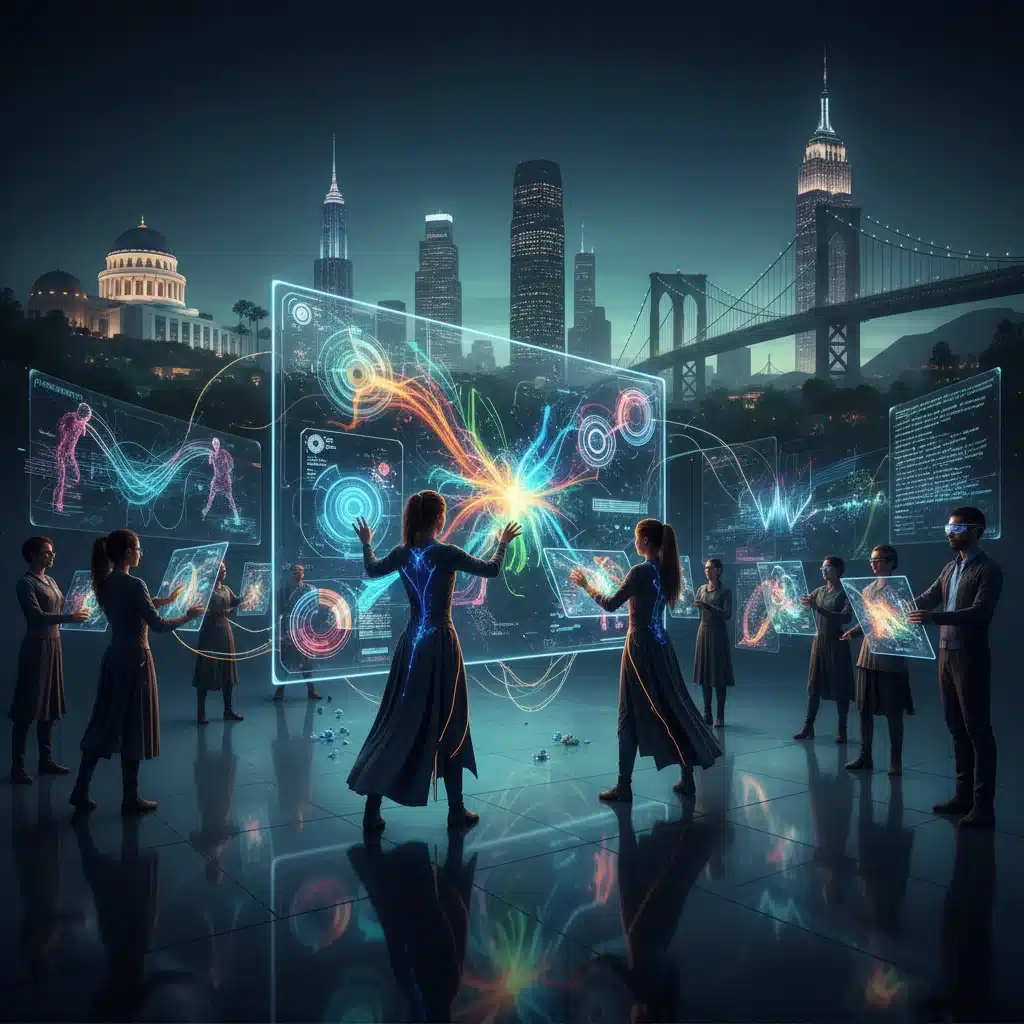
The landscape of creativity is undergoing a profound transformation, spearheaded by the rapid emergence and integration of Generative Artificial Intelligence (Gen AI). This isn’t merely an incremental technological advancement; it represents a paradigm shift that is redefining how content is conceived, produced, and consumed across various sectors. A compelling projection indicates that by early 2026, a significant 15% of all content creation in the United States will be augmented by Gen AI. This statistic, while specific, encapsulates a broader trend of AI’s burgeoning influence, suggesting a future where human ingenuity and machine capability are inextricably linked. Understanding the implications of this shift for the Gen AI Creative Industries is not just an academic exercise; it’s a critical imperative for professionals, businesses, and policymakers alike.
This article will delve deep into the multifaceted impact of Gen AI on the creative industries. We will explore the technologies driving this change, the specific sectors most affected, the benefits reaped, and the formidable challenges that accompany such a rapid technological evolution. From the bustling studios of Hollywood to independent graphic designers and musicians, Gen AI is already making its mark, promising unprecedented efficiencies, new forms of artistic expression, and a re-evaluation of what constitutes ‘original’ content. As we stand on the cusp of this new era, comprehending the scope and scale of AI’s augmentation in content creation becomes paramount for navigating the future of work and artistry.
The Rise of Generative AI: A Brief Overview
To fully grasp the implications of 15% content augmentation by Gen AI, it’s essential to understand what Generative AI entails. Unlike traditional AI that primarily analyzes data or automates predefined tasks, Gen AI is capable of producing novel outputs. This includes everything from text and images to music, video, and even 3D models. At its core, Gen AI learns patterns and structures from vast datasets and then uses this knowledge to generate new, original content that often mimics human-created work.
Key technologies underpinning this revolution include Generative Adversarial Networks (GANs), which pit two neural networks against each other to produce increasingly realistic outputs, and Transformer models, which have revolutionized natural language processing (NLP) and are now central to large language models (LLMs) like GPT-4. Diffusion models, another significant breakthrough, are particularly adept at generating high-quality images and art. These technological advancements have democratized access to sophisticated creative tools, enabling individuals and small businesses to achieve production quality previously reserved for large enterprises.
The exponential growth in computational power, coupled with the availability of enormous datasets, has fueled the rapid development and deployment of Gen AI. This synergy has propelled AI from a theoretical concept to a practical tool, fundamentally altering workflows and creative processes across the Gen AI Creative Industries. The ability of these models to learn, adapt, and generate diverse content at scale is what makes the 15% augmentation projection not just plausible but increasingly inevitable.
Defining ‘Augmentation’ in Content Creation
When we speak of 15% of US content creation being ‘augmented’ by Gen AI, it’s crucial to clarify what this term signifies. Augmentation does not necessarily mean full automation, where AI entirely replaces human creators. Instead, it suggests a scenario where AI tools enhance, assist, and accelerate human creative endeavors. This can manifest in several ways:
- Idea Generation and Brainstorming: AI can rapidly generate multiple concepts, themes, or plot outlines, providing a springboard for human creativity.
- Drafting and Prototyping: AI can produce initial drafts of text, musical compositions, or visual layouts, saving significant time in the early stages of a project.
- Editing and Refinement: AI-powered tools can assist with grammar checks, style suggestions, color correction, or even sound mixing, improving the quality and efficiency of post-production.
- Personalization and Customization: Gen AI can create highly personalized content variations for different audiences, a critical advantage in marketing and advertising.
- Asset Creation: From background images and sound effects to character models, AI can generate a vast array of assets, freeing human artists to focus on core creative direction.
This augmentation is about leveraging AI to amplify human capabilities, allowing creators to focus on higher-level strategic thinking, emotional storytelling, and unique artistic vision, while AI handles repetitive or time-consuming tasks. The 15% figure reflects this blend of human oversight and AI assistance, indicating a future where collaboration between humans and machines is the norm within the Gen AI Creative Industries.
Sectors Leading the Charge: Where Gen AI is Making the Biggest Impact
The impact of Gen AI is not uniformly distributed across all creative industries. Certain sectors, due to their data-rich nature, iterative processes, or high demand for varied content, are experiencing faster and more profound integration. Let’s explore some of the key areas:
Marketing and Advertising
This sector is perhaps one of the earliest and most enthusiastic adopters of Gen AI. From generating ad copy and social media posts to creating personalized marketing collateral and even entire campaign concepts, AI offers unparalleled speed and scalability. Companies can test numerous ad variations, optimize for different demographics, and produce content at a volume previously unimaginable. This drives efficiency and allows creative teams to focus on overarching strategy and brand narrative.
Digital Art and Graphic Design
Tools like Midjourney, DALL-E, and Stable Diffusion have revolutionized digital art. Designers can generate mood boards, create initial visual concepts, or even produce highly detailed illustrations and textures in seconds. While controversies exist regarding originality and copyright, the utility for rapid prototyping, asset creation, and exploring diverse visual styles is undeniable. This empowers graphic designers to iterate faster and bring complex visions to life with greater ease within the Gen AI Creative Industries.
Music and Audio Production
Gen AI is transforming music composition, sound design, and audio editing. AI can generate new melodies, harmonies, and rhythms, create background scores for films, or even produce unique sound effects. For independent artists, this can democratize music production, while for larger studios, it offers tools for rapid experimentation and customization. AI can also assist with mastering and mixing, optimizing audio quality with unprecedented precision.
Film and Video Production
In film and video, Gen AI is aiding in scriptwriting, storyboarding, character design, and even generating synthetic media. AI can help create realistic CGI elements, animate characters, or even produce entire virtual sets. While still in its nascent stages for full feature film production, its use in pre-visualization, special effects, and even generating short-form content for social media is rapidly expanding. The ability to quickly generate multiple visual scenarios or character iterations significantly speeds up pre-production.
Publishing and Content Writing
From generating news articles and summaries to crafting marketing emails and even assisting with novel writing, Gen AI is a powerful tool for content creators. While human oversight remains crucial for accuracy, nuance, and unique voice, AI can handle research, draft initial content, and significantly accelerate the writing process. This is particularly valuable for businesses requiring high volumes of content for blogs, websites, and internal communications, making the Gen AI Creative Industries more productive than ever.
The Economic and Creative Upsides of AI Augmentation
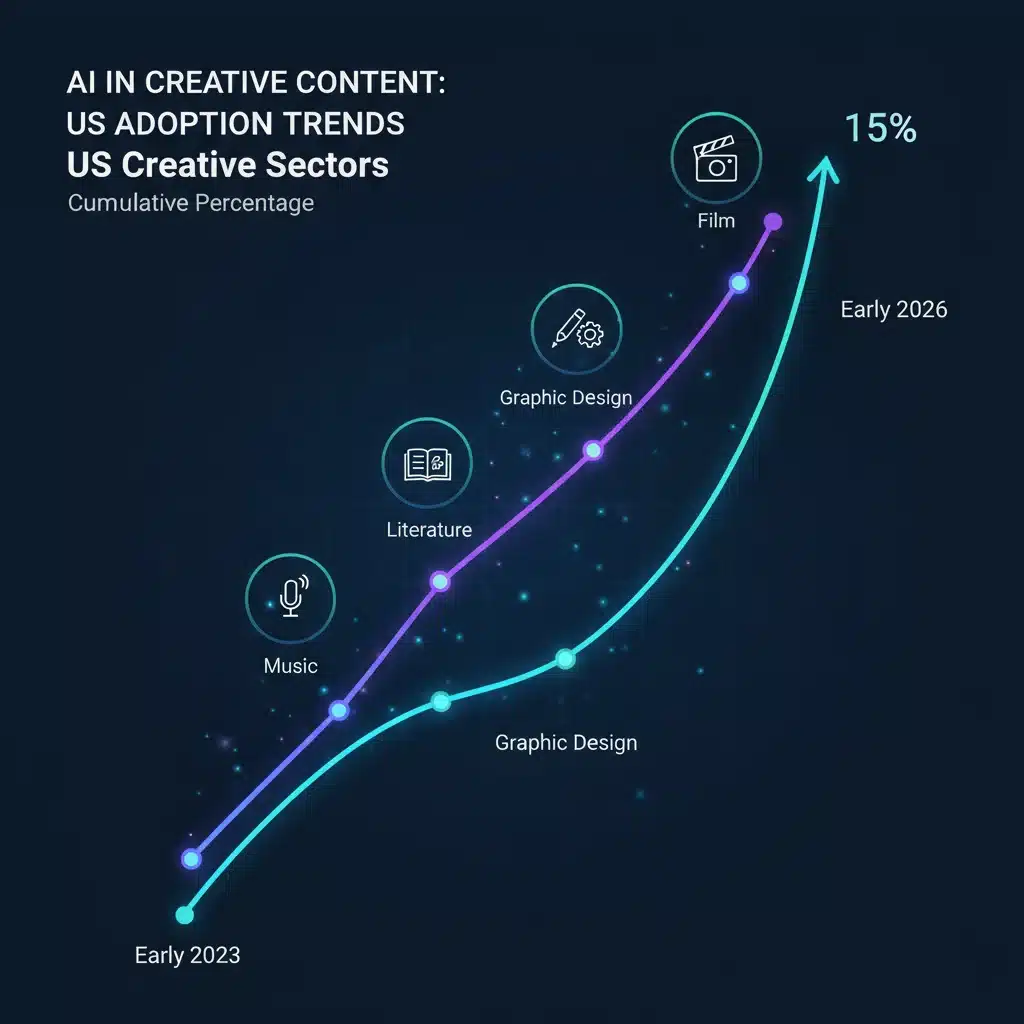
The projected 15% augmentation by early 2026 isn’t just a statistical milestone; it signifies tangible benefits for individuals and the broader economy. These upsides are driving the rapid adoption of Gen AI:
Increased Efficiency and Productivity
One of the most immediate benefits is the significant boost in efficiency. Tasks that once took hours or days can now be completed in minutes. This allows creators to take on more projects, meet tighter deadlines, and dedicate more time to the truly creative and strategic aspects of their work. For businesses, this translates into reduced operational costs and faster time-to-market for creative outputs.
Democratization of Creativity
Gen AI tools are making sophisticated creative capabilities accessible to a wider audience. Individuals without extensive technical skills or large budgets can now produce high-quality content, from professional-looking graphics to complex musical pieces. This levels the playing field, fostering innovation and enabling a new generation of creators to emerge within the Gen AI Creative Industries.
New Forms of Artistic Expression
AI isn’t just replicating existing art forms; it’s enabling entirely new ones. Artists are experimenting with AI as a co-creator, pushing the boundaries of what’s possible in digital art, interactive experiences, and synthetic media. This collaboration can lead to truly unique and groundbreaking works that would be impossible with traditional methods alone.
Personalization at Scale
In an increasingly personalized world, Gen AI allows businesses to tailor content to individual preferences at an unprecedented scale. This is invaluable in marketing, education, and entertainment, where bespoke experiences can significantly enhance engagement and impact. Imagine a video game where the narrative adapts dynamically to player choices, or an educational platform that generates custom learning materials for each student.
Competitive Advantage
For businesses that embrace Gen AI, the competitive advantage is clear. The ability to produce more content, faster, and with greater personalization means they can outpace competitors, attract more customers, and innovate at a quicker pace. Early adopters in the Gen AI Creative Industries are already seeing substantial returns on their investment in AI tools and strategies.
Challenges and Ethical Considerations
While the promise of Gen AI is immense, its rapid integration is not without challenges and ethical dilemmas that demand careful consideration and proactive solutions.
Copyright and Ownership
Perhaps the most contentious issue is the question of copyright. Who owns content generated by AI, especially if it was trained on copyrighted material? This is a complex legal and ethical minefield that courts and legislative bodies are just beginning to navigate. Clear guidelines are urgently needed to protect creators and foster fair use.
Job Displacement and Reskilling
While augmentation suggests collaboration, there’s an undeniable concern about job displacement, especially for roles that involve repetitive or highly standardized creative tasks. The 15% augmentation figure, while positive for efficiency, also implies a shift in required skills. There’s a critical need for education and reskilling initiatives to prepare the workforce for an AI-augmented future, focusing on uniquely human skills like critical thinking, emotional intelligence, and strategic creativity.
Bias and Fairness
Gen AI models learn from the data they are trained on, and if that data contains biases (e.g., racial, gender, cultural), the AI will perpetuate and even amplify those biases in its outputs. This can lead to discriminatory content, misrepresentations, or the exclusion of certain groups. Ensuring fairness and mitigating bias in AI-generated content is a significant ethical challenge for the Gen AI Creative Industries.
Authenticity and Trust
As AI becomes more sophisticated in generating realistic content, distinguishing between human-created and AI-generated work becomes increasingly difficult. This raises concerns about authenticity, misinformation, and the erosion of trust in media. The rise of deepfakes is a prime example of this challenge. Developing robust AI detection tools and promoting transparency are crucial.
Maintaining Human Creativity and Originality
There’s a philosophical debate about the role of human creativity in an AI-augmented world. Will over-reliance on AI stifle human originality, leading to a homogenization of creative output? Striking the right balance between leveraging AI’s capabilities and preserving the unique spark of human ingenuity is a delicate act that the Gen AI Creative Industries must master.
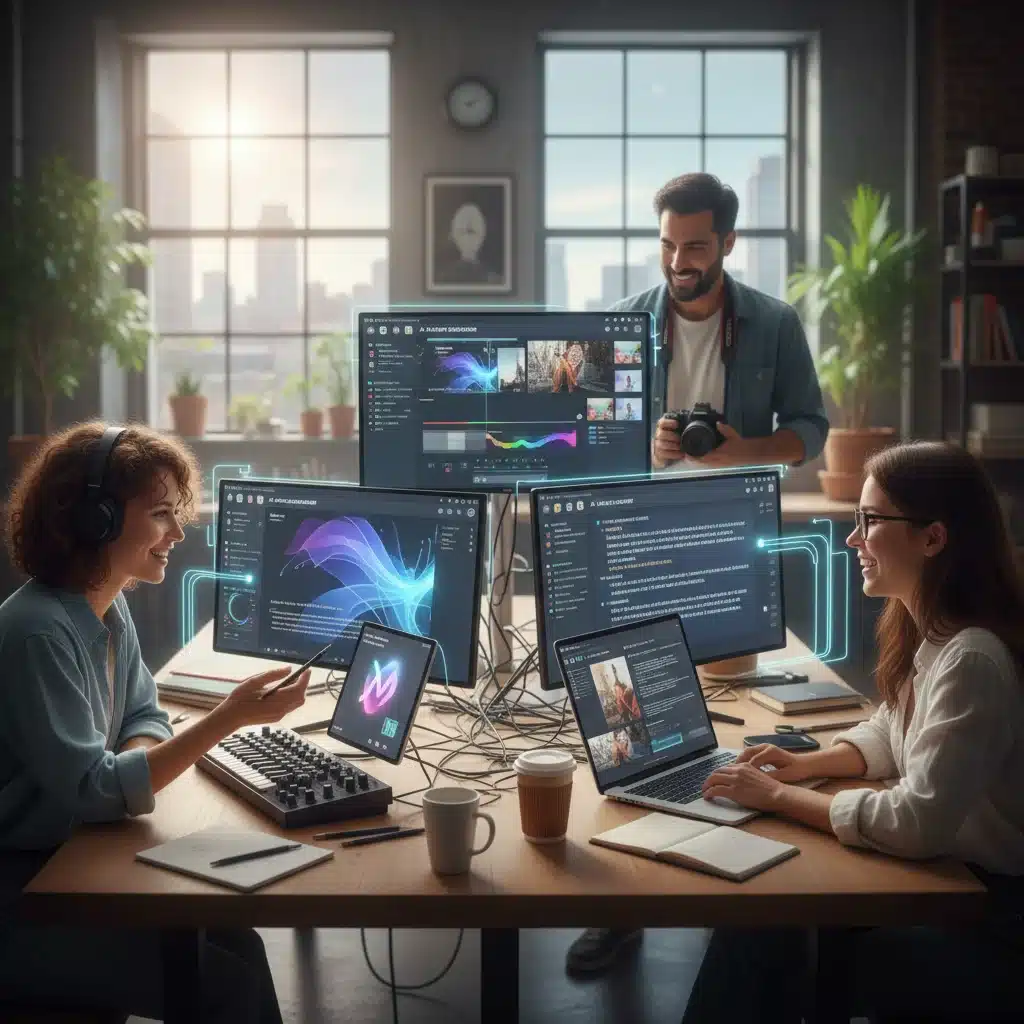
The Road Ahead: Navigating the Future of Gen AI in Creative Industries
The projection of 15% US content creation augmented by Gen AI by early 2026 is not a distant future; it’s a rapidly approaching reality. To navigate this transformative period successfully, several key strategies and considerations will be vital:
Investment in AI Literacy and Training
For creative professionals, understanding how to effectively use and prompt Gen AI tools will become as fundamental as mastering traditional software. Educational institutions and industry leaders must invest in comprehensive AI literacy programs, equipping the workforce with the skills needed to thrive in an augmented environment. This includes not just technical proficiency but also critical thinking about AI’s limitations and ethical implications.
Developing Ethical AI Frameworks
As the capabilities of Gen AI expand, so too must the frameworks governing its use. This requires collaboration between technologists, ethicists, legal experts, and creative professionals to establish clear guidelines around data usage, bias mitigation, transparency, and accountability. Proactive development of these frameworks is essential to prevent misuse and foster responsible innovation within the Gen AI Creative Industries.
Focus on Unique Human Value
In a world where AI can automate many tasks, the value of uniquely human attributes will only increase. Skills such as empathy, critical storytelling, strategic thinking, emotional intelligence, and the ability to connect with audiences on a deeply human level will become even more prized. Creative professionals should focus on honing these skills that AI cannot replicate.
Hybrid Workflows and Collaboration
The future of content creation will largely be a hybrid one, where humans and AI collaborate seamlessly. Designing efficient workflows that integrate AI tools as assistants and co-creators, rather than replacements, will be crucial. This involves understanding where AI excels and where human intervention is indispensable, optimizing for both efficiency and quality.
Policy and Regulation
Governments and international bodies will need to develop robust policies and regulations that address the societal and economic impacts of Gen AI. This includes intellectual property rights, labor laws, and standards for AI transparency and safety. The goal should be to foster innovation while protecting individuals and ensuring a fair and equitable creative ecosystem for the Gen AI Creative Industries.
Conclusion: A New Dawn for Creativity
The integration of Generative AI into the creative industries marks a pivotal moment in human history. The projection that 15% of US content creation will be augmented by AI by early 2026 is a powerful indicator of the speed and scale of this transformation. While challenges abound, particularly concerning ethics, employment, and authenticity, the potential for enhanced creativity, unprecedented efficiency, and new forms of artistic expression is equally vast.
This isn’t merely a story of machines taking over; it’s a narrative of evolution, where human ingenuity finds a powerful new partner. The future of the Gen AI Creative Industries will be defined by how effectively we harness these tools, address their inherent risks, and champion a collaborative spirit between human creators and intelligent machines. By embracing this change with foresight and responsibility, we can unlock a new dawn for creativity, pushing the boundaries of what’s possible and enriching our world with a diverse tapestry of augmented content.
The journey ahead will require continuous learning, adaptation, and a willingness to redefine established norms. But one thing is clear: Generative AI is not just a tool; it’s a catalyst that will reshape the very essence of creativity for generations to come.