Decoding the Future of Work: 3 Key Trends Reshaping the US Job Market by 2030
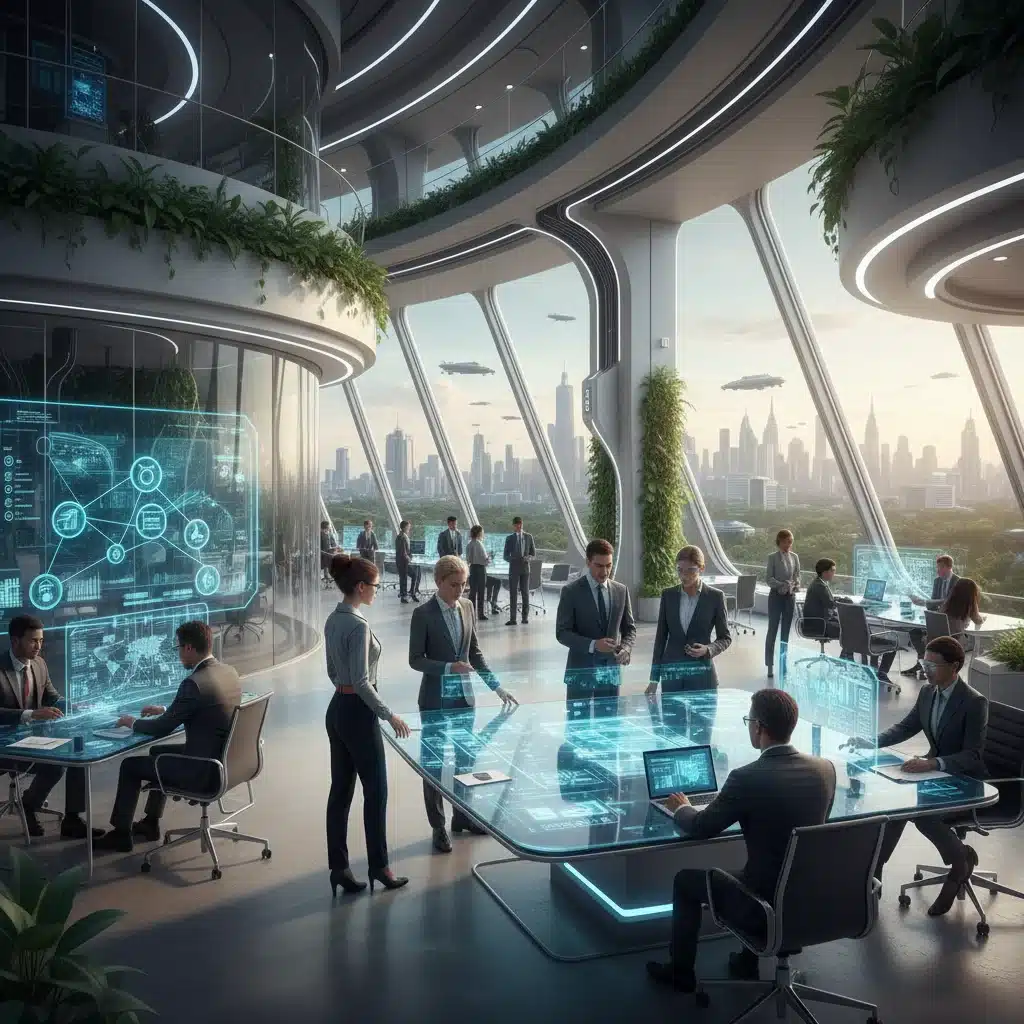
The landscape of employment is in constant flux, but the pace of change is accelerating at an unprecedented rate. As we hurtle towards 2030, the United States job market is poised for a monumental transformation, driven by powerful technological, social, and environmental forces. Understanding these shifts isn’t just about staying competitive; it’s about proactively shaping one’s career trajectory and business strategy for the coming decade. This article, drawing on insider knowledge and time-sensitive insights, will unpack the three key trends that are set to redefine the Future of Work in the US: the pervasive integration of Artificial Intelligence and automation, the enduring evolution of remote and hybrid work models, and the burgeoning opportunities within the green economy.
For decades, futurists have painted vivid pictures of a work world dominated by machines or entirely flexible schedules. While some of those predictions have materialized, the reality is often more nuanced and complex. The next seven years will not merely see incremental changes; they will witness a fundamental restructuring of how, where, and why we work. From the skills deemed essential to the very nature of employment contracts, everything is on the table. Businesses, policymakers, educators, and individuals alike must prepare for this epochal shift.
Our exploration begins with the most disruptive force: Artificial Intelligence. Far from being a mere tool, AI is rapidly becoming a co-worker, a manager, and even a creator. Its influence extends beyond automating repetitive tasks, venturing into areas once considered exclusively human domains like creative problem-solving and strategic decision-making. Following this, we will delve into the dynamic world of remote and hybrid work. What started as a necessity during a global crisis has evolved into a preferred mode of operation for many, fundamentally altering corporate culture, urban planning, and employee expectations. Finally, we will examine the rise of the green economy, a sector driven by environmental imperative and economic opportunity, creating entirely new industries and job categories that demand a novel skill set.
Each of these trends, while distinct, is interconnected, creating a complex web of challenges and opportunities. Ignoring them is not an option; embracing and adapting to them is the only path forward. This comprehensive analysis aims to provide a robust framework for understanding these transformative forces, offering practical insights for navigating the exciting, yet uncertain, Future of Work.
1. The Pervasive Integration of Artificial Intelligence and Automation
Artificial Intelligence (AI) is no longer a futuristic concept; it is a present-day reality rapidly reshaping every facet of the US job market. By 2030, AI’s integration will be so pervasive that it will be less about ‘if’ jobs are affected and more about ‘how’ they are transformed. This isn’t just about factory robots; it’s about sophisticated algorithms influencing everything from customer service and data analysis to healthcare diagnostics and creative design. The Future of Work is intrinsically linked to AI.
The Evolution from Automation to Augmentation
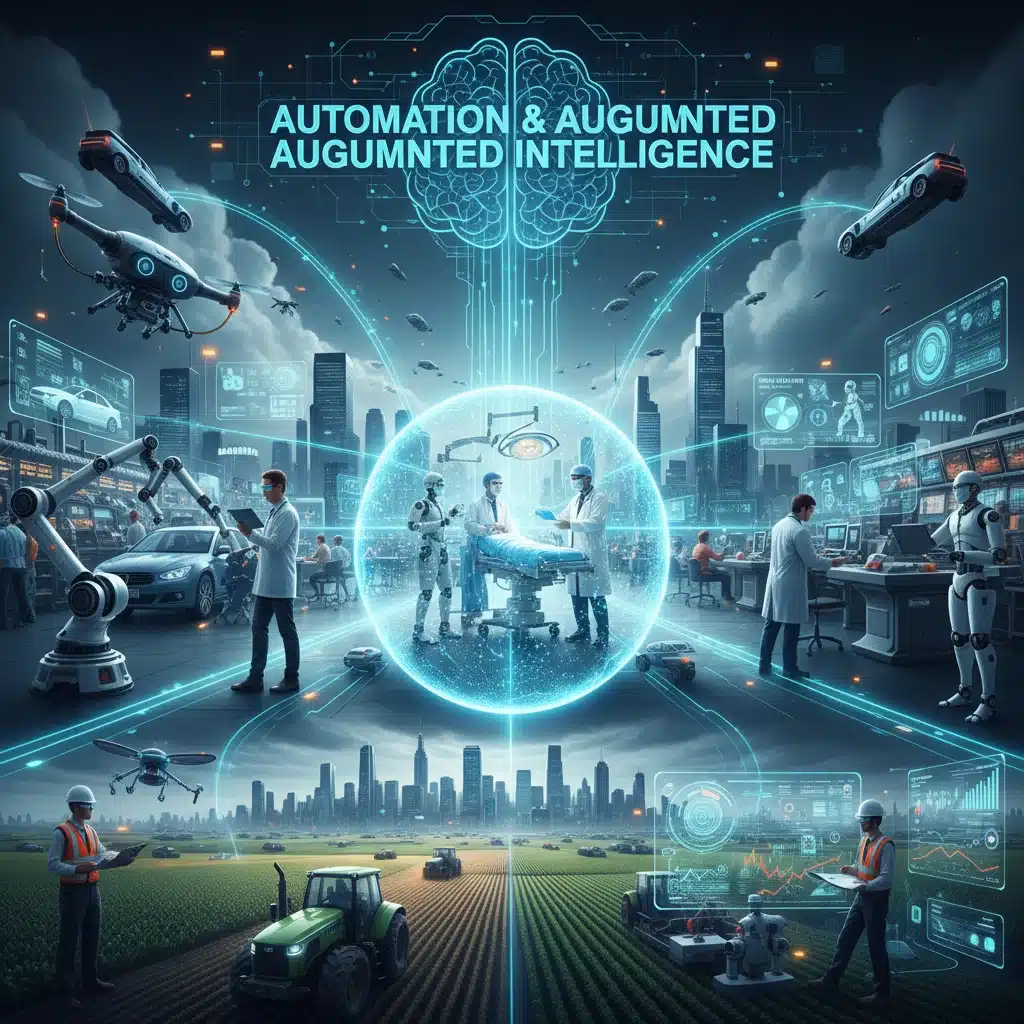
Initially, concerns about AI primarily revolved around job displacement through automation. While automation will undoubtedly continue to take over repetitive, rule-based tasks, a more nuanced understanding is emerging: AI’s role will increasingly be one of augmentation rather than outright replacement. Instead of eliminating entire job categories, AI will augment human capabilities, making workers more efficient, productive, and capable of tackling higher-level problems. For instance, AI tools can sift through vast datasets in minutes, allowing human analysts to focus on interpreting insights and strategizing, rather than manual data compilation.
This shift means that the skills required in the workforce will evolve. Critical thinking, creativity, emotional intelligence, and complex problem-solving – skills that AI currently struggles with – will become even more valuable. Jobs will require individuals to work collaboratively with AI, understanding its strengths and limitations, and leveraging its power to achieve outcomes that were previously impossible.
Impact Across Industries
Every sector will feel the ripple effects of AI. In healthcare, AI will assist in diagnostics, drug discovery, and personalized treatment plans, creating demand for professionals who can manage and interpret AI-generated medical data. In finance, AI will revolutionize fraud detection, algorithmic trading, and personalized financial advice, requiring human experts to oversee complex systems and client relationships. The retail sector will see AI-powered personalized shopping experiences, inventory management, and supply chain optimization, demanding new roles in AI strategy and implementation.
Even traditionally ‘human’ fields like education and arts will be impacted. AI can personalize learning experiences, assist with content creation, and even generate preliminary design concepts, freeing up educators and artists to focus on mentorship, critical feedback, and truly innovative work. The key is to view AI not as a competitor, but as a powerful collaborator in the Future of Work.
New Skill Demands for the AI Era
To thrive in an AI-integrated job market, individuals will need to cultivate a new set of skills. ‘Digital literacy’ will expand to ‘AI literacy,’ meaning an understanding of how AI works, its ethical implications, and how to effectively use AI tools. Data science and analytics will be paramount, as virtually every role will involve interacting with and interpreting data generated or analyzed by AI. Furthermore, ‘soft skills’ will become ‘power skills.’ Communication, collaboration, adaptability, and continuous learning will be critical for navigating rapidly changing work environments and working alongside intelligent systems.
Reskilling and upskilling initiatives will be vital for both individuals and organizations. Governments, educational institutions, and businesses must collaborate to provide accessible training programs that equip the current and future workforce with the competencies needed for the AI era. The ability to learn, unlearn, and relearn will be the ultimate competitive advantage in the Future of Work.
2. The Enduring Evolution of Remote and Hybrid Work Models
What began as a forced experiment during the pandemic has solidified into a permanent fixture of the US job market: remote and hybrid work models. By 2030, the traditional 9-to-5, five-days-a-week office presence will be an anomaly for many, replaced by more flexible, location-agnostic arrangements. This shift profoundly impacts everything from urban planning and corporate culture to employee well-being and global talent acquisition, fundamentally redefining the Future of Work.
From Necessity to Preference: The Hybrid Default
The initial transition to remote work was driven by necessity. However, employees quickly realized the benefits: increased flexibility, elimination of commutes, better work-life balance, and often, higher productivity. Employers, in turn, recognized advantages such as access to a wider talent pool, reduced overhead costs, and improved employee retention. While a fully remote model works for some, a hybrid approach – blending in-office and remote days – is emerging as the preferred default for many organizations.
This hybrid model aims to strike a balance, leveraging the benefits of remote work (focus, flexibility) with the advantages of in-person interaction (collaboration, team building, mentorship). The challenge lies in defining the ‘right’ hybrid model for each organization and ensuring equitable experiences for all employees, regardless of their location on any given day. The Future of Work demands this flexibility.
Reshaping Corporate Culture and Leadership
The shift to remote and hybrid work necessitates a complete overhaul of traditional corporate culture and leadership styles. Managers must transition from an ‘oversight’ mindset to one of ‘empowerment’ and ‘trust.’ Performance will be measured by outcomes, not by hours spent in an office chair. Communication strategies need to be intentional and inclusive, ensuring that remote employees feel just as connected and informed as their in-office counterparts.
Building a strong company culture in a distributed environment requires creativity and deliberate effort. Virtual team-building activities, transparent communication channels, and a focus on psychological safety become paramount. Leaders must also prioritize digital fluency, ensuring their teams are equipped with the tools and training to collaborate effectively across distances. This cultural evolution is a cornerstone of the Future of Work.
Impact on Real Estate and Urban Planning
The widespread adoption of remote and hybrid work is already having a significant impact on commercial real estate. Companies are re-evaluating their office space needs, often downsizing or redesigning offices to become collaborative hubs rather than traditional workstations. This trend could lead to a revitalization of suburban areas and smaller cities, as individuals are no longer tethered to major urban centers for employment.
Urban planners will need to adapt to changing commuting patterns and the demand for more localized amenities. The lines between ‘work’ and ‘home’ will continue to blur, influencing residential development, public transportation, and the design of community spaces. The physical infrastructure of society will reflect the new realities of the Future of Work.
Expanding the Talent Pool and Global Competition
One of the most significant advantages of remote work for employers is the ability to tap into a global talent pool, unconstrained by geographical boundaries. This opens up opportunities for businesses to find the best talent, regardless of their location, and for individuals to access jobs that were previously out of reach. However, this also intensifies global competition for skilled workers.
Companies will need to navigate complex international labor laws, tax implications, and cultural differences when hiring across borders. For employees, it means a greater emphasis on showcasing skills and experience in a globally competitive marketplace. The Future of Work is truly global.

3. The Burgeoning Opportunities of the Green Economy
As the climate crisis intensifies, so too does the imperative for sustainable solutions. This urgency is giving rise to a rapidly expanding ‘green economy,’ a sector focused on producing goods and services that benefit the environment and human well-being. By 2030, this sector will not only be a significant driver of economic growth but also a prolific creator of new jobs across diverse industries, fundamentally shaping the Future of Work.
Defining the Green Economy
The green economy encompasses a broad spectrum of activities, including renewable energy (solar, wind, geothermal), energy efficiency, sustainable agriculture, waste management and recycling, green building, conservation, and eco-tourism. It’s not just about environmental protection; it’s about economic development that is environmentally sustainable and socially inclusive. This holistic approach ensures that as we transition to a greener future, we also create equitable opportunities. The Future of Work is green.
Job Creation Across Sectors
The growth of the green economy will generate millions of jobs, ranging from highly technical roles to vocational positions. For instance, the renewable energy sector will demand engineers, technicians for installation and maintenance, project managers, and researchers. The sustainable agriculture movement will require agronomists, food scientists, and farm managers skilled in organic and regenerative practices. Green building will need architects, construction workers, and materials scientists focused on sustainable design and materials.
Beyond these direct ‘green jobs,’ there will be significant demand for professionals in supporting roles: consultants specializing in environmental policy, data analysts tracking sustainability metrics, marketing professionals promoting green products, and educators training the next generation of green workers. Virtually every industry will have a ‘green’ component, requiring existing roles to adapt and new roles to emerge for the Future of Work.
Essential Skills for the Green Workforce
The skills required for the green economy are a blend of technical expertise, interdisciplinary understanding, and a commitment to sustainability. STEM (Science, Technology, Engineering, and Mathematics) skills will be crucial, particularly in areas like renewable energy technology, environmental science, and sustainable engineering. However, soft skills like problem-solving, innovation, systems thinking, and collaboration will be equally vital, as green solutions often require cross-sectoral cooperation.
A fundamental understanding of environmental principles, climate change science, and sustainability practices will become a baseline requirement for many roles. Educational institutions and training programs are already adapting to meet this demand, offering specialized degrees and certifications in areas like renewable energy management, sustainable urban planning, and environmental impact assessment. Preparing for the Future of Work means embracing green skills.
Government Policies and Investment as Catalysts
Government policies and substantial investment will play a critical role in accelerating the growth of the green economy. Initiatives like tax incentives for renewable energy adoption, funding for sustainable infrastructure projects, and regulations promoting energy efficiency will create a fertile ground for job creation. Public-private partnerships will be essential in driving innovation and scaling up green technologies.
Moreover, international cooperation on climate goals will open up global markets for green products and services, further expanding opportunities for US businesses and workers. The green economy is not just an environmental movement; it is a powerful economic engine that will redefine the Future of Work for millions.
Navigating the Transformation: Strategies for Success in the Future of Work
The three trends – AI integration, the evolution of remote and hybrid work, and the rise of the green economy – are not isolated phenomena. They intertwine and amplify each other, creating a dynamic and often unpredictable environment. For individuals, businesses, and policymakers, developing proactive strategies is essential to not just survive but thrive in this transformed landscape. The Future of Work demands foresight and adaptability.
For Individuals: Lifelong Learning and Adaptability
The most critical strategy for individuals is a commitment to lifelong learning. The skills acquired today may be obsolete tomorrow, making continuous upskilling and reskilling imperative. Focus on developing ‘future-proof’ skills such as critical thinking, creativity, complex problem-solving, emotional intelligence, and digital fluency, especially in AI tools and data analytics. Embrace adaptability and resilience, viewing change as an opportunity rather than a threat.
Consider diversifying your skill set to be less vulnerable to specific technological displacements. Explore opportunities in the green economy, even if your current field isn’t directly related, as many roles will have a sustainability component. Networking, both online and offline, will become even more important for staying informed about emerging trends and connecting with new opportunities in the Future of Work.
For Businesses: Strategic Investment and Employee Empowerment
Businesses must strategically invest in technology, particularly AI, not just to cut costs but to augment their workforce and create new value. This includes investing in AI training for employees, fostering a culture of innovation, and experimenting with new tools. Developing robust and equitable hybrid work policies is also crucial for attracting and retaining top talent. This means investing in collaborative technologies, redesigning office spaces, and training managers to lead effectively in distributed environments.
Furthermore, businesses need to integrate sustainability into their core operations and strategies. This isn’t just about corporate social responsibility; it’s about identifying new market opportunities, reducing environmental impact, and appealing to a growing consumer base that values eco-friendly practices. Empowering employees through continuous learning opportunities, fostering a supportive culture, and prioritizing well-being will be key to organizational success in the Future of Work.
For Policymakers and Educators: Proactive Planning and Inclusive Growth
Policymakers have a critical role in creating an environment that supports this transformation while ensuring equitable outcomes. This includes investing in digital infrastructure, particularly in underserved areas, to support remote work. It also means developing policies that encourage AI innovation responsibly, addressing ethical considerations, and protecting worker rights in an automated world. Investing in green infrastructure and incentivizing sustainable industries will accelerate the transition to a low-carbon economy.
Educational institutions must overhaul curricula to prepare students for the jobs of the future, emphasizing STEM, digital literacy, critical thinking, and sustainability. Vocational training programs need to adapt quickly to new skill demands, particularly in the green economy and AI-related fields. Collaboration between government, industry, and academia is vital to bridge the skills gap and ensure that no segment of the workforce is left behind in the Future of Work.
Conclusion: Embracing the Future of Work
The US job market by 2030 will be fundamentally different from what we know today. The pervasive integration of Artificial Intelligence, the enduring evolution of remote and hybrid work models, and the burgeoning opportunities within the green economy are not just trends; they are foundational shifts that will redefine careers, demand new skills, and reshape industries. These changes present both significant challenges and unparalleled opportunities.
For those who are prepared to embrace lifelong learning, cultivate adaptability, and strategically navigate these transformative forces, the Future of Work holds immense promise. It’s a future where human ingenuity, augmented by technology, can solve complex problems; where work offers greater flexibility and balance; and where economic growth is intertwined with environmental stewardship. The time to prepare is now, for the future is not a distant horizon but an unfolding reality that demands our immediate attention and proactive engagement. By understanding these key trends and acting decisively, we can collectively build a more resilient, innovative, and sustainable work world for generations to come.