US Data Privacy Law Changes 2026: Digital Marketing Impact

In the dynamic realm of digital marketing, staying abreast of regulatory changes isn’t just good practice; it’s a fundamental necessity for survival and growth. The United States, historically slower to adopt comprehensive federal data privacy legislation compared to regions like Europe with its General Data Protection Regulation (GDPR), is now experiencing a rapid acceleration in its regulatory landscape. By mid-2026, experts predict three critical shifts in US data privacy law that will profoundly impact how digital marketers operate. Understanding these changes isn’t merely about avoiding penalties; it’s about building consumer trust, fostering ethical practices, and ultimately, future-proofing your marketing strategies.
The patchwork of state-specific laws, while providing some level of protection, has created a complex and often contradictory environment for businesses. This fragmentation is giving way to more unified, albeit still evolving, frameworks. For digital marketers, this means a significant overhaul of data collection, processing, and usage practices. From consent mechanisms to data retention policies, almost every facet of a digital campaign will require careful re-evaluation. This article delves deep into these three critical shifts, offering an insider’s look at what to expect and how to prepare your digital marketing efforts for the new era of US Data Privacy.
The Accelerating Momentum Towards a Federal US Data Privacy Framework
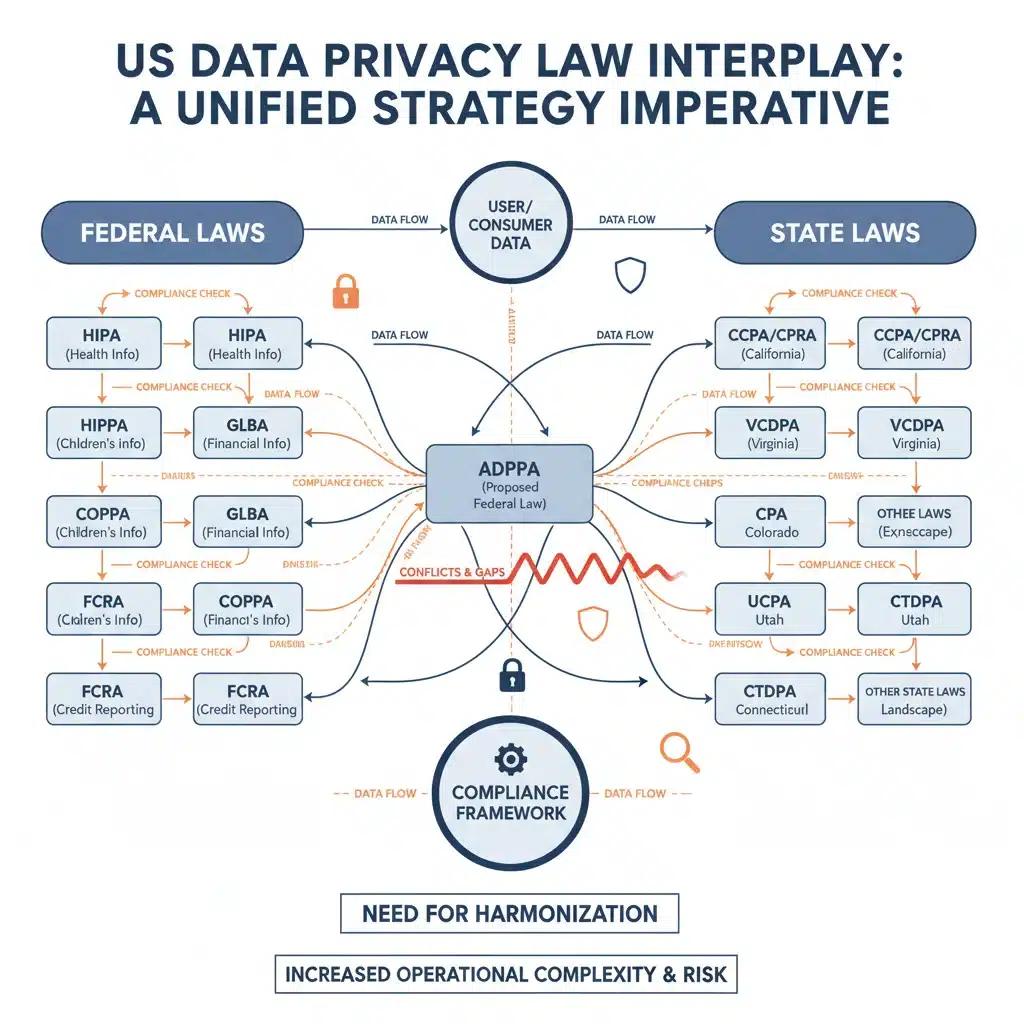
For years, the call for a unified federal US Data Privacy law has echoed through legislative halls and industry conferences. The current landscape, characterized by a growing number of state-specific regulations like the California Consumer Privacy Act (CCPA), the California Privacy Rights Act (CPRA), Virginia’s CDPA, Colorado’s CPA, and others, has created a compliance nightmare for businesses operating nationwide. Marketers are forced to navigate a labyrinth of differing consent requirements, consumer rights, and enforcement mechanisms, leading to increased operational costs and the risk of non-compliance.
However, the tide is turning. The sheer complexity and economic burden of this fragmented approach are pushing federal lawmakers to seriously consider comprehensive legislation. While a single, overarching federal law similar to GDPR might still be a few years away, the momentum towards a more harmonized approach is undeniable. By mid-2026, we anticipate significant progress, potentially in the form of a foundational federal framework that sets a baseline for data privacy, allowing states to enact stricter but not conflicting regulations. Alternatively, we might see the emergence of a few dominant state laws setting de facto national standards, influencing federal action.
The Drivers Behind Federal Harmonization
Several factors are fueling this push for federal US Data Privacy regulation:
- Business Demands: Companies, particularly those operating across state lines, are vocal about the need for a single set of rules. The cost of complying with multiple, often contradictory, state laws is unsustainable.
- Consumer Expectations: Consumers are becoming increasingly aware of their data rights and are demanding stronger, more consistent protections, irrespective of where they live.
- International Pressure: The US lags behind other major economic blocs in data privacy, which can hinder international trade and data flows. A federal law would align the US more closely with global standards.
- Technological Advancements: The rapid evolution of AI, machine learning, and data analytics capabilities creates new ethical and privacy challenges that fragmented state laws struggle to address comprehensively.
Implications for Digital Marketers
A move towards federal harmonization, even if incremental, will necessitate a strategic pivot for digital marketers. Instead of juggling multiple state-specific compliance strategies, marketers will need to focus on a more unified, albeit potentially more stringent, set of rules. This could simplify compliance in the long run but will require significant upfront investment in understanding and implementing the new framework. Key areas of impact include:
- Standardized Consent Mechanisms: A federal law could standardize what constitutes valid consent for data collection and processing, moving away from varying state definitions. This could mean more explicit opt-in requirements for certain types of data or marketing activities.
- Universal Consumer Rights: Marketers will likely face a more consistent set of consumer rights, including the right to access, delete, and correct personal data, as well as the right to opt-out of targeted advertising and data sales, applicable nationwide.
- Data Minimization and Purpose Limitation: Federal legislation will likely emphasize principles of data minimization (collecting only what’s necessary) and purpose limitation (using data only for specified purposes), forcing marketers to audit their data collection practices.
- Cross-State Data Transfers: A federal framework could streamline rules around data transfers between different states, reducing legal complexity for national campaigns.
Preparing for this shift involves advocating for sensible federal legislation, monitoring legislative developments closely, and beginning to build internal frameworks that can adapt to more stringent and unified US Data Privacy standards.
Enhanced Focus on Consumer Consent and Data Rights
Beyond the structural shift towards federal harmonization, mid-2026 will undoubtedly see a significant enhancement in the focus on consumer consent and individual data rights. This trend is already evident in existing state laws and is a core tenet of international regulations like GDPR. The days of implied consent or obscure privacy policies are rapidly fading. Consumers are demanding greater control over their personal information, and regulators are responding with more explicit and enforceable provisions.
The Evolution of Consent
The concept of ‘consent’ in US Data Privacy is evolving from a passive agreement to an active choice. Marketers must move beyond pre-checked boxes and buried clauses in terms and conditions. Future regulations will likely demand:
- Granular Consent: Consumers will expect to provide consent for specific types of data collection and specific purposes. For example, consenting to email marketing might not imply consent for sharing data with third-party advertisers.
- Explicit Opt-in: The default position will increasingly be opt-out, requiring users to actively choose to share their data for non-essential purposes. This will have a direct impact on how initial user engagement and data capture are designed.
- Easy Withdrawal of Consent: Consumers must have clear and easily accessible mechanisms to withdraw their consent at any time, without detriment. This means re-evaluating unsubscribe processes and data deletion requests.
- Renewed Consent: For certain types of data or long-term data processing, businesses might be required to periodically renew consent, ensuring it remains informed and current.
Strengthening Individual Data Rights
Accompanying the evolution of consent is the strengthening of individual data rights, which will become more standardized and robust under new US Data Privacy laws:
- Right to Know/Access: Consumers will have a clearer, more enforceable right to know what personal data businesses collect about them, where it comes from, and how it’s used and shared.
- Right to Delete: The right to request the deletion of personal data will become more widespread and will require businesses to implement efficient and verifiable deletion processes.
- Right to Correct: Consumers will gain a more standardized right to request corrections to inaccurate personal data held by businesses.
- Right to Opt-Out of Sale/Sharing: The right to opt-out of the sale or sharing of personal data, particularly for targeted advertising, will be a cornerstone of new legislation. This directly challenges traditional digital advertising models reliant on third-party data.
- Right to Limit Use of Sensitive Personal Information: There will be increased scrutiny and specific protections for ‘sensitive personal information’ (e.g., health data, precise geolocation, racial or ethnic origin), often requiring explicit consent for its collection and use.
Impact on Digital Marketing Strategies
These enhanced rights and consent requirements will necessitate fundamental changes in digital marketing operations:
- First-Party Data Strategy: The reliance on third-party cookies and data brokers will diminish. Marketers must prioritize building robust first-party data strategies, directly collecting data from consumers with their explicit consent and offering clear value in return.
- Consent Management Platforms (CMPs): Implementing sophisticated CMPs will become non-negotiable. These platforms help manage consent preferences, track user choices, and ensure compliance across various channels.
- Transparent Communication: Marketers will need to be far more transparent about their data practices. Clear, concise, and easy-to-understand privacy notices and consent requests will be crucial for building trust and encouraging opt-ins.
- Personalization vs. Privacy: The balance between highly personalized marketing and respecting privacy will become more delicate. Marketers will need to innovate ways to deliver relevant experiences without infringing on consumer rights, possibly through contextual advertising or anonymous data aggregation.
- Data Governance and Auditing: Robust internal data governance frameworks, including regular audits of data collection, storage, and usage, will be essential to demonstrate compliance and respond to consumer requests.
The shift towards stronger consumer consent and data rights is not a threat to digital marketing but an opportunity to build more ethical, transparent, and ultimately, more trustworthy relationships with customers. Those who embrace these changes proactively will gain a significant competitive advantage.
The Demise of Third-Party Cookies and the Rise of Privacy-Enhancing Technologies
Perhaps one of the most widely discussed and impactful shifts in digital marketing, driven by evolving US Data Privacy regulations and browser policies, is the impending deprecation of third-party cookies. Google’s planned phase-out of third-party cookies in Chrome by late 2024 (though subject to change) combined with increasing regulatory pressure to limit cross-site tracking, is creating an urgent need for marketers to find alternative solutions. By mid-2026, the digital advertising ecosystem will look dramatically different, necessitating a complete re-evaluation of how user tracking, targeting, and measurement are conducted.
The End of an Era for Third-Party Cookies
Third-party cookies have long been the backbone of programmatic advertising, enabling cross-site tracking, retargeting, and audience segmentation. Their demise is driven by:
- Privacy Concerns: Regulators and consumers view third-party cookies as intrusive, allowing for extensive tracking of online behavior without explicit consent.
- Browser Policies: Major browsers like Safari and Firefox have already blocked third-party cookies, and Chrome’s eventual phase-out will effectively eliminate their widespread utility.
- Regulatory Scrutiny: New US Data Privacy laws are likely to place further restrictions on the collection and use of data obtained through third-party tracking, even if not explicitly banning cookies.
The Emergence of Privacy-Enhancing Technologies (PETs)
In response to this shift, the industry is rapidly developing and adopting Privacy-Enhancing Technologies (PETs) and alternative identification methods. These technologies aim to balance the need for effective advertising with enhanced user privacy. Key developments include:
- First-Party Data and Data Clean Rooms: As mentioned, first-party data will become paramount. Data clean rooms allow multiple parties to securely collaborate and analyze aggregated, anonymized data without directly sharing individual user information, preserving privacy while enabling insights.
- Contextual Advertising: This traditional method is experiencing a resurgence. Instead of targeting users based on their past behavior, contextual advertising places ads on web pages relevant to the content being viewed, leveraging the immediate user interest.
- Universal IDs and Identity Solutions: Various industry consortiums are developing privacy-centric universal ID solutions based on hashed email addresses or other anonymized identifiers, requiring user consent for their use.
- Google’s Privacy Sandbox: Google is developing a suite of APIs within its Privacy Sandbox initiative, including Topics API (for interest-based advertising), FLEDGE (for remarketing), and Attribution Reporting API (for measurement), designed to enable advertising functionality without relying on third-party cookies.
- Federated Learning and Differential Privacy: These advanced techniques allow for data analysis and model training across decentralized datasets without individual data ever leaving the user’s device or being identifiable, offering a high degree of privacy.

Navigating the Cookieless Future for Digital Marketers
The implications of this shift for digital marketers are profound and require immediate strategic action:
- Invest in First-Party Data Collection: Develop compelling value propositions to encourage users to voluntarily share their data directly with your brand. This includes loyalty programs, exclusive content, personalized experiences, and transparent communication about data usage.
- Diversify Measurement and Attribution: Move beyond cookie-based attribution models. Explore server-side tracking, conversion modeling, incrementality testing, and data clean room solutions to accurately measure campaign performance in a privacy-centric world.
- Embrace Contextual and Brand Safety Solutions: Re-evaluate your media buying strategies to incorporate more contextual targeting. Ensure your brand safety measures are robust in this new environment.
- Experiment with Emerging Technologies: Actively test and integrate solutions from Google’s Privacy Sandbox, universal ID providers, and other PETs to understand their effectiveness and limitations for your specific marketing goals.
- Re-skill and Re-tool Your Teams: Digital marketing teams will need new skills in data ethics, privacy-enhancing technologies, and alternative advertising models. Invest in training and new tools that support a cookieless future.
- Stronger Partnerships with Publishers: Publishers with rich first-party data will become more valuable. Forge direct relationships and explore partnerships that leverage their audience insights in a privacy-compliant manner.
The demise of third-party cookies is not the end of digital advertising, but rather a catalyst for innovation. Those who proactively adapt and embrace privacy-enhancing technologies will be best positioned to thrive in the evolving digital landscape, ensuring their campaigns remain effective while respecting consumer privacy and adhering to the new US Data Privacy standards.
Preparing Your Digital Marketing Strategy for Mid-2026 and Beyond
The convergence of accelerating federal harmonization, enhanced consumer consent, and the cookieless future presents a formidable challenge but also a significant opportunity for digital marketers. The period leading up to mid-2026 is critical for strategic planning and implementation. Businesses that view these changes as mere compliance hurdles risk falling behind; those that embrace them as opportunities to build stronger, more ethical, and more resilient marketing practices will emerge as leaders.
Key Actionable Steps for Marketers
To navigate these critical US Data Privacy shifts effectively, consider the following actionable steps:
- Conduct a Comprehensive Data Audit: Understand what data you collect, why you collect it, where it’s stored, who has access to it, and how long it’s retained. Map your data flows to identify potential privacy risks and compliance gaps.
- Develop a Robust First-Party Data Strategy: Prioritize direct data collection from customers. This involves creating compelling value exchanges (e.g., personalized experiences, exclusive content, loyalty programs) that encourage users to opt-in and share their data willingly.
- Implement Advanced Consent Management: Invest in and deploy a sophisticated Consent Management Platform (CMP) that allows for granular consent, easy withdrawal, and transparent communication of data practices. Ensure it’s integrated across all digital touchpoints.
- Re-evaluate Third-Party Vendor Relationships: Scrutinize all vendors that handle customer data, including ad tech platforms, analytics providers, and data brokers. Ensure they are compliant with new and anticipated US Data Privacy regulations and have robust data processing agreements in place.
- Diversify Your Advertising Channels and Measurement: Reduce reliance on third-party cookie-dependent advertising. Explore contextual advertising, direct publisher partnerships, influencer marketing, and privacy-preserving measurement solutions. Invest in server-side tracking and data clean rooms.
- Train Your Teams on Data Privacy Best Practices: Educate your marketing, sales, and data teams on the latest US Data Privacy laws, internal policies, and ethical data handling. Foster a culture of privacy-by-design.
- Review and Update Privacy Policies and Terms of Service: Ensure your legal documents are clear, concise, easily accessible, and accurately reflect your current data practices and consumer rights under new regulations.
- Stay Informed and Engage with Policy Makers: Actively monitor legislative developments at both federal and state levels. Consider joining industry groups that advocate for practical and effective US Data Privacy regulations.
- Build Trust Through Transparency: Be open and honest with your customers about your data practices. Transparency builds trust, which is invaluable in an increasingly privacy-conscious world.
- Embrace a Privacy-First Mindset: Shift your organizational culture to view privacy not as a burden, but as a core component of customer experience and brand reputation. Integrating privacy from the outset of any new product or marketing initiative will be crucial.
The Long-Term Outlook
The journey to a fully privacy-compliant and effective digital marketing ecosystem is ongoing. The shifts expected by mid-2026 are significant milestones, but the evolution of US Data Privacy law will continue. Businesses that embed privacy into their core values and operational DNA will be best equipped to adapt to future changes, maintain consumer trust, and sustain long-term growth. This is not just about avoiding fines; it’s about building a sustainable and ethical foundation for all digital interactions.
The proactive adoption of these strategies will not only ensure compliance with the impending US Data Privacy regulations but will also position your brand as a trusted entity in the eyes of increasingly privacy-aware consumers. The future of digital marketing is intertwined with privacy, and successful marketers will be those who lead with both innovation and integrity.