US Data Privacy Laws 2020-2026: Digital Marketing Impact Analysis

The digital landscape is in a perpetual state of flux, driven by technological advancements and, increasingly, by evolving regulatory frameworks. For digital marketers and businesses operating within the United States, understanding the intricate web of US Data Privacy Laws has become not just a compliance issue, but a fundamental aspect of strategic planning. The period between 2020 and 2026 marks a significant transition, witnessing the proliferation of state-level legislation that has dramatically reshaped how consumer data can be collected, processed, and utilized for marketing purposes. This expert review delves into the evolution of these laws, their specific impact on digital marketing, and what businesses need to do to navigate this complex environment successfully.
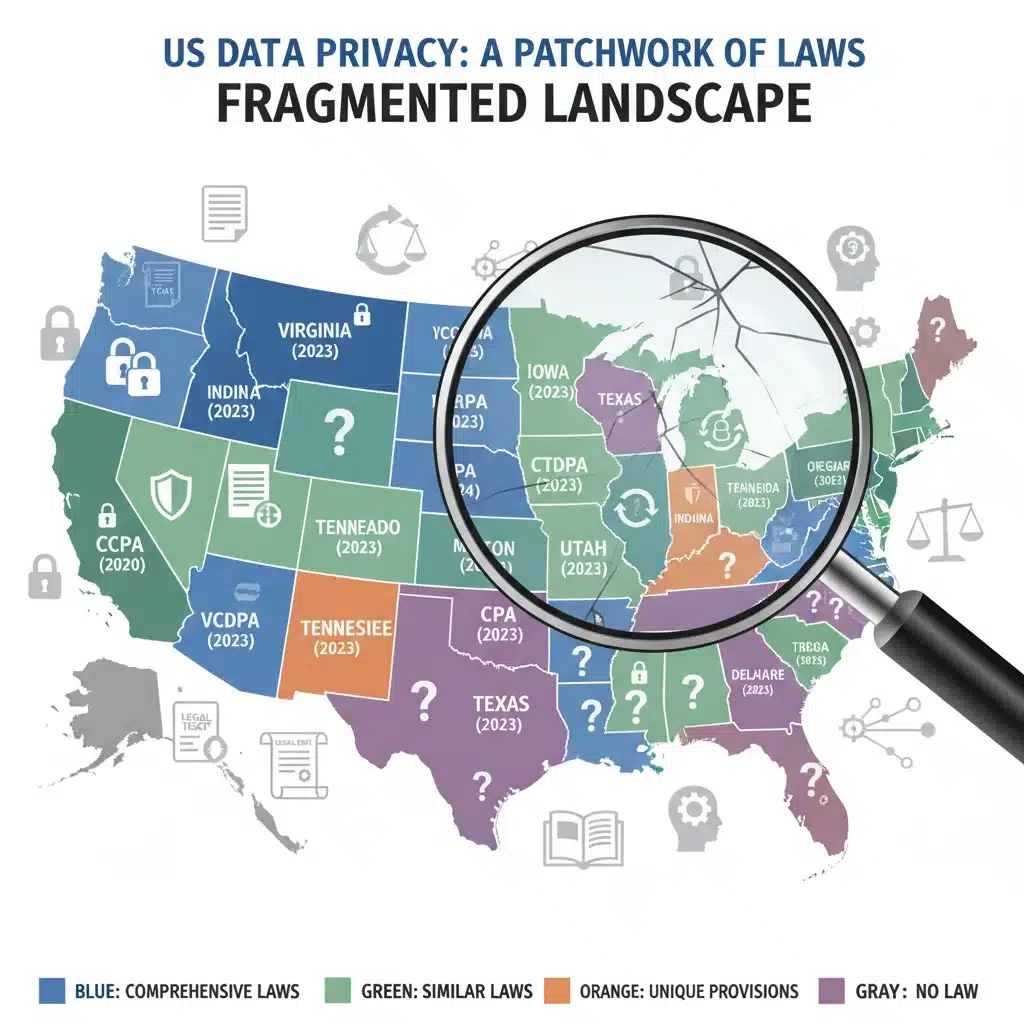
The journey of data privacy in the US has been characterized by a patchwork approach, contrasting sharply with the more unified framework seen in the European Union with the General Data Protection Regulation (GDPR). While a comprehensive federal data privacy law remains elusive, individual states have stepped up, creating a complex and often challenging compliance landscape for businesses. This article provides a detailed comparison and analysis of these developments, offering an expert perspective on how to adapt and thrive.
The Shifting Sands: US Data Privacy Laws from 2020 to 2026
The year 2020 served as a pivotal moment with the California Consumer Privacy Act (CCPA) taking full effect. This landmark legislation, while state-specific, set a precedent for consumer data rights across the nation. It granted Californians the right to know what personal information is collected about them, to delete that information, and to opt-out of the sale of their personal information. For many businesses, the CCPA was their first real encounter with robust data privacy compliance outside of specific industry regulations like HIPAA for healthcare or COPPA for children’s online privacy.
Following the CCPA, the California Privacy Rights Act (CPRA) was passed in November 2020, becoming fully effective on January 1, 2023. The CPRA significantly expanded upon the CCPA, introducing new consumer rights, establishing the California Privacy Protection Agency (CPPA) to enforce these laws, and broadening the definition of “sensitive personal information.” This evolution meant that businesses had to re-evaluate their data handling practices, particularly concerning data sharing for cross-context behavioral advertising, which the CPRA categorizes as ‘sharing’ and provides consumers with an opt-out right.
Beyond California, other states quickly followed suit, albeit with variations. Virginia’s Consumer Data Protection Act (VCDPA) became effective on January 1, 2023, offering similar consumer rights to access, delete, and opt-out of the sale of personal data, as well as targeted advertising. Colorado’s Privacy Act (CPA), also effective January 1, 2023, further contributed to this growing mosaic, introducing its own set of definitions and compliance requirements. Utah’s Consumer Privacy Act (UCPA) and Connecticut’s Data Privacy Act (CTDPA) joined the fray, effective December 31, 2023, and July 1, 2023, respectively. Each of these laws, while sharing common principles, presents unique nuances that demand careful attention from businesses.
Looking ahead to 2024, 2025, and 2026, the trend of state-level data privacy legislation is expected to continue. We’ve already seen states like Iowa (Iowa Act Concerning Consumer Data Protection, effective January 1, 2025), Indiana (Indiana Consumer Data Protection Act, effective January 1, 2026), and Delaware (Delaware Personal Data Privacy Act, effective January 1, 2025 for larger entities and January 1, 2026 for smaller entities) enact their own comprehensive privacy laws. Montana, Tennessee, and Texas have also passed their own versions of data privacy laws, which will become effective in 2024 and 2025. This rapid legislative activity underscores the urgent need for a proactive and adaptable approach to privacy compliance.
The common threads running through these diverse US Data Privacy Laws include consumer rights such as the right to access personal data, rectify inaccuracies, delete data, and opt-out of the sale or sharing of data for targeted advertising. However, differences exist in terms of thresholds for applicability, definitions of personal data, specific opt-out mechanisms, and enforcement powers. This fragmentation creates significant compliance challenges for businesses operating nationally, necessitating a strategy that can accommodate the strictest requirements across various jurisdictions.
Direct Impact on Digital Marketing Strategies
The evolving landscape of US Data Privacy Laws has had a profound and multifaceted impact on digital marketing. Traditional tactics that relied heavily on broad data collection and unconstrained data sharing are becoming increasingly untenable. Marketers must now operate with a heightened awareness of consumer consent, data transparency, and the rights of individuals regarding their personal information.
Consent Management and Data Collection
Perhaps the most significant shift for digital marketers is the increased emphasis on explicit consent. While not all US state laws require opt-in consent for all data processing activities (many operate on an opt-out model), the trend is towards greater transparency and control for consumers. This means marketers need robust consent management platforms (CMPs) to track and manage user preferences effectively. Simply having a privacy policy is no longer sufficient; businesses must actively demonstrate compliance through auditable consent records.
Data collection practices themselves are under scrutiny. The principle of data minimization – collecting only the data necessary for a specific purpose – is gaining traction. Marketers must re-evaluate their data collection forms, website cookies, and tracking technologies to ensure they are only gathering essential information and clearly communicating why that data is being collected. Generic data grabs are out; purposeful and transparent data acquisition is in.
Targeted Advertising and Personalization
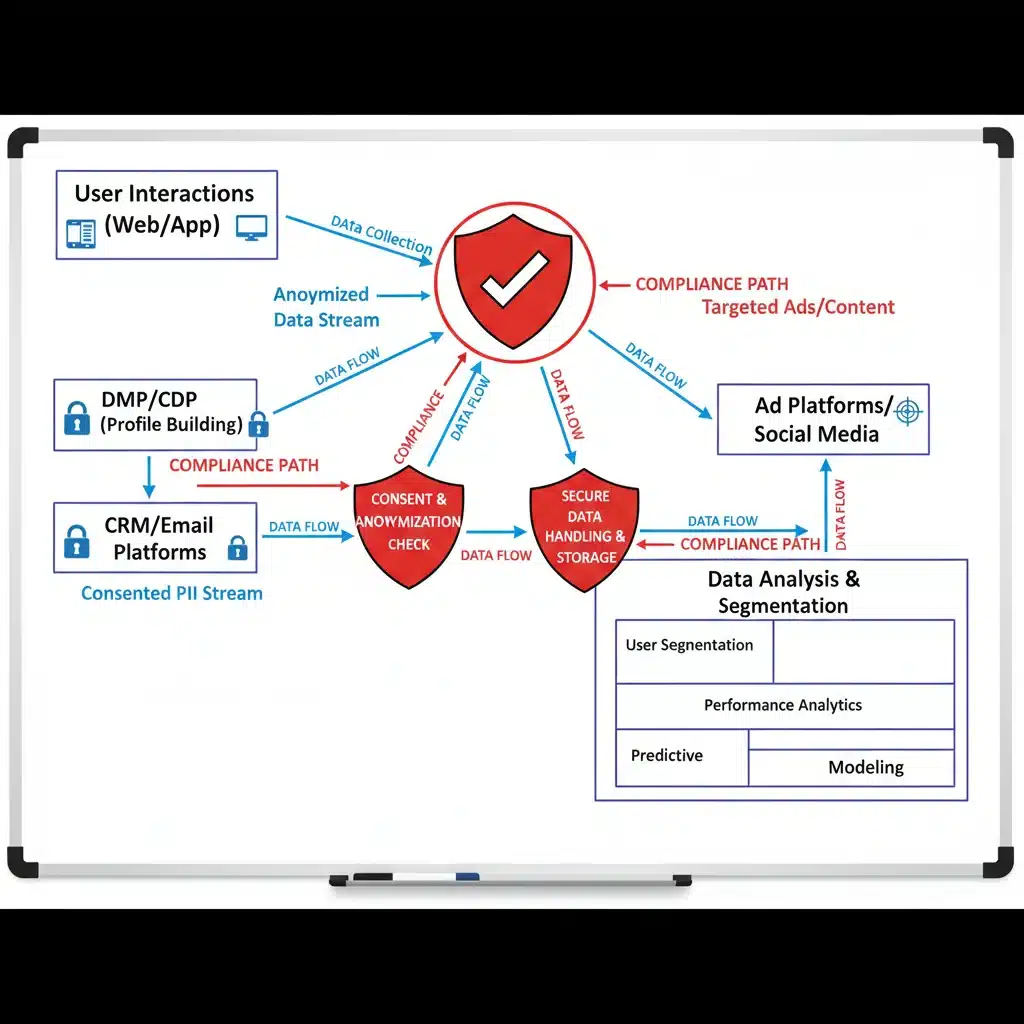
Targeted advertising, the backbone of modern digital marketing, is directly impacted by the right to opt-out of the sale or sharing of personal information. Under laws like CPRA, VCDPA, and CPA, consumers can explicitly request that their data not be used for targeted advertising. This necessitates sophisticated mechanisms for honoring these requests. Marketers must be able to identify opted-out users and exclude them from targeted campaigns, which can complicate audience segmentation and ad delivery.
Personalization, while still a powerful marketing tool, must be approached with caution. Hyper-personalization based on sensitive personal information without explicit consent carries significant risks. Marketers are encouraged to focus on contextual advertising and broader segmentation strategies, or to leverage anonymized or aggregated data where possible, to deliver relevant content without infringing on privacy rights. The era of ‘creepy’ personalization, where consumers feel their data is being used without their knowledge or permission, is rapidly drawing to a close.
Data Sharing and Third-Party Relationships
Many digital marketing strategies involve sharing data with third-party vendors, such as ad networks, analytics providers, and marketing automation platforms. The new US Data Privacy Laws impose stricter requirements on these relationships. Businesses are now responsible for ensuring that their third-party partners also comply with privacy regulations. This means conducting thorough due diligence, implementing robust data processing agreements (DPAs), and ensuring contractual clauses address data protection, security, and consumer rights.
The concept of ‘selling’ data has been broadened by laws like the CPRA to include sharing for cross-context behavioral advertising, even without monetary exchange. This redefinition has significant implications for how data is exchanged within the digital advertising ecosystem. Marketers must meticulously audit their data sharing practices and ensure they have the necessary legal basis and consumer consent for any such activities.
Navigating the Compliance Maze: Strategies for Digital Marketers
Given the complexity and fragmentation of US Data Privacy Laws, digital marketers need a multi-pronged strategy to ensure compliance and maintain effective marketing operations. Proactive measures are far more effective than reactive responses to regulatory enforcement actions.
1. Conduct a Comprehensive Data Audit
The first step is to understand what data your organization collects, where it’s stored, how it’s used, and with whom it’s shared. A thorough data audit should map all data flows, identify personal and sensitive personal information, and determine the legal basis for processing each type of data. This foundational understanding is crucial for building a compliant privacy program.
2. Implement Robust Consent Management Platforms (CMPs)
CMPs are essential tools for managing consumer preferences regarding data collection, use, and sharing. They enable businesses to capture consent, record opt-in/opt-out choices, and honor consumer rights requests. A well-implemented CMP ensures transparency, builds trust with consumers, and provides an auditable trail of compliance.
3. Update Privacy Policies and Notices
Privacy policies must be clear, concise, and easily accessible. They should accurately reflect current data collection and processing practices, inform users of their privacy rights under applicable state laws, and explain how to exercise those rights. Regular updates are necessary to reflect changes in laws or business practices. Just-in-time notices, providing specific information about data collection at the point of interaction (e.g., when signing up for a newsletter or accepting cookies), also enhance transparency.
4. Prioritize Data Minimization and Anonymization
Adopt a data minimization approach: collect only the data truly necessary for your marketing objectives. Where possible, anonymize or pseudonymize data to reduce privacy risks. This not only enhances compliance but also reduces the potential impact of data breaches.
5. Strengthen Third-Party Vendor Management
Scrutinize all third-party vendors who have access to consumer data. Ensure they are contractually obligated to comply with relevant data privacy laws and that their security practices are robust. Regular reviews and audits of vendor compliance are critical. Data processing agreements (DPAs) should be in place with all vendors handling personal data.
6. Train Marketing Teams on Privacy Best Practices
Human error is a significant contributor to privacy breaches and non-compliance. Regular training for marketing teams on data privacy principles, specific legal requirements, and internal policies is paramount. Marketers need to understand the implications of their actions and how to handle consumer data responsibly.
7. Develop a Consumer Rights Request Process
Businesses must have clear, efficient processes for handling consumer requests related to their data rights (access, deletion, opt-out). This includes establishing designated channels for requests, verifying consumer identities, and responding within legally mandated timeframes. Failure to adequately address these requests can lead to significant penalties.
8. Embrace Privacy-Enhancing Technologies (PETs)
Explore and adopt privacy-enhancing technologies that allow for data analysis and marketing effectiveness without compromising individual privacy. This could include federated learning, differential privacy, and secure multi-party computation. These technologies represent the future of privacy-conscious digital marketing.
The Future Landscape: 2026 and Beyond
As we look towards 2026 and beyond, the trajectory of US Data Privacy Laws suggests a few key trends. Firstly, the number of states enacting their own comprehensive privacy laws will likely continue to grow. This will further exacerbate the fragmentation, making a unified compliance strategy even more challenging. Businesses with national footprints will increasingly need to adopt a ‘highest common denominator’ approach, adhering to the strictest state-level requirements to minimize risk.
Secondly, there is renewed discussion and advocacy for a federal data privacy law. The argument for a single, consistent framework across the US is compelling, as it would simplify compliance for businesses and provide clearer rights for consumers. However, political hurdles and disagreements over the scope and enforcement of such a law have historically prevented its passage. While the prospect of a federal law by 2026 remains uncertain, the increasing state-level complexity might eventually provide the impetus needed for federal action.
Thirdly, enforcement will likely become more stringent. As privacy agencies like the CPPA mature and gain experience, we can expect more investigations and enforcement actions against non-compliant businesses. The financial penalties associated with violations are substantial, underscoring the importance of robust compliance programs.
Finally, consumer expectations regarding privacy are continuously rising. The general public is becoming more aware of their data rights and the value of their personal information. Brands that demonstrate a strong commitment to privacy and transparency are likely to build greater trust and loyalty, turning privacy compliance into a competitive differentiator rather than just a regulatory burden.
Conclusion: Adapting to the New Era of Digital Marketing
The evolution of US Data Privacy Laws from 2020 to 2026 represents a fundamental shift in the operating environment for digital marketers. The days of unchecked data collection and usage are over. Businesses must embrace a privacy-first mindset, embedding data protection into every aspect of their marketing strategies and technological infrastructure.
While the fragmented nature of US privacy laws presents significant challenges, it also fosters innovation. Marketers are being pushed to develop more creative, ethical, and privacy-conscious ways to engage with consumers. By prioritizing transparency, respecting consumer choices, and implementing robust compliance measures, businesses can not only avoid penalties but also build stronger, more trusting relationships with their audience.
Staying informed about the latest legislative developments, investing in appropriate technologies, and fostering a culture of privacy within the organization are no longer optional – they are essential for long-term success in the dynamic world of digital marketing. The period between 2020 and 2026 serves as a powerful reminder that in the digital age, privacy and profitability are not mutually exclusive; in fact, they are increasingly intertwined.