EV Charging Infrastructure: US Growth Forecast 2026
The landscape of transportation is undergoing a profound transformation, driven by the relentless march of technological innovation and a global commitment to sustainability. At the heart of this revolution lies the electric vehicle (EV) market, a sector witnessing exponential expansion. However, the true potential of EVs can only be fully realized with a robust, accessible, and efficient charging infrastructure. This comprehensive analysis delves into the projected EV charging growth across the United States by 2026, examining the critical factors shaping its trajectory, the technological advancements driving its evolution, and the policy frameworks accelerating its deployment. Understanding this growth is not merely an academic exercise; it is crucial for policymakers, investors, urban planners, and consumers alike to navigate the complexities and opportunities presented by the electrification of transport.
The transition to electric vehicles is more than just a shift in power source; it represents a fundamental rethinking of how we travel, consume energy, and interact with our environment. As such, the development of EV charging infrastructure is not just about installing more charging points; it’s about building an entire ecosystem that supports seamless EV adoption. This ecosystem encompasses various charging levels, smart grid integration, renewable energy sources, and user-friendly payment systems. Our exploration will provide a detailed forecast, highlighting key trends and regional disparities that will define the US EV charging landscape in the coming years. We aim to offer a clear picture of what to expect by 2026, from the proliferation of fast chargers on major highways to the expansion of residential and workplace charging solutions, all contributing to significant EV charging growth.
The Current State of US EV Charging Infrastructure
Before peering into the future, it’s essential to understand the foundation upon which future EV charging growth will be built. The current US EV charging infrastructure is a mosaic of public, private, and semi-private charging solutions. As of late 2023, the United States boasted a significant number of public charging ports, but their distribution and type vary widely. Level 2 (L2) chargers, which use a 240-volt outlet to provide a full charge in several hours, constitute the majority. These are commonly found at workplaces, retail locations, and public parking facilities, offering convenience for longer stops.
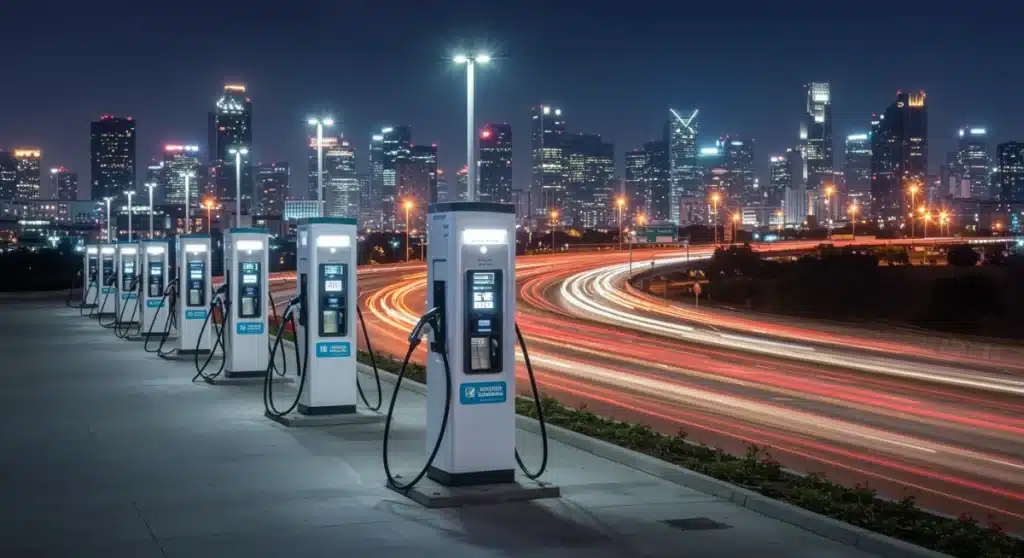
Complementing L2 chargers are DC Fast Chargers (DCFC), often referred to as Level 3 chargers. These are crucial for long-distance travel, capable of replenishing a significant portion of an EV battery in under an hour. While their numbers are growing rapidly, their density and availability, especially in rural areas, remain a key challenge. The federal government, through initiatives like the National Electric Vehicle Infrastructure (NEVI) Formula Program, has committed substantial funding to build out a national network of DCFCs along designated alternative fuel corridors, aiming to ensure no driver is ever far from a charging option. This strategic investment is a primary catalyst for future EV charging growth.
Beyond public infrastructure, a significant portion of EV charging occurs at home. Residential charging, primarily using Level 1 (120-volt household outlet) or Level 2 chargers, serves as the backbone of daily EV usage for many owners. Workplace charging is also gaining traction, offering employees the convenience of charging during their workday. The interplay between these different charging environments – home, work, and public – is critical for a holistic and user-friendly EV ecosystem. The coordinated expansion of all these segments is vital for sustained EV charging growth.
Key Drivers of EV Charging Growth by 2026
Several powerful forces are converging to accelerate EV charging growth across the US. Understanding these drivers is key to appreciating the scale of the transformation anticipated by 2026:
- Increased EV Adoption Rates: The most direct driver is the escalating sales of electric vehicles. As more consumers choose EVs, the demand for charging infrastructure naturally rises. Factors contributing to this include expanding EV model availability, competitive pricing, improving battery range, and growing consumer awareness of environmental benefits. Government incentives, both federal and state, also play a significant role in making EVs more attractive.
- Supportive Government Policies and Funding: Federal initiatives like the Bipartisan Infrastructure Law, particularly the NEVI program, are injecting billions of dollars into charging infrastructure development. These funds are specifically earmarked for building out a reliable and interconnected national charging network. State-level policies, including grants, tax credits, and mandates for charging station installations, further amplify these efforts. These policies are foundational to robust EV charging growth.
- Technological Advancements in Charging: Innovation in charging technology is making stations faster, more efficient, and more user-friendly. This includes higher power DCFCs (e.g., 350 kW and beyond), bidirectional charging capabilities (Vehicle-to-Grid or V2G), smart charging solutions that optimize energy use, and improved software for seamless payment and station discovery.
- Private Sector Investment and Innovation: Beyond government funding, private companies – from utility providers and charging network operators to automotive manufacturers and real estate developers – are making substantial investments. This private capital is crucial for scaling up infrastructure rapidly, developing new business models, and fostering competition that drives innovation and better services. This synergy between public and private investment is a powerful engine for EV charging growth.
- Growing Demand for Public and Workplace Charging: As EV ownership becomes more widespread, the need for convenient charging options beyond the home becomes paramount. This includes charging at retail centers, entertainment venues, multi-unit dwellings (MUDs), and workplaces. The ‘range anxiety’ factor, though diminishing with better battery technology, is still a psychological barrier that a ubiquitous charging network can effectively address, thereby encouraging further EV charging growth.
Projected EV Charging Growth by 2026: A Detailed Forecast
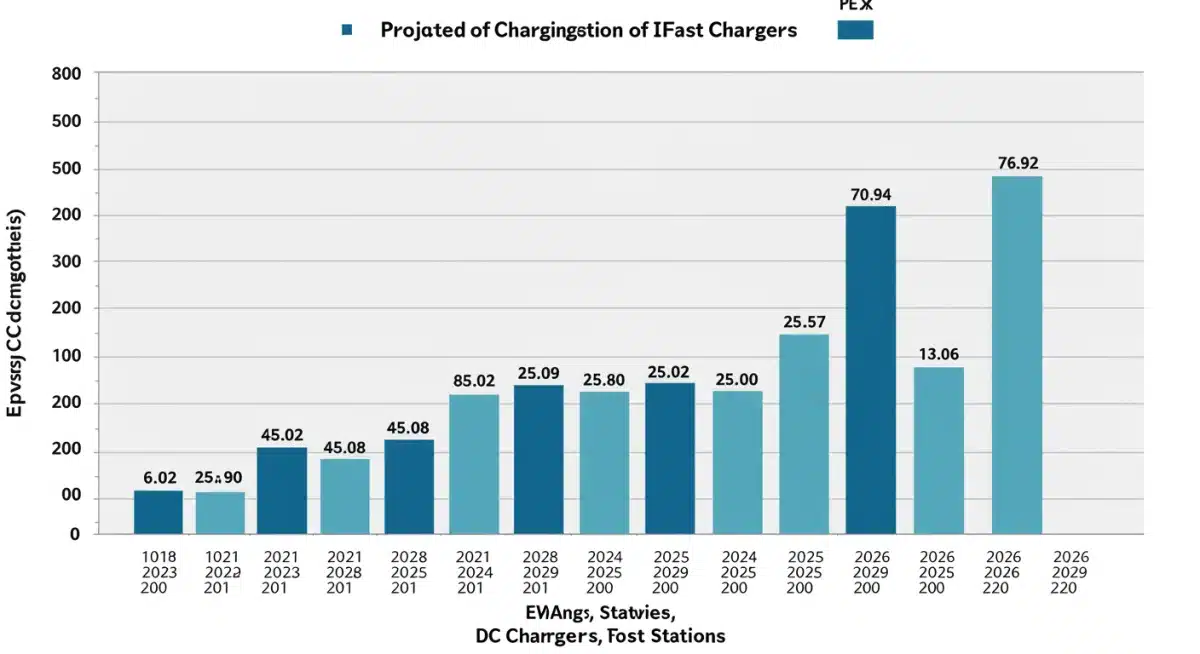
By 2026, the US is poised to witness a dramatic expansion of its EV charging network. Forecasts from various industry experts and government agencies indicate a substantial increase in the number of charging ports across all categories, with a particular emphasis on DC Fast Chargers. The total number of public and workplace charging ports is expected to more than double, possibly tripling, from current levels. This aggressive expansion is vital to keep pace with the projected surge in EV sales.
Specifically, we can anticipate significant growth in:
- DC Fast Chargers (DCFC): These will see the most rapid percentage growth. Driven by federal funding and the need for inter-city travel support, the number of DCFC ports could increase by 200-300% or more by 2026. The focus will be on placing them strategically along major highways, at travel plazas, and in urban hubs to minimize charging times and alleviate range anxiety for long-distance drivers. This is a critical component of overall EV charging growth.
- Level 2 Public Chargers: While their percentage growth might be less dramatic than DCFCs, the absolute number of L2 chargers will continue to climb steadily. They will remain the workhorses for destination charging – at shopping malls, parks, hotels, and public parking lots – where drivers can charge for several hours. The emphasis will shift towards optimizing their placement and ensuring higher reliability.
- Workplace Charging: As more companies embrace sustainability and attract EV-driving employees, workplace charging will see substantial investment. This provides a convenient and often subsidized charging option for commuters, reducing the reliance on public infrastructure for daily needs and contributing significantly to the convenience aspect of EV charging growth.
- Residential Charging: While largely private, the sales of home charging equipment (Level 2 chargers) will mirror EV sales growth. Utilities and local governments may continue to offer incentives for home charger installation, supporting the foundational charging needs of EV owners.
Regional Disparities and Targeted Growth
While the overall picture for EV charging growth is positive, it’s crucial to acknowledge that this growth will not be uniform across the United States. Regional disparities will persist, influenced by factors such as existing EV adoption rates, state policies, population density, and utility infrastructure readiness.
- West Coast Dominance: States like California, Oregon, and Washington, which have historically been frontrunners in EV adoption and supportive policies, will continue to lead in charging infrastructure density. Their ambitious climate goals and robust incentive programs will ensure sustained, rapid EV charging growth.
- Northeast Expansion: The Northeast corridor, including states like New York, Massachusetts, and New Jersey, is also expected to see significant expansion. High population density, strong environmental policies, and a growing EV market will drive substantial investment in both urban and highway charging.
- Emerging Markets in the South and Midwest: While starting from a lower base, states in the South and Midwest are poised for considerable percentage growth. Federal funding from the NEVI program will be particularly impactful in these regions, helping to bridge gaps in charging availability along key transportation routes. States like Texas, Florida, and Michigan, with increasing EV manufacturing presence, will see accelerated development.
- Rural Challenges and Opportunities: Rural areas will likely remain the most challenging for charging infrastructure deployment due to lower population density and potentially higher installation costs. However, federal programs are specifically designed to address these gaps, ensuring that even remote communities have access to essential charging services. This focus on equitable access is critical for holistic EV charging growth.
Technological Innovations Shaping the Future of Charging
The projected EV charging growth is not just about quantity; it’s also about quality and intelligence. Technological advancements will continue to refine the charging experience and integrate EV charging more seamlessly into the broader energy grid.
- Ultra-Fast Charging: Beyond the current 150-350 kW DCFCs, we can expect to see more widespread deployment of ultra-fast chargers exceeding 350 kW, significantly reducing charging times to mere minutes for compatible vehicles.
- Bidirectional Charging (V2G/V2H): Vehicle-to-Grid (V2G) and Vehicle-to-Home (V2H) technologies, allowing EVs to discharge power back to the grid or a home, will become more prevalent. This transforms EVs into mobile energy storage units, offering grid stability services and potential revenue streams for owners. This innovation fundamentally changes the role of an EV in the energy ecosystem and supports intelligent EV charging growth.
- Smart Charging and Load Management: Advanced software will enable smart charging networks to optimize power delivery, balance grid loads, and integrate with renewable energy sources. This helps avoid grid overloads during peak demand and ensures efficient energy use.
- Wireless Charging: While still in nascent stages for public use, wireless (inductive) charging technologies could see niche applications by 2026, particularly in fleet depots or specific urban environments, offering convenience without physical cables.
- Improved User Experience: Enhanced mobile apps, universal payment systems, and more reliable charging hardware will significantly improve the user experience, making EV charging as simple and predictable as refueling a gasoline car. The standardization of charging connectors (e.g., potential widespread adoption of the North American Charging Standard, NACS) will also streamline the experience and foster more rapid EV charging growth.
Challenges to Overcome for Sustained EV Charging Growth
Despite the optimistic outlook, the path to widespread EV charging growth is not without its hurdles. Addressing these challenges effectively will be paramount to realizing the full potential of EV adoption.
- Grid Modernization and Capacity: The existing electrical grid, in many areas, was not designed to handle the increased load from widespread EV charging, especially DCFCs. Significant investments in grid upgrades, transformer replacements, and smart grid technologies will be necessary to prevent localized brownouts and ensure reliable power delivery.
- Permitting and Installation Delays: The process of obtaining permits and completing electrical upgrades for new charging stations can be lengthy and complex, especially in dense urban environments. Streamlining these processes across different jurisdictions is critical for accelerating deployment.
- Cost of Installation and Maintenance: The upfront cost of installing high-power DCFCs, along with ongoing maintenance and operational expenses, can be substantial. While government incentives help, finding sustainable business models for charging station operators remains a challenge.
- Interoperability and Standardization: The fragmentation of charging networks, payment systems, and connector types can create user frustration. While efforts are underway to standardize, achieving seamless interoperability across all networks is crucial for a smooth user experience and sustained EV charging growth.
- Reliability and Uptime: A common complaint among EV drivers is the unreliability of some public charging stations. Ensuring high uptime, prompt repairs, and accurate real-time status information for charging ports is essential for building consumer confidence and encouraging further EV adoption.
- Equity and Access: Ensuring equitable access to charging infrastructure, particularly in underserved communities, multi-unit dwellings, and rural areas, is a significant social challenge. Targeted policies and funding are needed to prevent a digital divide in EV access.
The Impact of Policy and Investment on EV Charging Growth
The role of government policy and strategic investment cannot be overstated in driving EV charging growth. The Bipartisan Infrastructure Law, passed in 2021, represents a landmark commitment to electrifying transportation. The NEVI Formula Program, a core component, allocates $5 billion over five years to states to build out a national EV charging network, with a focus on DCFCs along alternative fuel corridors. This program mandates specific requirements for charger density, reliability, and interoperability, ensuring a consistent and high-quality charging experience across the country.
Beyond federal efforts, state and local governments are implementing a diverse array of policies:
- Rebates and Tax Credits: Many states offer incentives for the purchase of EVs and the installation of charging equipment, both for residential and commercial entities.
- Building Codes and Ordinances: Some municipalities are enacting ‘EV-ready’ building codes, requiring new construction or major renovations to include EV charging infrastructure or the necessary electrical capacity for future installation. This proactive approach ensures future EV charging growth is integrated into urban planning.
- Utility Programs: Electric utilities are playing an increasingly active role, offering programs that include rebates for charging equipment, managed charging services, and investments in grid infrastructure to support EV adoption.
- Public-Private Partnerships: Collaboration between government entities and private companies is accelerating deployment and fostering innovative solutions for charging infrastructure. These partnerships leverage the strengths of both sectors to achieve shared goals of EV charging growth.
The collective impact of these policies and investments is creating a powerful tailwind for EV charging growth. They reduce financial barriers, streamline regulatory processes, and provide a clear roadmap for the expansion of the charging network, making it easier for both providers to install and consumers to utilize charging stations.
Conclusion: A Future Electrified by Robust EV Charging Growth
The projections for EV charging growth across the US by 2026 paint a picture of rapid expansion and significant transformation. The convergence of increasing EV adoption, substantial government funding, private sector innovation, and technological advancements is creating a powerful momentum towards a fully electrified transportation system. While challenges related to grid capacity, permitting, and equitable access remain, concerted efforts are underway to address these hurdles.
By 2026, we can expect a vastly more robust and user-friendly charging infrastructure, characterized by a significant increase in DC Fast Chargers along major routes, a steady proliferation of Level 2 chargers for destination and workplace charging, and continued reliance on convenient home charging. Regional disparities will likely persist, but federal programs are specifically designed to ensure that even underserved areas see substantial improvements in charging access. The future of transportation in the United States is undeniably electric, and the rapid, intelligent growth of its charging infrastructure is the essential catalyst for this revolution. This forecasted EV charging growth is not just about convenience; it’s about unlocking the full environmental and economic benefits of electric mobility for all Americans.