US Data Privacy Regulations 2026: Business Compliance Guide

Navigating the New US Data Privacy Regulations: A Step-by-Step Guide for Businesses by March 2026
The landscape of US Data Privacy is undergoing a significant transformation. As businesses prepare for March 2026, understanding and adapting to these evolving regulations is not just a legal obligation but a strategic imperative. The patchwork of state-specific laws, coupled with the potential for new federal legislation, creates a complex environment that demands proactive engagement. This comprehensive guide will walk your business through the essential steps to achieve and maintain compliance, ensuring you are well-prepared for the impending deadlines and fostering a culture of data protection.
Understanding the Evolving US Data Privacy Landscape
Before diving into specific actions, it’s crucial to grasp the current and projected state of US Data Privacy regulations. Unlike the European Union’s GDPR, the United States has historically adopted a sector-specific and state-by-state approach. However, this is rapidly changing, with an increasing number of states enacting comprehensive privacy laws. By March 2026, businesses can expect an even more stringent and interconnected regulatory framework.
Key State-Level Data Privacy Laws to Watch
Several state laws serve as benchmarks for the future of US Data Privacy. The California Consumer Privacy Act (CCPA) and its successor, the California Privacy Rights Act (CPRA), have set a high bar for consumer rights and business obligations. Other states, including Virginia (VCDPA), Colorado (CPA), Utah (UCPA), and Connecticut (CTDPA), have followed suit, each with its nuances but sharing common principles:
- Right to Know: Consumers can request information about the personal data collected about them.
- Right to Delete: Consumers can request the deletion of their personal data.
- Right to Opt-Out: Consumers can opt-out of the sale or sharing of their personal data.
- Right to Correct: Consumers can request corrections to inaccurate personal data.
- Data Minimization: Businesses should only collect data that is necessary for specified purposes.
These laws typically apply to businesses that meet certain thresholds related to revenue, the number of consumers whose data they process, or the percentage of revenue derived from selling personal data. It is imperative for businesses to identify which state laws apply to their operations, as non-compliance can result in significant penalties and reputational damage.
The Push for Federal Data Privacy Legislation
While state laws continue to proliferate, there’s a growing consensus on the need for a uniform federal US Data Privacy law. Several proposals have been introduced in Congress, aiming to streamline compliance and provide consistent protections nationwide. Although a comprehensive federal law might not be in place by March 2026, businesses should monitor these developments closely. Any federal legislation would likely preempt some state laws, but it could also introduce new requirements or strengthen existing ones. Preparing for a robust federal framework now can save significant effort later.
Step 1: Conduct a Comprehensive Data Inventory and Mapping
The foundation of any effective US Data Privacy compliance strategy is a thorough understanding of the data your business collects, processes, stores, and shares. This involves a detailed data inventory and mapping exercise.
Identifying and Documenting Personal Data
Begin by identifying all types of personal data your organization handles. This includes, but is not limited to, names, addresses, email addresses, phone numbers, IP addresses, browsing history, purchase history, demographic information, and sensitive data like health records or financial information. For each category of data, document:
- What data is collected? Be specific about the exact data points.
- Where is it collected from? (e.g., website forms, CRM, third-party sources, employee records).
- Why is it collected? Clearly define the business purpose and legal basis for collection.
- How is it stored? (e.g., databases, cloud services, physical files).
- Who has access to it? Internally and externally.
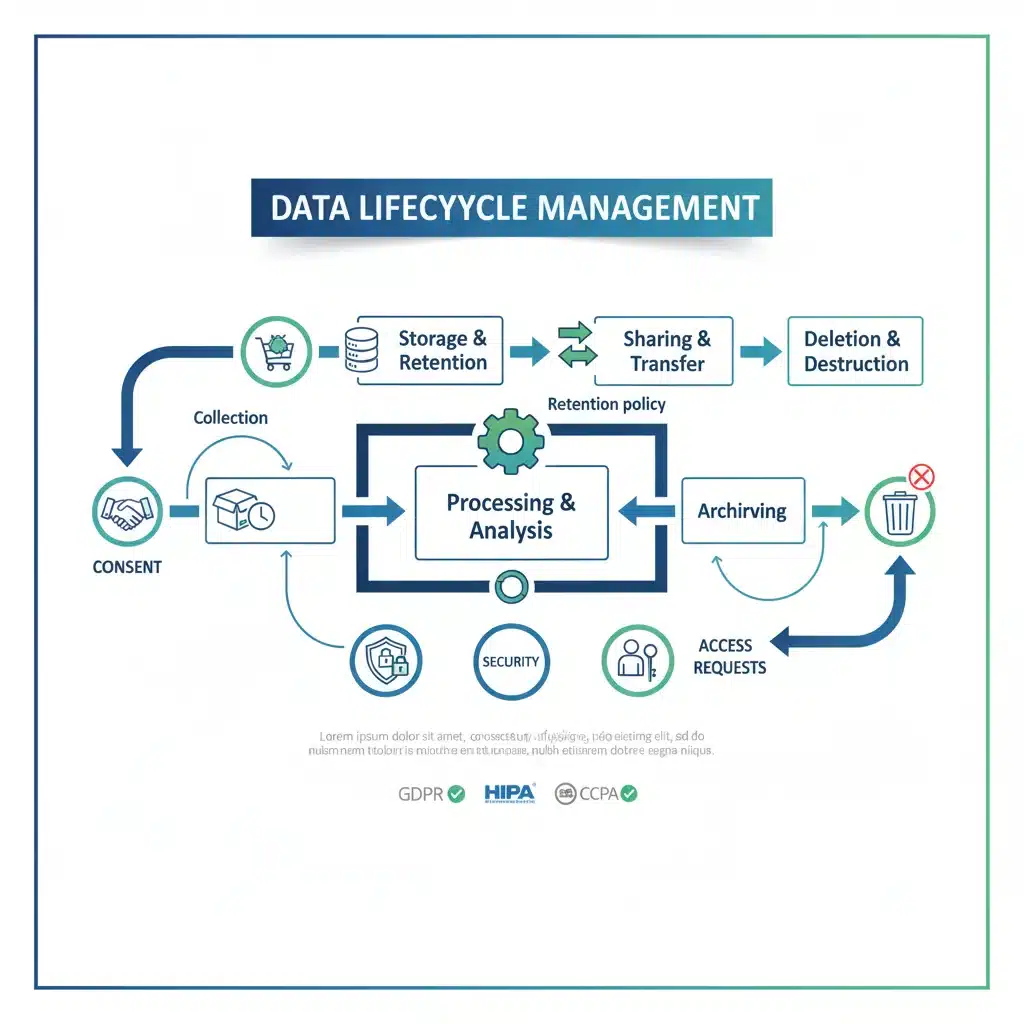
- How long is it retained? Establish clear data retention policies.
- How is it secured? Encryption, access controls, etc.
- Is it shared with third parties? If so, which ones and for what purpose?
- How is it disposed of? Secure deletion processes.
Data Flow Mapping
Once you have inventoried your data, create data flow maps. These visual representations illustrate how personal data moves through your organization and with third parties. Data flow maps help identify potential vulnerabilities, compliance gaps, and areas where data privacy principles are not adequately applied. This exercise is critical for understanding your data ecosystem and demonstrating accountability to regulators.
Step 2: Review and Update Privacy Policies and Notices
Transparency is a cornerstone of modern US Data Privacy regulations. Your privacy policies and notices must accurately reflect your data handling practices and clearly inform consumers of their rights.
Ensuring Clarity and Accessibility
Your privacy policy should be:
- Clear and Concise: Avoid legal jargon and use plain language that is easily understood by the average consumer.
- Accessible: Prominently display your privacy policy on your website and other relevant platforms.
- Comprehensive: Detail what data you collect, why you collect it, how you use it, who you share it with, and how consumers can exercise their rights.
- Up-to-Date: Regularly review and update your policy to reflect any changes in your data practices or regulatory requirements.
Specific Disclosure Requirements
Many US Data Privacy laws mandate specific disclosures. These often include:
- Categories of personal information collected.
- Sources from which personal information is collected.
- Business or commercial purpose for collecting or selling personal information.
- Categories of third parties with whom personal information is shared.
- A description of consumer rights and how to exercise them.
- A “Do Not Sell My Personal Information” link (where applicable).
Ensure your privacy notices are tailored to the specific requirements of the state laws that apply to your business.
Step 3: Implement Robust Data Subject Rights Mechanisms
A central theme of the new US Data Privacy regulations is empowering consumers with greater control over their personal data. Businesses must establish efficient and verifiable mechanisms for individuals to exercise their data subject rights.
Handling Access, Deletion, and Correction Requests
Develop clear procedures and dedicated channels for consumers to submit requests related to their data. This typically includes:
- Request Portals or Forms: Easy-to-use online forms or dedicated email addresses.
- Identity Verification: Implement robust, yet user-friendly, methods to verify the identity of the person making the request to prevent unauthorized access.
- Response Timelines: Adhere to the specific response timelines mandated by each applicable state law (e.g., 45 days, with a possible extension).
- Record Keeping: Maintain detailed records of all requests received, actions taken, and communications with the data subject.
Managing Opt-Outs for Sale or Sharing of Data
For businesses that sell or share personal data, providing a clear and conspicuous “Do Not Sell or Share My Personal Information” link on your website is often a legal requirement. This mechanism must be functional and effectively halt the sale or sharing of data upon request. Consider implementing Global Privacy Control (GPC) signals as a recognized method for consumers to express their opt-out preferences.
Step 4: Enhance Data Security Measures
Data privacy and data security are inextricably linked. While privacy focuses on the rights of individuals regarding their data, security focuses on protecting that data from unauthorized access, use, disclosure, disruption, modification, or destruction. Strong security measures are a fundamental requirement of all US Data Privacy laws.
Implementing Technical and Organizational Safeguards
Review and strengthen your existing data security practices. This includes:
- Encryption: Encrypt personal data at rest and in transit.
- Access Controls: Implement strict access controls based on the principle of least privilege.
- Multi-Factor Authentication (MFA): Enforce MFA for all systems containing personal data.
- Regular Security Audits: Conduct frequent vulnerability assessments and penetration testing.
- Incident Response Plan: Develop and regularly test a robust data breach incident response plan.
- Employee Training: Train all employees on data security best practices and their role in protecting personal data.
Vendor and Third-Party Risk Management
Your responsibility for US Data Privacy extends to the vendors and third parties with whom you share data. Conduct due diligence on all third-party service providers to ensure they meet your security and privacy standards. Implement data processing agreements (DPAs) or similar contracts that clearly define their obligations regarding data protection, security, and compliance with applicable privacy laws.
Step 5: Develop and Implement Internal Policies and Training
Compliance with US Data Privacy regulations requires a holistic approach that permeates your entire organization. Developing clear internal policies and providing comprehensive employee training are essential components.
Internal Privacy Policies and Procedures
Beyond your external privacy policy, create internal policies that guide your employees on how to handle personal data in accordance with legal requirements. These policies should cover:
- Data Collection Guidelines: What data can be collected, and under what circumstances.
- Data Usage Policies: How personal data can be used internally.
- Data Retention and Disposal Policies: How long data should be kept and how it should be securely deleted.
- Data Breach Protocol: Steps to take in the event of a data breach.
- Data Subject Request Handling: Procedures for processing consumer requests.
- Third-Party Data Sharing Guidelines: Rules for sharing data with vendors and partners.
Ensure these policies are easily accessible to all employees and regularly reviewed and updated.
Mandatory Employee Training
Human error is a significant factor in data breaches and privacy violations. Regular and mandatory training for all employees who handle personal data is critical. Training should cover:
- The importance of US Data Privacy and its impact on the business and consumers.
- Overview of applicable privacy laws and regulations.
- Specific internal policies and procedures related to data handling.
- How to identify and report potential data privacy incidents.
- Best practices for data security (e.g., strong passwords, phishing awareness).
Tailor training to different roles and responsibilities within the organization, focusing on the data relevant to each group.
Step 6: Conduct Regular Privacy Impact Assessments (PIAs)
Many US Data Privacy laws, particularly those influenced by GDPR principles, require or recommend conducting Privacy Impact Assessments (PIAs) or Data Protection Impact Assessments (DPIAs). A PIA is a systematic process for identifying and mitigating privacy risks associated with new projects, systems, or processes that involve the collection, use, or disclosure of personal data.
When to Conduct a PIA
PIAs should be conducted:
- Before launching new products or services that involve personal data.
- When implementing new technologies that process personal data.
- Before significant changes to existing data processing activities.
- When engaging new third-party vendors who will process personal data.
The PIA Process
A typical PIA involves:
- Description of the project/process: What personal data will be involved, and for what purpose?
- Identification of data flows: How data will be collected, used, stored, and shared.
- Assessment of privacy risks: Potential negative impacts on individuals’ privacy.
- Identification of mitigation strategies: Steps to reduce or eliminate identified risks.
- Documentation and approval: Recording the assessment and obtaining necessary approvals.
By integrating PIAs into your project lifecycle, you can proactively address privacy concerns and embed “privacy by design” principles into your operations.
Step 7: Appoint a Data Privacy Officer (DPO) or Designate a Privacy Lead
While not explicitly mandated by all US Data Privacy laws, appointing a dedicated individual or team to oversee privacy compliance is a best practice and often a practical necessity, especially for larger organizations or those handling sensitive data.
Roles and Responsibilities of a Privacy Lead
A Data Privacy Officer (DPO) or a designated privacy lead typically has responsibilities that include:
- Monitoring internal compliance with privacy laws and policies.
- Advising on data protection impact assessments.
- Acting as a point of contact for data subjects and supervisory authorities.
- Conducting and overseeing privacy training.
- Managing data subject requests and inquiries.
- Staying updated on evolving privacy regulations.
This role serves as a central hub for all privacy-related matters, ensuring consistency and accountability across the organization.
Step 8: Establish Data Governance Frameworks
Effective US Data Privacy compliance requires a robust data governance framework. This framework defines the roles, responsibilities, policies, and processes for managing and protecting data throughout its lifecycle.
Key Components of Data Governance
A strong data governance framework includes:
- Data Ownership: Clearly define who is responsible for specific datasets.
- Data Quality Standards: Ensure the accuracy, completeness, and consistency of data.
- Data Classification: Categorize data based on its sensitivity and regulatory requirements.
- Data Retention Policies: Establish clear rules for how long different types of data are kept.
- Audit Trails: Maintain records of data access and modifications for accountability.
By implementing a comprehensive data governance framework, businesses can ensure that data is managed responsibly and in compliance with privacy regulations.
Step 9: Plan for Ongoing Monitoring and Adaptation
The US Data Privacy landscape is dynamic. Compliance is not a one-time event but an ongoing process that requires continuous monitoring and adaptation.
Regular Compliance Audits
Conduct regular internal and external audits to assess your compliance posture. These audits should review:
- Adherence to internal policies and procedures.
- Effectiveness of data subject request mechanisms.
- Security controls and incident response capabilities.
- Compliance with applicable state and potential federal laws.
Identify any gaps or areas for improvement and implement corrective actions promptly.
Staying Informed on Regulatory Changes
Actively monitor legislative developments at both the state and federal levels. Subscribe to industry newsletters, consult with legal experts, and participate in privacy-focused associations to stay abreast of new laws, amendments, and regulatory guidance. Proactive monitoring allows your business to anticipate changes and adapt its compliance strategy before deadlines hit.

The Business Benefits of Proactive US Data Privacy Compliance
While the focus on US Data Privacy compliance often stems from avoiding penalties, the benefits extend far beyond mere legal adherence. Proactive compliance can be a significant competitive advantage.
Building and Maintaining Consumer Trust
In an era of increasing data breaches and privacy concerns, consumers are more aware than ever of how their personal information is handled. Businesses that demonstrate a strong commitment to data privacy can build greater trust and loyalty with their customers. This trust can translate into stronger brand reputation, increased customer retention, and a willingness of consumers to share data when they feel confident it will be protected.
Enhanced Brand Reputation and Market Competitiveness
A reputation for robust US Data Privacy practices can differentiate your business in the marketplace. It signals to partners, investors, and customers that your organization is responsible and forward-thinking. Conversely, privacy incidents or non-compliance can severely damage brand reputation, leading to customer churn and financial losses.
Operational Efficiencies and Reduced Risk
Implementing strong data governance and privacy frameworks can lead to greater operational efficiencies. A clear understanding of your data assets, their purpose, and their lifecycle reduces data sprawl, improves data quality, and streamlines data management processes. Moreover, proactive compliance significantly reduces the risk of costly data breaches, regulatory fines, and legal challenges.
Conclusion: A Future-Proof Approach to US Data Privacy
The journey to full US Data Privacy compliance by March 2026 is multifaceted and requires a strategic, organized approach. By following these steps – from data inventory and policy updates to robust security and ongoing monitoring – your business can not only meet its legal obligations but also transform privacy into a core business value. Embracing data privacy as a fundamental aspect of your operations will not only protect your organization from risks but also enhance customer trust, strengthen your brand, and position you for long-term success in an increasingly data-conscious world. Start preparing today to navigate the future of data privacy with confidence and competence.