Advanced Robotics in US Manufacturing: 20% Efficiency Gain in 12 Months
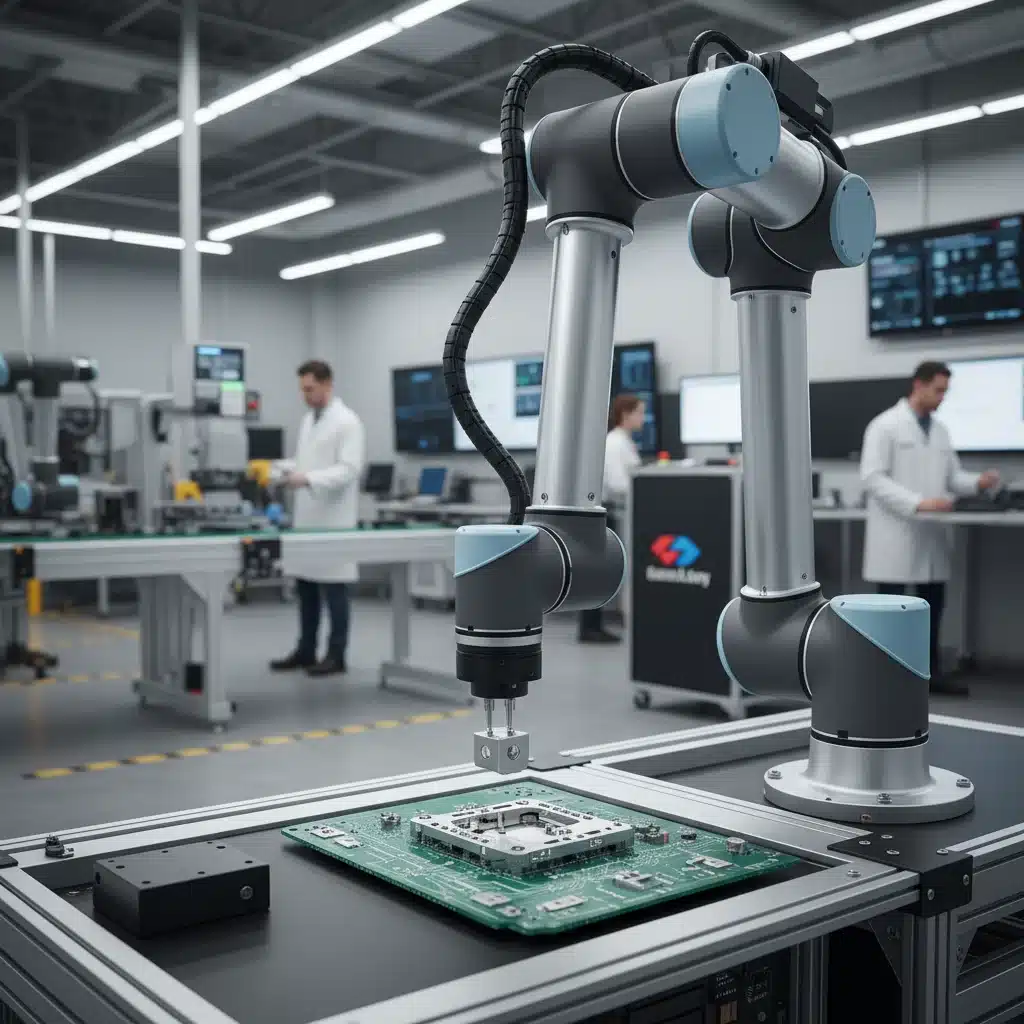
The landscape of US manufacturing is undergoing a profound transformation, driven by relentless global competition, evolving consumer demands, and the imperative for greater operational efficiency. In this dynamic environment, advanced robotics has emerged not just as an innovative tool, but as a critical strategic imperative. Businesses are no longer asking if they should adopt robotics, but rather, how quickly and effectively they can integrate these technologies to gain a competitive edge. This article delves into the actionable strategies and practical considerations for US manufacturing companies to achieve a remarkable 20% efficiency gain within a mere 12 months through the strategic deployment of advanced robotics. We’ll explore the ‘why,’ the ‘how,’ and the ‘what’ of this transformative journey, providing a roadmap for sustainable growth and enhanced productivity.
The Unstoppable March of Robotics in US Manufacturing
For decades, robotics has been synonymous with large-scale industrial operations, primarily in sectors like automotive. However, recent advancements in artificial intelligence, machine learning, sensor technology, and collaborative robotics (cobots) have democratized access to these powerful tools. Today, robotics in US manufacturing is no longer the exclusive domain of multinational corporations; small and medium-sized enterprises (SMEs) are also leveraging these innovations to optimize their production lines, improve quality, and address labor shortages. The sheer versatility of modern robots allows them to perform a wide array of tasks, from repetitive assembly and intricate welding to precise material handling and rigorous quality inspection, often surpassing human capabilities in speed, accuracy, and consistency.
Why a 20% Efficiency Gain is Achievable and Crucial
A 20% efficiency gain within 12 months might seem ambitious, but it is entirely attainable with a well-planned and executed robotics strategy. This level of improvement is not merely about incremental changes; it represents a significant leap in productivity that can redefine a company’s market position. The benefits extend far beyond direct labor cost reduction. Enhanced efficiency translates to faster production cycles, reduced waste, improved product quality, greater manufacturing flexibility, and ultimately, increased profitability. In an era where supply chain resilience and rapid market responsiveness are paramount, achieving such gains is not just a desirable outcome but a strategic necessity for US manufacturers aiming to thrive.
Phase 1: Strategic Assessment and Planning (Months 1-3)
The journey to a 20% efficiency gain begins with a meticulous assessment and strategic planning phase. Rushing into robotics without a clear understanding of your current state and desired future state is a recipe for costly mistakes and suboptimal outcomes.
Identifying Key Areas for Robotic Intervention
The first step is a comprehensive audit of your existing manufacturing processes. This involves identifying bottlenecks, repetitive tasks, hazardous operations, areas with high error rates, and processes that consume significant manual labor or time. Look for:
- Repetitive and Tedious Tasks: These are prime candidates for automation, as robots excel at consistent, high-volume, and repetitive work without fatigue.
- Hazardous Environments: Welding, painting, handling heavy loads, or working with dangerous chemicals are tasks where robots can significantly improve worker safety.
- High-Precision Requirements: Robots offer unparalleled accuracy and repeatability, crucial for intricate assembly or quality control.
- Bottlenecks in Production: Identify where your production line slows down. Robotics can often alleviate these choke points.
- Areas with High Labor Turnover or Shortages: Automation can provide a stable solution to workforce challenges.
Engage your floor-level employees in this process. They possess invaluable insights into daily operations and can pinpoint areas where robotics would have the most immediate and impactful benefit. Their involvement also fosters buy-in and reduces resistance to change.
Defining Clear Objectives and KPIs
Once potential areas are identified, establish clear, measurable, achievable, relevant, and time-bound (SMART) objectives. Your overarching goal is a 20% efficiency gain, but break this down into specific KPIs for each robotic application. Examples include:
- Reduction in cycle time for a specific process by X%.
- Increase in throughput by Y units per hour.
- Decrease in rework or scrap rates by Z%.
- Improvement in worker safety metrics (e.g., reduction in incidents).
- Reduction in energy consumption for specific tasks.
These KPIs will serve as your benchmarks for success and allow you to track progress throughout the 12-month period.
Feasibility Studies and Technology Selection
With objectives in hand, conduct thorough feasibility studies. This involves researching available robotic technologies that best fit your needs. Consider:
- Types of Robots: Industrial robots (for heavy-duty, high-speed tasks), collaborative robots (for human-robot interaction), mobile robots (AGVs, AMRs for logistics).
- End-of-Arm Tooling (EOAT): Grippers, vacuum cups, welding torches, vision systems – the right EOAT is crucial for task execution.
- Software and Integration: How easily can the robot integrate with existing PLCs, ERP systems, and other factory automation?
- Scalability: Can the chosen solution be scaled up or down as production demands change?
Engage with reputable robotics integrators and vendors. Their expertise can be invaluable in selecting the right technology, designing the robotic cell, and ensuring seamless integration. Don’t underestimate the importance of simulation software during this phase to model potential layouts and predict performance.
Phase 2: Implementation and Integration (Months 4-9)
This is where the rubber meets the road. Successful implementation requires careful project management, technical expertise, and a focus on safety and training.
Designing the Robotic Cell and Workflow Integration
The design of the robotic cell is critical. It must be optimized for efficiency, safety, and future flexibility. Key considerations include:
- Layout and Footprint: Maximize space utilization while ensuring proper clearances for robot movement and human interaction (if applicable).
- Peripheral Equipment: Integration with conveyors, feeders, sensors, and safety interlocks.
- Safety Measures: Comprehensive risk assessments, safety guarding, light curtains, emergency stops, and adherence to industry standards (e.g., ISO 10218, ANSI/RIA R15.06).
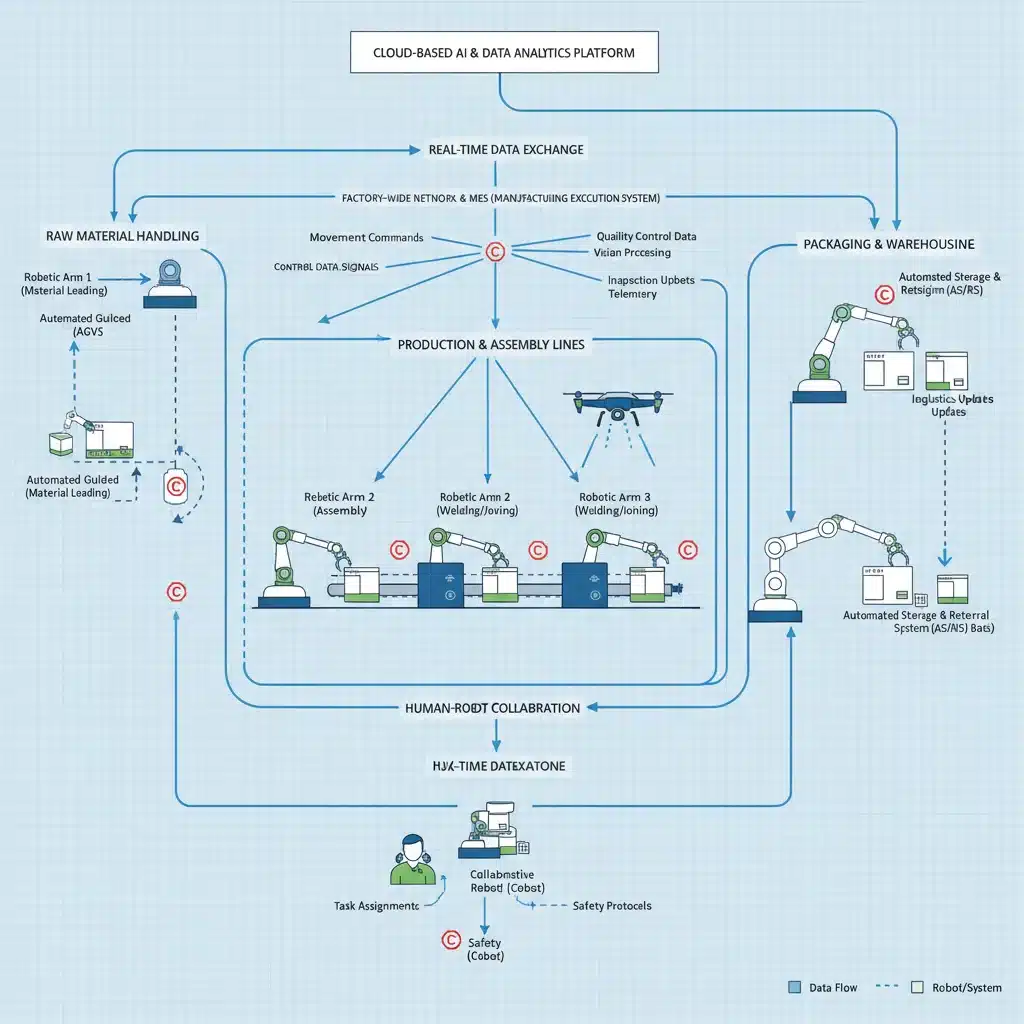
- Data Connectivity: Ensuring the robot can communicate with other machines and the central control system for real-time monitoring and data collection.
Work closely with your chosen integrator to finalize the design. Detailed engineering drawings and simulations are essential to prevent costly rework during installation.
Installation, Programming, and Commissioning
Once the design is approved, the physical installation begins. This involves:
- Physical Installation: Mounting the robot, installing EOAT, and setting up peripheral equipment.
- Electrical and Mechanical Integration: Connecting power, control signals, and ensuring mechanical alignment.
- Programming: Developing the robot’s motion paths, logic, and interaction sequences. This often involves teach pendants, offline programming software, or even AI-driven programming tools for complex tasks.
- Commissioning and Testing: Rigorous testing of the robotic cell under various operating conditions to ensure it meets performance specifications and safety requirements. This includes dry runs, small batch production, and stress testing.
Workforce Training and Skill Development
The introduction of robotics does not necessarily mean job displacement; it often means job evolution. Investing in workforce training is crucial for successful integration and long-term efficiency. Training should cover:
- Operator Training: How to safely operate and monitor the robotic system, basic troubleshooting, and loading/unloading tasks.
- Maintenance Training: For technicians, covering preventive maintenance, diagnostics, and repair of robotic components.
- Programming Training: For engineers and advanced technicians who will be responsible for modifying programs or developing new applications.
- Safety Protocols: Ensuring all personnel working near robots understand and adhere to strict safety guidelines.
A well-trained workforce is more adaptable, less resistant to change, and better equipped to maximize the benefits of robotics in US manufacturing.
Phase 3: Optimization and Scaling (Months 10-12)
After initial implementation, the focus shifts to fine-tuning the robotic systems, measuring performance against KPIs, and exploring opportunities for further expansion.
Performance Monitoring and Data Analytics
Robust data collection and analytics are fundamental to achieving and sustaining a 20% efficiency gain. Implement systems to continuously monitor:
- Throughput and Cycle Times: Track real-time production rates and compare them against manual processes and initial targets.
- Quality Metrics: Monitor defect rates, rework, and scrap to ensure robotics are improving product quality.
- Uptime and Downtime: Analyze robot availability and identify common causes of downtime to schedule preventive maintenance effectively.
- Energy Consumption: Track energy usage to identify potential savings.
- Cost Savings: Quantify reductions in labor costs, material waste, and other operational expenses.
Leverage dashboards and visualization tools to make data accessible and actionable. This continuous feedback loop allows for rapid identification of issues and opportunities for optimization.
Continuous Improvement and Iteration
Robotics implementation is not a one-time event; it’s an ongoing process of continuous improvement. Based on performance data, look for ways to:
- Optimize Robot Paths and Speeds: Fine-tune programming for maximum efficiency without compromising quality or safety.
- Improve Material Flow: Enhance the upstream and downstream processes feeding the robotic cell to prevent starvation or bottlenecks.
- Refine End-of-Arm Tooling: Experiment with different grippers or sensors to improve task performance.
- Implement Predictive Maintenance: Use data to anticipate equipment failures and schedule maintenance proactively, minimizing unplanned downtime.
Encourage a culture of innovation and problem-solving among your team. Regular review meetings with operators, engineers, and management can uncover valuable insights for further optimization.
Calculating and Demonstrating ROI
By the end of the 12-month period, you should be able to clearly demonstrate the return on investment (ROI) for your robotics initiatives. This goes beyond just the 20% efficiency gain and includes:
- Direct Cost Savings: Reduced labor costs (through redeployment, not necessarily layoffs), lower material waste, reduced energy consumption.
- Indirect Benefits: Improved product quality, increased production capacity, enhanced worker safety, greater manufacturing flexibility, faster time-to-market, and improved employee morale (by eliminating dangerous or tedious tasks).
- Competitive Advantage: The ability to produce higher quality goods at a lower cost, positioning your company favorably in the market.
Quantify these benefits in financial terms to build a strong business case for future robotics investments and to celebrate the success of your initial endeavors.
Key Technologies Driving Robotics in US Manufacturing Efficiency
Understanding the specific technologies that enable these efficiency gains is crucial for strategic implementation. Here are some of the most impactful:
Collaborative Robots (Cobots)
Cobots are designed to work safely alongside human operators without requiring extensive safety barriers in many applications. Their ease of programming, flexibility, and relatively lower cost make them ideal for SMEs and tasks requiring human-robot interaction. Cobots excel at:
- Assembly Assistance: Performing repetitive tasks while humans handle more complex or cognitive parts of the assembly.
- Machine Tending: Loading and unloading machines, freeing human operators for supervisory roles or quality control.
- Quality Inspection: Using integrated vision systems to perform consistent and accurate inspections.
- Packaging and Palletizing: Automating end-of-line processes.
The ability of cobots to adapt to changing production needs and their inherent safety features significantly contribute to operational flexibility and efficiency.
Artificial Intelligence (AI) and Machine Learning (ML)
AI and ML are the brains behind advanced robotics, enabling robots to learn, adapt, and make intelligent decisions. Their applications include:
- Predictive Maintenance: AI algorithms analyze sensor data to predict when robot components might fail, allowing for proactive maintenance and minimizing downtime.
- Vision Systems: AI-powered vision systems enable robots to recognize objects, inspect for defects, and guide precise movements with unprecedented accuracy.
- Adaptive Robotics: ML allows robots to adjust their movements and parameters based on real-time feedback, optimizing performance for variable tasks or environments.
- Process Optimization: AI can analyze vast amounts of production data to identify inefficiencies and suggest improvements in robot programming or workflow.
These cognitive abilities elevate robotics beyond simple automation, turning them into intelligent, self-optimizing systems.
Autonomous Mobile Robots (AMRs) and Automated Guided Vehicles (AGVs)
AMRs and AGVs revolutionize internal logistics and material handling. They automate the movement of raw materials, work-in-progress, and finished goods, eliminating manual transport and improving throughput.
- AGVs: Follow fixed paths (tapes, wires) and are suitable for predictable, high-volume transport routes.
- AMRs: Use sensors and AI to navigate dynamic environments, avoid obstacles, and choose optimal paths. They offer greater flexibility and adaptability.
By automating material flow, these robots reduce transit times, minimize human error in material handling, and free up personnel for higher-value activities, directly contributing to overall factory efficiency.
Integrated Vision Systems
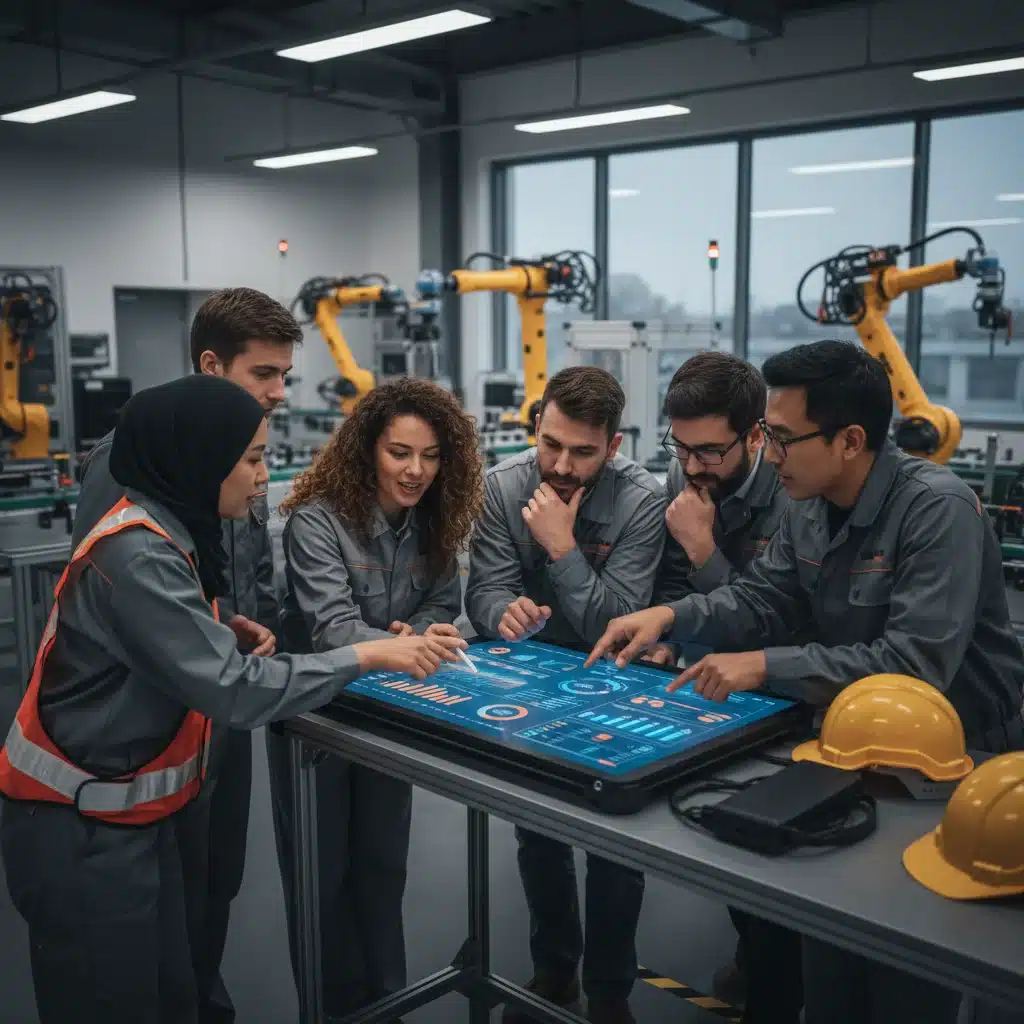
Modern robots are often equipped with sophisticated vision systems that act as their ‘eyes.’ These systems are critical for:
- Part Recognition and Location: Identifying and precisely locating parts for pick-and-place operations.
- Quality Control: Performing high-speed, accurate inspections for defects, dimensional accuracy, and surface finish.
- Guidance and Navigation: Guiding welding, painting, or assembly robots with extreme precision.
- Bin Picking: Enabling robots to pick randomly oriented parts from bins, a complex task that was once a significant hurdle for automation.
Vision systems dramatically enhance the robot’s ability to interact with its environment, making them more versatile and capable of handling complex, variable tasks that previously required human intervention.
Overcoming Challenges in Robotics Implementation
While the benefits are clear, implementing robotics in US manufacturing comes with its own set of challenges. Proactive planning can mitigate these risks.
Initial Investment Costs
Robotics can represent a significant upfront investment. However, focus on the long-term ROI. Explore government incentives, tax credits, and financing options available for manufacturing automation. A detailed cost-benefit analysis is essential to justify the investment.
Skill Gap and Workforce Adaptation
The transition to an automated factory requires new skills. Address the skill gap through comprehensive training programs, reskilling existing employees, and potentially hiring new talent with expertise in robotics and automation.
Integration Complexity
Integrating new robotic systems with legacy equipment and IT infrastructure can be complex. Partnering with experienced integrators who specialize in your industry can streamline this process and ensure compatibility.
Safety Concerns
Safety is paramount. Adhere to all relevant safety standards and conduct thorough risk assessments. Invest in robust safety features and comprehensive training for all personnel working in proximity to robots.
Maintenance and Support
Robotic systems require ongoing maintenance. Establish a strong maintenance plan, either in-house or through service agreements with your vendor, to ensure maximum uptime and longevity of your investment.
The Future of US Manufacturing with Robotics
Achieving a 20% efficiency gain within 12 months through advanced robotics in US manufacturing is not merely an aspiration; it’s a strategic imperative for manufacturers looking to remain competitive and resilient. The integration of collaborative robots, AI, AMRs, and sophisticated vision systems offers unprecedented opportunities to optimize production, enhance quality, and empower the workforce.
By following a structured approach – from strategic assessment and planning, through meticulous implementation and integration, to continuous optimization and scaling – US manufacturers can unlock significant productivity improvements. This journey is about more than just installing machines; it’s about embracing a new paradigm of manufacturing that prioritizes innovation, data-driven decision-making, and a skilled, adaptable workforce. The future of US manufacturing is undoubtedly robotic, and those who embrace this transformation proactively will be the ones to lead the charge into a more efficient, productive, and prosperous era.