Quantum Computing’s US Impact 2026: Emerging Industries & Economic Outlook
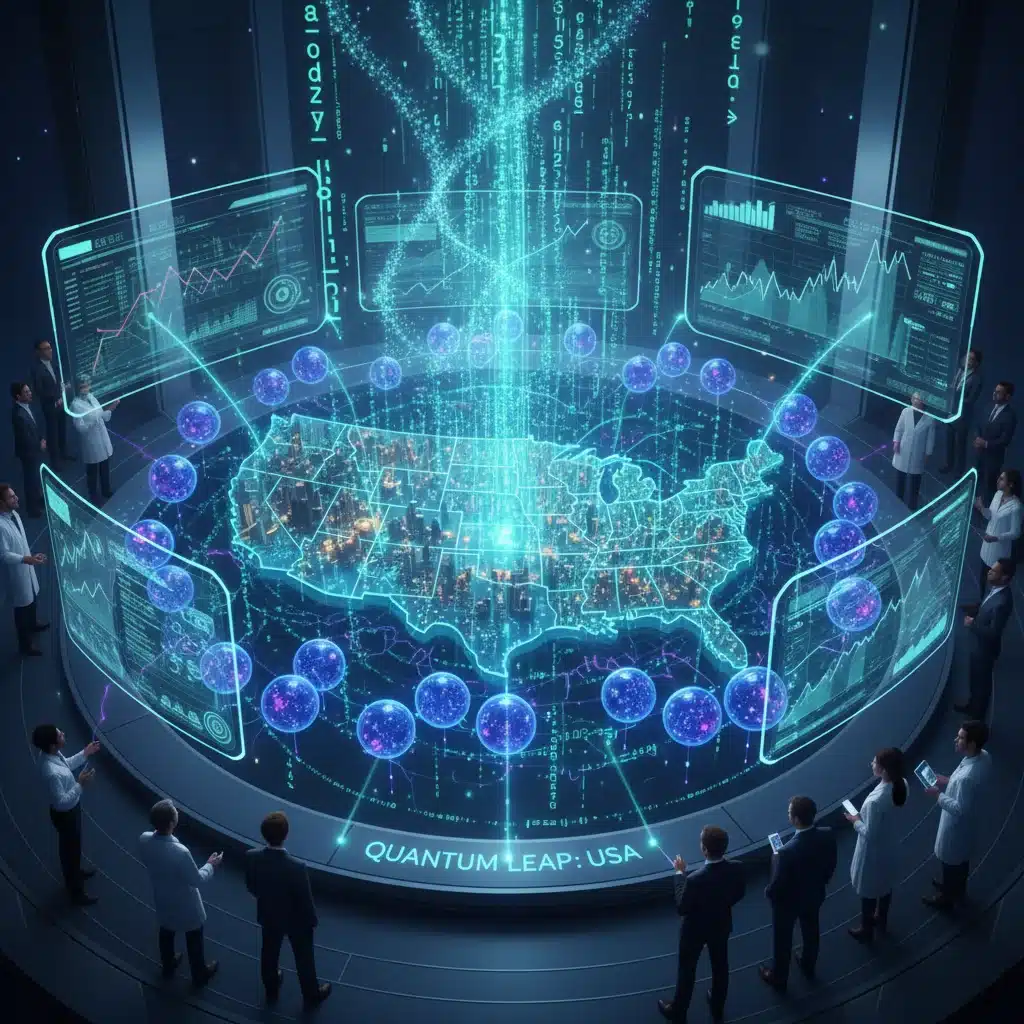
The landscape of technology is constantly evolving, but few advancements promise to reshape our world as profoundly as quantum computing. As we look towards 2026, the United States stands at a pivotal juncture, poised to leverage this revolutionary technology for unprecedented growth and innovation. The question isn’t if quantum computing will have an impact, but rather, how deep and widespread that impact will be, particularly across various US industries. This comprehensive analysis delves into the anticipated shifts, emerging sectors, and the strategic importance of quantum computing US advancements over the next few years.
Quantum computing, unlike classical computing, utilizes the principles of quantum mechanics—superposition, entanglement, and quantum tunneling—to process information in fundamentally new ways. This allows quantum computers to solve certain complex problems exponentially faster than even the most powerful supercomputers available today. While still in its nascent stages, the potential applications span an incredible range, from drug discovery and materials science to artificial intelligence and financial modeling. The US, with its robust research institutions, venture capital ecosystem, and a strong history of technological leadership, is positioned to be a global frontrunner in this quantum race.
The Quantum Computing US Landscape: A 2026 Snapshot
By 2026, the quantum computing US landscape is expected to be characterized by significant advancements in hardware, software, and practical applications. While fully fault-tolerant universal quantum computers might still be a few years away, noisy intermediate-scale quantum (NISQ) devices will have matured considerably, enabling more sophisticated problem-solving in specific domains. This period will be crucial for laying the groundwork for future, more powerful quantum systems, and for integrating quantum solutions into hybrid classical-quantum architectures.
Government Initiatives and Funding
The US government has recognized the strategic importance of quantum computing. The National Quantum Initiative Act, signed into law in 2018, significantly boosted funding for quantum information science (QIS) research and development across various federal agencies, including the National Science Foundation (NSF), the Department of Energy (DOE), and the National Institute of Standards and Technology (NIST). By 2026, we anticipate continued strong government support, with increased investment in national quantum research centers, academic partnerships, and initiatives aimed at developing a skilled quantum workforce. This sustained funding is critical for maintaining the US competitive edge in quantum computing US efforts.
Private Sector Investment and Innovation
Alongside government funding, private sector investment in quantum computing US startups and established tech giants is surging. Companies like IBM, Google, Microsoft, Amazon, and Honeywell are heavily investing in quantum hardware, software platforms, and application development. Venture capital firms are also pouring money into promising quantum startups, recognizing the long-term potential for disruptive innovation. By 2026, this private investment will have driven significant breakthroughs, leading to more stable, higher-qubit quantum processors and more accessible quantum programming tools.
Emerging Industries Transformed by Quantum Computing US
The impact of quantum computing US will not be evenly distributed; certain industries are inherently better positioned to benefit from its unique capabilities. By 2026, we expect to see tangible progress and early-stage commercialization in several key sectors.
Pharmaceuticals and Healthcare
One of the most anticipated areas of impact is in drug discovery and development. Quantum computers excel at simulating molecular interactions with unprecedented accuracy, which is currently a significant bottleneck for classical computers. By 2026, pharmaceutical companies will likely be using quantum algorithms for:
- Drug Design: More precisely modeling how potential drug candidates bind to target proteins, leading to the development of more effective and fewer side-effect-prone medications.
- Materials Science: Designing new materials with specific properties for medical devices, such as biocompatible implants or advanced diagnostic tools.
- Personalized Medicine: Analyzing vast genomic datasets to identify individual patient responses to treatments, paving the way for highly personalized therapeutic strategies.
The ability of quantum computing US to accelerate these processes could drastically reduce the time and cost associated with bringing new drugs to market, offering immense benefits to global health.
Financial Services
The financial sector, with its reliance on complex calculations and data analysis, is another prime candidate for quantum disruption. By 2026, quantum algorithms could be leveraged for:
- Portfolio Optimization: Managing investment portfolios with greater efficiency and risk assessment, considering a multitude of variables simultaneously.
- Fraud Detection: Identifying subtle patterns in financial transactions that indicate fraudulent activity, far beyond the capabilities of current AI systems.
- High-Frequency Trading: Executing trades at speeds and with insights impossible for classical systems, though regulatory implications would need careful consideration.
- Risk Management: More accurately modeling complex financial derivatives and assessing systemic risks in the market.
The competitive advantage for firms adopting quantum solutions early in the financial services sector could be substantial.
Materials Science and Manufacturing
The design and discovery of new materials are fundamental to technological progress. Quantum computing US will enable scientists to simulate material properties at the atomic and molecular level, leading to breakthroughs in:
- Battery Technology: Developing more efficient and longer-lasting batteries for electric vehicles and renewable energy storage.
- Catalyst Design: Creating novel catalysts for industrial processes, reducing energy consumption and waste.
- Superconducting Materials: Exploring new high-temperature superconductors, which could revolutionize energy transmission.
- Aerospace: Designing lighter, stronger, and more heat-resistant materials for aircraft and spacecraft.
These advancements will not only drive innovation but also contribute to sustainability goals and enhance manufacturing capabilities across the US.
Artificial Intelligence and Machine Learning
Quantum computing is expected to supercharge artificial intelligence (AI) and machine learning (ML) algorithms. While classical AI has made incredible strides, certain computational bottlenecks remain. By 2026, quantum machine learning (QML) could enhance:
- Data Analysis: Processing massive datasets more efficiently to uncover hidden patterns and insights.
- Pattern Recognition: Improving the accuracy of image recognition, natural language processing, and other AI tasks.
- Optimization Problems: Solving complex optimization problems in logistics, supply chain management, and resource allocation.
The synergy between quantum computing US and AI could lead to the development of truly intelligent systems with capabilities far beyond what we currently imagine.
Economic Implications and Job Market Shifts
The rise of quantum computing US will undoubtedly have significant economic implications, creating new industries, transforming existing ones, and shifting the job market. By 2026, while widespread job displacement is unlikely, the demand for specialized skills will rapidly increase.
Creation of New Industries and Startups
Just as the internet spurred the creation of entirely new sectors, quantum computing will foster new industries centered around quantum hardware manufacturing, quantum software development, quantum algorithm design, and quantum consulting services. This will lead to a boom in quantum startups, attracting venture capital and creating high-value jobs.
Demand for a Skilled Workforce
A critical challenge and opportunity for the quantum computing US ecosystem is the development of a skilled workforce. By 2026, there will be a growing demand for:
- Quantum Engineers: Experts in designing, building, and maintaining quantum hardware.
- Quantum Software Developers: Programmers proficient in quantum programming languages and frameworks.
- Quantum Algorithm Specialists: Researchers who can conceive and optimize algorithms for quantum computers.
- Quantum Data Scientists: Professionals who can apply quantum computing to complex data analysis problems.
Universities and vocational training programs will need to adapt rapidly to meet this demand, ensuring the US has the talent pool necessary to capitalize on quantum advancements.
Impact on GDP and Global Competitiveness
While difficult to quantify precisely, the economic impact of quantum computing US is projected to be substantial in the long term. Early adoption and leadership in this field could translate into significant GDP growth, enhanced national competitiveness, and a stronger position in the global technological race. Countries that lag in quantum development risk falling behind in critical sectors, making sustained investment and strategic planning paramount for the US.
Challenges and Roadblocks to Quantum Computing US Adoption
Despite the immense potential, several challenges need to be addressed for quantum computing US to reach its full stride by 2026 and beyond.
Technical Hurdles
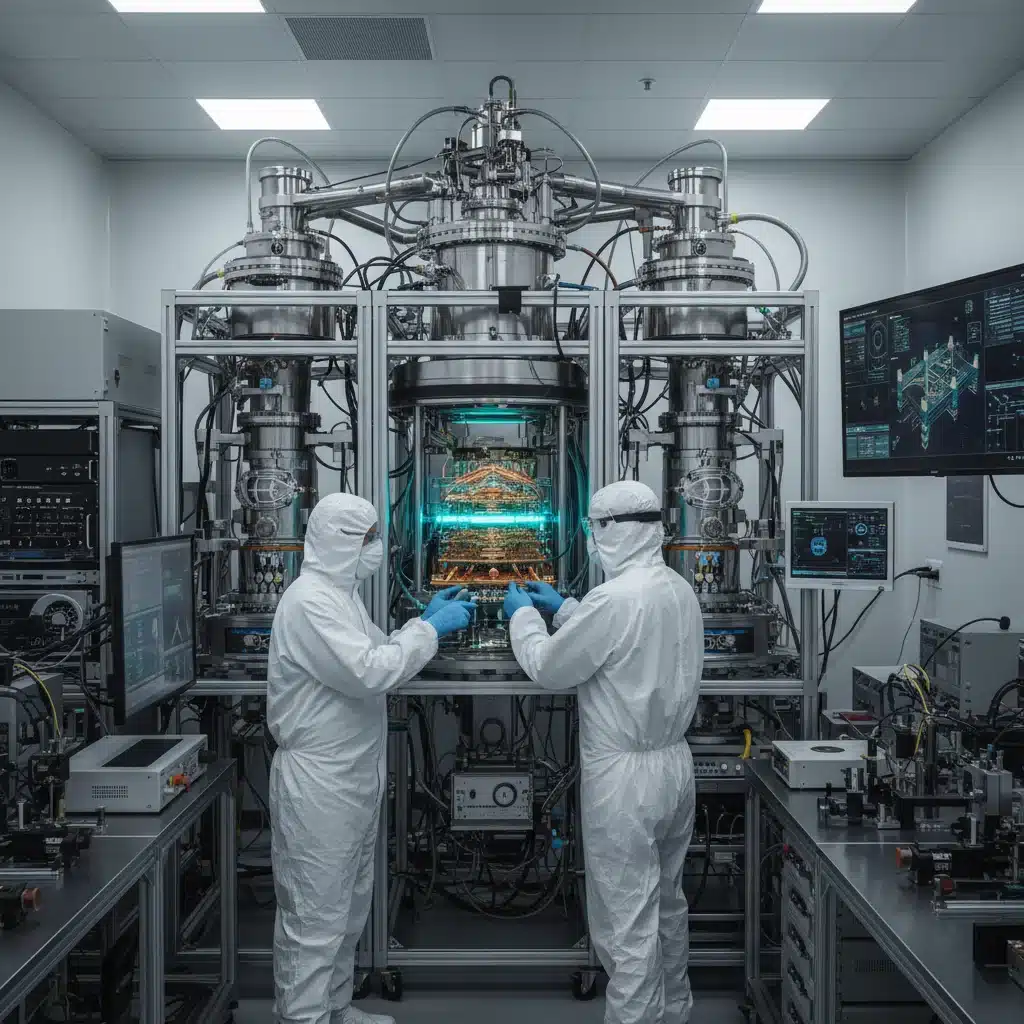
The primary challenges remain technical. Quantum computers are extremely sensitive to their environment, requiring ultra-cold temperatures and isolation from electromagnetic interference. Scaling up the number of qubits while maintaining quantum coherence and reducing error rates are ongoing hurdles. While significant progress is being made, achieving fault-tolerant quantum computation remains a complex engineering feat.
Software and Algorithm Development
Developing robust quantum software and algorithms that can effectively harness the power of quantum hardware is another critical area. The quantum programming paradigm is fundamentally different from classical computing, requiring new ways of thinking and specialized tools. By 2026, we expect to see more user-friendly quantum programming environments and a growing library of optimized algorithms, but significant work will still be needed.
Talent Gap
As mentioned, the shortage of skilled professionals is a significant concern. Bridging this talent gap requires concerted efforts from academia, industry, and government to educate and train the next generation of quantum scientists and engineers. Without a sufficient workforce, the pace of innovation and adoption of quantum computing US technologies will be constrained.
Cost and Accessibility
Currently, quantum computers are incredibly expensive to build and operate, making them largely inaccessible to most organizations. While cloud-based quantum services are making quantum resources more available, the cost barrier for dedicated hardware will remain high in the near term. By 2026, we might see more affordable access models, but widespread, on-premise quantum computing will likely still be a distant reality.
National Security and Geopolitical Implications
The strategic importance of quantum computing US extends beyond economic prosperity to national security and geopolitical influence. By 2026, nations will increasingly view quantum capabilities as a critical component of their defense and intelligence strategies.
Cryptography and Cybersecurity
One of the most widely discussed implications is quantum computing’s potential to break current encryption standards, particularly RSA and elliptic curve cryptography, which secure much of our digital communication and financial transactions. This threat necessitates the development of quantum-resistant cryptography (post-quantum cryptography). By 2026, the US will be actively transitioning to and implementing these new cryptographic standards to safeguard critical infrastructure and sensitive data from future quantum attacks.

Military and Intelligence Applications
Quantum computing US could offer significant advantages in various military and intelligence applications, including:
- Advanced Sensor Technology: Developing extremely sensitive quantum sensors for navigation, stealth detection, and surveillance.
- Logistics and Optimization: Optimizing complex military logistics, resource allocation, and strategic planning.
- Intelligence Analysis: Processing vast amounts of intelligence data to identify threats and predict geopolitical events with greater accuracy.
The race for quantum supremacy is, in part, a race for national security superiority, making quantum computing US a top priority for defense agencies.
Global Competition and Collaboration
The US is not alone in the quantum race. China, the European Union, and other nations are also investing heavily in quantum research. By 2026, this global competition will intensify, with nations vying for leadership in quantum hardware, software, and applications. While competition drives innovation, international collaboration on fundamental research and ethical guidelines will also be crucial to ensure responsible development and prevent a ‘quantum arms race.’
The Path Forward: Strategies for US Quantum Leadership
To ensure continued leadership in quantum computing US, a multi-faceted strategy is essential, focusing on research, development, talent, and ethical considerations.
Sustained Investment in R&D
Continued and even increased funding for basic and applied research across federal agencies, universities, and national labs is paramount. This includes funding for hardware development, software platforms, and the exploration of new quantum algorithms.
Fostering a Robust Quantum Ecosystem
Creating an environment conducive to innovation involves supporting quantum startups, encouraging partnerships between academia and industry, and providing access to quantum resources for researchers and developers. This includes maintaining open-source quantum programming tools and platforms.
Workforce Development and Education
Investing in education from K-12 to postgraduate levels is crucial. This means developing quantum education curricula, funding scholarships and fellowships, and retraining existing classical computer scientists for the quantum era. Building a diverse and inclusive quantum workforce will be key to long-term success.
Establishing Ethical and Regulatory Frameworks
As quantum technology matures, it will be important to consider the ethical implications of its use and to develop appropriate regulatory frameworks. This includes addressing concerns around data privacy, algorithmic bias, and the potential for misuse of quantum capabilities. Proactive engagement on these issues will ensure responsible innovation.
International Collaboration
While competition is inevitable, fostering international collaboration on pre-competitive research, standardization efforts, and the development of ethical guidelines can benefit all nations. Sharing knowledge and resources on fundamental challenges can accelerate progress for the entire quantum community.
Conclusion
The year 2026 marks a significant milestone in the journey of quantum computing US. While the technology will still be evolving, its foundational impact on emerging industries, economic growth, and national security will be undeniable. From revolutionizing drug discovery and financial modeling to bolstering national defense and cybersecurity, quantum computing promises to unlock solutions to problems currently deemed intractable. The United States, through strategic investment, robust research, and a commitment to workforce development, is well-positioned to lead this quantum revolution. The coming years will be a period of intense innovation and transformation, solidifying quantum computing’s place as one of the most critical technologies of the 21st century and profoundly shaping the future of the nation.