Edge vs Cloud Computing: 2026 US Enterprise Performance Guide
In the rapidly evolving digital landscape of 2026, US enterprises face increasingly complex decisions regarding their IT infrastructure. The choice between Edge Computing and Cloud Computing, or more accurately, the optimal integration of both, is no longer a mere technical discussion but a strategic imperative that directly impacts operational efficiency, data security, and competitive advantage. As businesses demand lower latency, enhanced data privacy, and more efficient processing of vast data volumes generated by IoT devices, AI, and real-time analytics, understanding the nuanced differences and synergistic potential of these two paradigms is paramount. This comprehensive guide delves into the core aspects of Edge Cloud Performance, offering a 2026 perspective tailored for US enterprises seeking to optimize their technological investments.
Edge Computing vs. Cloud Computing: A 2026 Comparison for US Enterprises Seeking Optimal Performance
The digital transformation journey for US enterprises in 2026 is marked by an explosion of data, demanding sophisticated and agile computing solutions. While Cloud Computing has long been the dominant force, offering unparalleled scalability and flexibility, Edge Computing has rapidly emerged as a critical complement, addressing specific needs that the centralized cloud cannot efficiently fulfill. The key lies in understanding how to leverage the strengths of each to achieve superior Edge Cloud Performance. This article will dissect their fundamental differences, explore their respective advantages and disadvantages, and provide a strategic framework for enterprises to make informed decisions for their diverse workloads.
Understanding Cloud Computing: The Centralized Powerhouse
Cloud Computing, at its essence, involves delivering on-demand computing services—including servers, storage, databases, networking, software, analytics, and intelligence—over the Internet (the “cloud”). Rather than owning their own computing infrastructure or data centers, companies can rent access to anything from applications to storage from a cloud service provider. This model has revolutionized IT, offering unprecedented scalability, cost-effectiveness, and global accessibility. Major players like Amazon Web Services (AWS), Microsoft Azure, and Google Cloud Platform continue to innovate, providing a vast array of services that cater to almost every business need.
Advantages of Cloud Computing in 2026:
- Scalability and Elasticity: Cloud platforms can instantly scale resources up or down to meet fluctuating demands, ensuring that enterprises only pay for what they use. This elasticity is crucial for businesses with unpredictable workloads or rapid growth.
- Cost Efficiency: By eliminating the need for upfront hardware purchases and ongoing maintenance, cloud computing significantly reduces capital expenditure and operating costs. The pay-as-you-go model allows for better budget management.
- Global Reach and Accessibility: Cloud data centers are distributed globally, enabling enterprises to deploy applications and services closer to their international users, improving access and reducing latency for geographically dispersed operations.
- Robust Disaster Recovery: Cloud providers offer sophisticated disaster recovery solutions, ensuring business continuity even in the face of major outages. Data replication and redundant infrastructure are standard.
- Managed Services and Innovation: Cloud providers continually invest in cutting-edge technologies, offering managed services for AI, machine learning, big data analytics, and serverless computing, allowing enterprises to innovate faster without managing complex underlying infrastructure.
- Enhanced Collaboration: Cloud-based tools and platforms facilitate seamless collaboration among distributed teams, improving productivity and fostering innovation.
Disadvantages of Cloud Computing in 2026:
- Latency Issues: For applications requiring real-time processing or critical responses, the distance between the data source and the cloud data center can introduce unacceptable latency, hindering optimal Edge Cloud Performance.
- Bandwidth Constraints and Costs: Transferring massive volumes of data to and from the cloud can be slow and expensive, especially for IoT deployments generating petabytes of information.
- Data Sovereignty and Compliance: While cloud providers offer compliance certifications, specific regulatory requirements in certain industries or regions might necessitate data being processed and stored locally, posing challenges for a purely cloud-centric approach.
- Security Concerns (Perceived and Real): Despite robust security measures, some enterprises remain hesitant about storing highly sensitive data outside their direct control, leading to ongoing debates about cloud security.
- Vendor Lock-in: Migrating applications and data between different cloud providers can be complex and costly, potentially leading to vendor lock-in.
Exploring Edge Computing: Bringing Processing Closer to the Source
Edge Computing refers to a distributed computing paradigm that brings computation and data storage closer to the sources of data. Instead of sending all data to a centralized cloud for processing, relevant computations are performed at the ‘edge’ of the network, often on the devices themselves or in nearby micro-data centers. This approach is particularly beneficial for applications requiring immediate insights, local data processing, and reduced reliance on network bandwidth.
Advantages of Edge Computing in 2026:
- Reduced Latency: By processing data closer to its origin, edge computing significantly minimizes the time delay, making it ideal for real-time applications such as autonomous vehicles, industrial automation, and augmented reality. This is a primary driver for improved Edge Cloud Performance in specific use cases.
- Lower Bandwidth Consumption: Only processed, aggregated data needs to be sent to the cloud, dramatically reducing the amount of data transmitted over the network and lowering bandwidth costs.
- Enhanced Data Privacy and Security: Sensitive data can be processed and stored locally, reducing the risk of exposure during transit to the cloud. This is critical for compliance with regulations like GDPR and CCPA.
- Improved Reliability: Edge devices can operate autonomously even when connectivity to the central cloud is intermittent or lost, ensuring continuous operation for critical systems.
- Scalability for IoT: As the number of IoT devices continues to proliferate, edge computing provides a scalable solution for managing and processing the immense volume of data generated at the source.
- Cost Savings: By reducing bandwidth usage and potentially offloading some processing from expensive cloud resources, edge computing can lead to significant cost savings in the long run.
Disadvantages of Edge Computing in 2026:
- Increased Complexity: Managing a distributed network of edge devices and micro-data centers can be more complex than managing a centralized cloud infrastructure, requiring specialized expertise.
- Higher Upfront Costs: Deploying edge infrastructure often involves initial hardware investments, which can be substantial depending on the scale.
- Security Challenges at the Edge: Securing numerous distributed edge devices, which may be physically exposed or have limited processing power for advanced security features, presents unique challenges.
- Limited Processing Power and Storage: Edge devices typically have less computational power and storage capacity compared to cloud data centers, limiting the complexity of tasks they can perform.
- Standardization Issues: The edge computing ecosystem is still evolving, leading to a lack of standardization across hardware, software, and protocols, which can complicate integration.
Edge Cloud Performance: A Synergistic Approach for US Enterprises
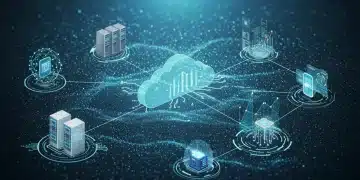
In 2026, the discussion is less about choosing one over the other and more about how to effectively integrate Edge Computing and Cloud Computing to create a hybrid infrastructure that maximizes Edge Cloud Performance. This hybrid model, often referred to as ‘Cloud-to-Edge’ or ‘Edge-Cloud continuum’, leverages the strengths of both paradigms to create a resilient, efficient, and highly responsive IT environment.
Key Considerations for Hybrid Edge Cloud Performance:
- Workload Placement: The most crucial decision involves determining which workloads are best suited for the edge and which should reside in the cloud.
- Edge Workloads: Ideal for real-time analytics, AI inference, local data aggregation, sensor data processing, low-latency control systems (e.g., smart factories, autonomous vehicles), and applications requiring offline capabilities.
- Cloud Workloads: Best for large-scale data storage, complex AI model training, long-term analytics, enterprise resource planning (ERP), customer relationship management (CRM), and applications requiring massive computational power or global access.
- Data Management Strategy: Enterprises need a robust data strategy that defines what data is processed at the edge, what is aggregated and sent to the cloud, and how data is synchronized and secured across the continuum.
- Network Infrastructure: A high-performance network is essential to connect edge devices to local gateways and then to the central cloud. 5G and future wireless technologies play a critical role in enabling this connectivity.
- Security Architecture: Implementing a unified security framework that extends from the edge to the cloud is paramount. This includes device authentication, data encryption in transit and at rest, and continuous threat monitoring across the entire distributed environment.
- Management and Orchestration: Tools and platforms are needed to manage, monitor, and orchestrate applications and resources across both edge and cloud environments seamlessly. This reduces operational complexity and ensures consistent performance.
Industry-Specific Applications and Benefits for US Enterprises
The strategic deployment of Edge and Cloud Computing brings tangible benefits across various sectors in the US:
Manufacturing and Industry 4.0:
- Predictive Maintenance: Edge devices monitor machinery in real-time, detecting anomalies and predicting failures, reducing downtime and improving operational efficiency. Data for long-term trend analysis can be sent to the cloud.
- Quality Control: AI-powered vision systems at the edge can inspect products on assembly lines, identifying defects instantly.
- Autonomous Robots: Low-latency processing at the edge enables robots to navigate and interact with their environment safely and efficiently.
Healthcare:
- Remote Patient Monitoring: Wearable devices and edge gateways collect vital patient data, processing it locally for immediate alerts and sending aggregated, anonymized data to the cloud for long-term health trend analysis.
- Medical Imaging: Edge devices can pre-process large medical images, reducing bandwidth requirements before sending them to the cloud for advanced AI diagnostics.
- Hospital Operations: Edge computing can optimize hospital logistics, asset tracking, and patient flow with real-time data processing.
Retail:
- In-Store Analytics: Edge devices process video feeds to understand customer traffic patterns, optimize store layouts, and manage inventory in real-time without sending sensitive footage to the cloud.
- Personalized Experiences: Localized data processing enables immediate, personalized recommendations and offers for shoppers.
- Inventory Management: Real-time stock levels and automated reordering driven by edge analytics improve efficiency.
Automotive and Transportation:
- Autonomous Vehicles: Edge computing is fundamental for self-driving cars, processing sensor data in milliseconds to ensure safe navigation.
- Smart Traffic Management: Edge devices at intersections analyze traffic flow and adjust signals in real-time to reduce congestion.
- Fleet Management: Edge analytics can optimize routes, monitor vehicle health, and improve logistics for transportation companies.
Security in the Edge-Cloud Continuum: A Critical Imperative
Securing the distributed Edge Cloud Performance environment is arguably one of the most critical challenges for US enterprises in 2026. The expanded attack surface, encompassing numerous edge devices, gateways, and cloud infrastructure, demands a multi-layered and holistic security strategy.
Key Security Measures:
- Zero Trust Architecture: Assume no device, user, or application is trustworthy by default, regardless of its location (edge or cloud). Implement strict identity verification and access controls.
- Endpoint Security: Robust security for all edge devices, including strong authentication, regular patching, intrusion detection, and hardware-level security features.
- Data Encryption: Encrypt data at rest on edge devices and during transit between the edge and the cloud.
- Network Segmentation: Isolate critical edge devices and applications from the broader network to limit the spread of potential breaches.
- Centralized Security Management: Implement a unified security platform that provides visibility, monitoring, and policy enforcement across the entire edge-cloud continuum.
- Compliance and Governance: Ensure that all data processing and storage, whether at the edge or in the cloud, adheres to relevant industry regulations and governmental laws (e.g., HIPAA, CMMC, state-specific privacy laws).
- Threat Intelligence and AI: Leverage AI-driven threat detection and response systems that can identify and mitigate threats across the distributed environment in real-time.
- Supply Chain Security: Vet the security practices of all hardware and software vendors involved in the edge-cloud deployment.
Cost Implications and ROI of Edge Cloud Performance
Understanding the financial implications of adopting an edge-cloud strategy is crucial for US enterprises. While cloud computing typically follows a pay-as-you-go operational expenditure (OpEx) model, edge computing often involves significant upfront capital expenditure (CapEx) for hardware and infrastructure.
Calculating ROI:
- Reduced Bandwidth Costs: A primary driver of savings is the reduction in data transferred to the cloud, especially for high-volume IoT deployments.
- Improved Operational Efficiency: Real-time insights and automation at the edge can lead to significant improvements in productivity, reduced downtime, and optimized resource utilization.
- Enhanced Customer Experience: Lower latency and personalized services can lead to increased customer satisfaction and loyalty.
- New Revenue Streams: Edge computing can enable new business models and services that were previously impossible due to latency or bandwidth constraints.
- Compliance Cost Avoidance: Processing sensitive data locally at the edge can help avoid hefty fines associated with data breaches or non-compliance.
- Cloud Cost Optimization: By offloading certain workloads to the edge, enterprises can optimize their cloud spending, reserving expensive cloud resources for tasks that truly require them.
- Maintenance and Management Costs: Factor in the costs associated with deploying, maintaining, and securing distributed edge infrastructure, which can be considerable.
A thorough total cost of ownership (TCO) analysis, comparing various deployment models (pure cloud, pure edge, hybrid edge-cloud), is essential to project the long-term financial benefits and determine the optimal strategy for Edge Cloud Performance.
The Future of Edge Cloud Performance in 2026 and Beyond
The convergence of Edge Computing and Cloud Computing is not just a trend; it’s the foundational architecture for the next generation of digital services. In 2026, we are witnessing a maturation of this continuum, driven by advancements in:
- 5G and 6G Networks: Ultra-low latency and high-bandwidth wireless connectivity will further blur the lines between edge and cloud, enabling seamless data flow and distributed processing.
- AI at the Edge: More powerful and energy-efficient AI chips will allow increasingly complex AI models to run directly on edge devices, enhancing real-time decision-making capabilities.
- Serverless Edge: The emergence of serverless functions at the edge will simplify application deployment and management, mirroring the benefits seen in cloud environments.
- Open Standards and Interoperability: Efforts towards standardization will ease the integration of diverse edge devices and platforms with cloud services, fostering a more cohesive ecosystem.
- Quantum Computing at the Edge (Early Stages): While still nascent, the potential for quantum-inspired or even true quantum computing capabilities at the edge could revolutionize data processing for highly specialized tasks.
For US enterprises, embracing this evolving landscape means continuously evaluating their IT strategy, investing in skilled personnel, and partnering with technology providers that offer integrated edge-to-cloud solutions. The agility to adapt to these technological shifts will be a key differentiator in achieving sustainable competitive advantage.
Strategic Recommendations for US Enterprises
To effectively navigate the complexities of Edge Computing and Cloud Computing and maximize Edge Cloud Performance, US enterprises should consider the following strategic recommendations:
- Conduct a Comprehensive Workload Assessment: Categorize applications and data based on their latency requirements, data volume, security needs, and regulatory compliance. This will inform optimal placement (edge vs. cloud).
- Develop a Hybrid Architecture Strategy: Design an IT infrastructure that intelligently combines the strengths of both edge and cloud. Avoid a ‘one-size-fits-all’ approach.
- Prioritize Data Governance and Security: Implement a robust, unified security framework that protects data and applications across the entire edge-cloud continuum. Ensure compliance with all relevant regulations.
- Invest in Network Infrastructure: Ensure your network can support the demands of distributed computing, including high-speed connectivity for data transfer between edge and cloud.
- Build or Acquire Edge Expertise: Develop internal capabilities or partner with specialists who understand the unique challenges and opportunities of deploying and managing edge infrastructure.
- Start Small and Scale: Begin with pilot projects to test edge computing solutions in specific use cases, gather insights, and then scale up deployments based on proven success and ROI.
- Leverage Managed Services: Consider adopting managed edge services from cloud providers or specialized vendors to reduce operational overhead and complexity.
- Focus on Automation and Orchestration: Implement tools that automate the deployment, management, and monitoring of applications and infrastructure across the edge-cloud continuum to enhance efficiency and reduce manual errors.
- Stay Agile and Adaptable: The technology landscape is constantly evolving. Maintain a flexible IT strategy that allows for continuous adaptation to new advancements and changing business requirements.
Conclusion
The journey to optimal Edge Cloud Performance for US enterprises in 2026 is a strategic one, demanding a nuanced understanding of both Edge and Cloud Computing. While the cloud offers immense scalability and flexibility, the edge provides the low-latency processing and local intelligence crucial for real-time applications and massive IoT deployments. The most successful enterprises will be those that skillfully integrate these two powerful paradigms, creating a seamless, secure, and highly efficient distributed computing environment. By carefully assessing workloads, prioritizing security, and adopting a forward-thinking approach, businesses can unlock unprecedented levels of innovation, operational efficiency, and competitive advantage in the digital age.