Future of Work: 5 Emerging Automation Trends Impacting US Job Markets by 2026 (INSIDER KNOWLEDGE)

Future of Work: 5 Emerging Automation Trends Impacting US Job Markets by 2026 (INSIDER KNOWLEDGE)
The landscape of the US job market is in a perpetual state of flux, driven by technological advancements that redefine roles, skills, and even entire industries. As we inch closer to 2026, the influence of automation is becoming increasingly pronounced, not just as a disruptive force but also as a catalyst for innovation and new opportunities. Understanding the key Automation Trends 2026 is no longer a luxury but a necessity for businesses, policymakers, and the workforce alike. This comprehensive guide delves into five critical emerging automation trends that are poised to significantly reshape the US job market, offering insider knowledge and strategic insights to navigate this evolving terrain.
The narrative surrounding automation often oscillates between fear of job displacement and excitement over increased efficiency. While it’s true that some routine tasks are being automated, the more nuanced reality reveals a co-evolution where humans and machines collaborate, leading to higher productivity, new job categories, and a greater demand for uniquely human skills. Our focus here is to provide a clear, forward-looking perspective on these transformative trends, equipping you with the knowledge to anticipate changes and proactively adapt.
1. Hyper-automation and Intelligent Process Automation (IPA)
Hyper-automation, a term popularized by Gartner, refers to the application of advanced technologies like Artificial Intelligence (AI), Machine Learning (ML), Robotic Process Automation (RPA), and process mining to automate as many business and IT processes as possible. It’s not just about automating individual tasks but about orchestrating a symphony of automated processes that can learn, adapt, and even make decisions. This is one of the most significant Automation Trends 2026 that will impact virtually every sector.
The Evolution from RPA to IPA
Traditional RPA focused on automating repetitive, rule-based tasks. However, Intelligent Process Automation (IPA) takes this a step further by integrating AI and ML capabilities. This allows automated systems to handle more complex, unstructured data, learn from past interactions, and even adapt to changing conditions without explicit reprogramming. For instance, in customer service, IPA-powered chatbots can understand nuances in customer queries, access knowledge bases, and resolve issues, freeing human agents to focus on more complex or empathetic interactions.
Impact on US Job Markets
- Routine Task Elimination: Jobs involving highly repetitive data entry, administrative support, and some aspects of accounting and finance will see significant automation.
- Augmented Roles: Many roles will become augmented, meaning humans will work alongside intelligent automation systems. For example, a financial analyst might use an IPA tool to quickly analyze vast datasets and identify trends, allowing them to focus on strategic recommendations rather than data compilation.
- New Skill Demands: There will be a surge in demand for professionals skilled in designing, deploying, maintaining, and overseeing hyper-automation systems. This includes AI engineers, data scientists, RPA developers, and process architects.
- Increased Efficiency and Productivity: Businesses adopting hyper-automation will see substantial gains in operational efficiency, leading to higher output and potentially lower costs, which can fuel economic growth and investment in other areas.
The shift towards hyper-automation means that businesses will increasingly look for efficiencies across their entire operational footprint. This isn’t just about cutting costs; it’s about unlocking new levels of agility, scalability, and innovation. Companies that embrace these advanced automation strategies will gain a significant competitive edge, while those that lag may find themselves struggling to keep pace. The onus is on the workforce to develop the skills necessary to interact with, manage, and even create these sophisticated automated systems. This trend underscores the importance of continuous learning and upskilling in the face of rapid technological change.
2. AI-Powered Robotics and Collaborative Robots (Cobots)
Robotics has been a staple in manufacturing for decades, but the integration of advanced AI is ushering in a new era of intelligent, adaptable, and collaborative robots. This synergy of AI and robotics is one of the most exciting Automation Trends 2026, expanding the reach of automation beyond traditional factory floors into diverse environments.
The Rise of Intelligent Robotics
Modern robots are no longer just programmed to perform fixed, repetitive movements. AI enables them to perceive their environment, learn from experience, make decisions, and even interact safely with humans. This intelligence allows for greater flexibility and adaptability, making robots suitable for tasks that require more nuanced handling, object recognition, and dynamic decision-making.
Collaborative Robots (Cobots)
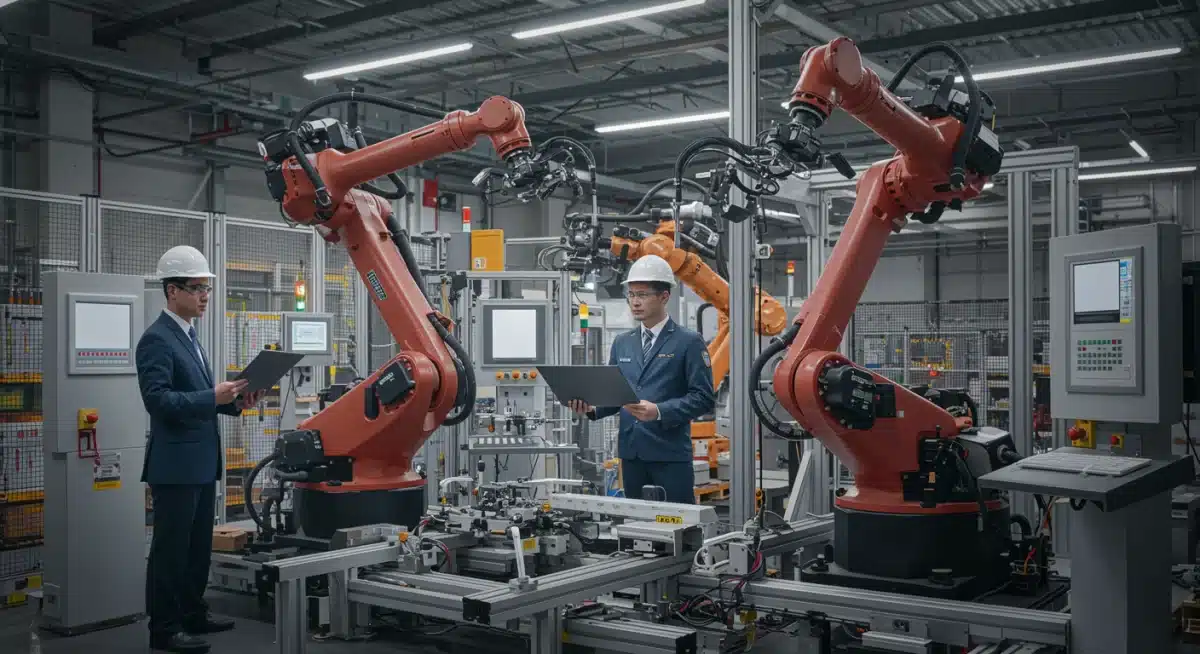
Cobots are designed to work safely alongside humans, often without safety cages, enhancing productivity by assisting with tasks that are strenuous, repetitive, or require high precision. They can take over the physical strain, allowing human workers to focus on tasks requiring cognitive skills, problem-solving, and creativity. This partnership model is proving to be highly effective in industries ranging from manufacturing and logistics to healthcare.
Impact on US Job Markets
- Manufacturing and Logistics Transformation: Expect to see more widespread deployment of AI-powered robots and cobots in factories, warehouses, and supply chains. This will lead to increased automation of assembly, packaging, material handling, and quality control tasks.
- Healthcare Applications: Robots are increasingly assisting in surgeries, dispensing medication, sterilizing equipment, and even aiding in patient care, creating new roles for robot technicians and specialized medical staff.
- New Job Categories: The demand for robotics engineers, AI specialists for robotics, robot maintenance technicians, and human-robot interaction designers will skyrocket.
- Reskilling and Upskilling: Workers in affected industries will need to reskill to manage, program, and collaborate with robots, shifting from direct labor to oversight and problem-solving roles.
The integration of AI into robotics moves beyond simple task automation to intelligent assistance and collaboration. This means a fundamental shift in how work is structured, emphasizing the augmentation of human capabilities rather than outright replacement. Companies that invest in cobots are often looking to improve worker safety, reduce ergonomic injuries, and increase overall productivity, rather than simply cutting jobs. The key for the workforce will be to embrace training in robotics and AI to remain relevant and valuable in these evolving environments.
3. Advanced Analytics and Predictive AI for Business Operations
While not automation in the traditional sense of physical robots, the application of advanced analytics and predictive AI to optimize business operations is a critical driver of the broader Automation Trends 2026. This involves using vast datasets and sophisticated algorithms to forecast outcomes, identify patterns, and automate decision-making processes across various functions.
From Descriptive to Predictive and Prescriptive Analytics
Businesses have long used descriptive analytics to understand what happened. Predictive analytics tells us what might happen, and prescriptive analytics goes further to recommend actions to achieve desired outcomes or prevent undesirable ones. AI algorithms are at the heart of this, processing massive amounts of data to uncover insights that human analysts might miss or take significantly longer to find.
Real-World Applications
- Supply Chain Optimization: AI can predict demand fluctuations, optimize inventory levels, and even foresee potential disruptions, automating adjustments to supply chain logistics.
- Personalized Marketing and Sales: Predictive AI can identify customer segments, forecast purchasing behavior, and automate personalized marketing campaigns, leading to higher conversion rates.
- Fraud Detection: In finance, AI systems can analyze transaction patterns in real-time to detect and prevent fraudulent activities, often with minimal human intervention.
- Healthcare Diagnostics: AI assists in analyzing medical images and patient data to predict disease onset or recommend personalized treatment plans.
Impact on US Job Markets
- Data-Centric Roles: There will be an exponential increase in demand for data scientists, machine learning engineers, AI architects, and business intelligence analysts.
- Automated Decision-Making: Roles primarily focused on routine decision-making based on historical data may see significant automation.
- Strategic and Interpretive Roles: Human roles will shift towards interpreting AI-generated insights, validating models, ensuring ethical AI use, and making high-level strategic decisions that require human judgment and creativity.
- Cross-functional Collaboration: Increased collaboration between technical AI teams and domain experts will be crucial to effectively leverage these tools.
The power of advanced analytics and predictive AI lies in its ability to automate intelligence, turning raw data into actionable insights and automated decisions. This trend is not about replacing human decision-makers entirely but about empowering them with superior information and automating the processes that lead to those insights. The challenge for the workforce will be to develop data literacy and analytical skills, understanding how to work with and interpret AI-generated intelligence to drive better business outcomes.
4. AI-Driven Software Development and Low-Code/No-Code Platforms
The way software is developed is undergoing a revolution, largely driven by AI and the proliferation of low-code/no-code platforms. This trend is democratizing software creation and accelerating digital transformation, making it a pivotal part of the Automation Trends 2026.
AI in Software Development Life Cycle (SDLC)
AI is increasingly being used to automate various stages of the SDLC, from generating code snippets and testing software to identifying bugs and even deploying applications. AI-powered tools can analyze code for vulnerabilities, suggest optimizations, and learn from developer patterns to enhance efficiency. This accelerates development cycles and reduces human error.
Low-Code/No-Code Platforms
These platforms allow individuals with little to no coding experience to build applications and automate workflows using visual interfaces and pre-built components. By dragging and dropping elements and configuring logic, business users can create custom solutions, bypassing the need for extensive programming knowledge. This empowers non-technical employees to automate their own processes and build departmental applications, a concept often referred to as ‘citizen development’.
Impact on US Job Markets
- Democratization of Development: More business users will be able to create applications and automate tasks, reducing the bottleneck on IT departments for simple solutions.
- Shift in Developer Roles: Professional developers will increasingly focus on complex, high-value projects, custom integrations, and the development of the underlying components and APIs that low-code/no-code platforms utilize.
- New Roles for ‘Citizen Developers’: Demand will grow for roles that bridge the gap between business needs and technical capabilities, such as ‘citizen developer trainers’ or ‘low-code platform specialists’.
- Increased Productivity: Faster application development and deployment cycles will lead to greater business agility and innovation across industries.
The rise of AI-driven software development and low-code/no-code platforms is fundamentally changing who can create and deploy technology. This means that technical skills are becoming more accessible, but also that the nature of expert development is evolving. Developers will need to move beyond mere coding to focus on architectural design, complex problem-solving, and ensuring the security and scalability of these automated systems. For the broader workforce, embracing low-code/no-code tools can be a powerful way to enhance personal productivity and contribute to digital transformation initiatives within their organizations.
5. AI-Powered Virtual Assistants and Augmented Reality (AR) in Professional Services
The final significant trend in our exploration of Automation Trends 2026 involves the increasing sophistication of AI-powered virtual assistants and the integration of Augmented Reality (AR) into professional services. These technologies are set to revolutionize how knowledge workers operate, enhancing efficiency and providing new ways to interact with information.
Evolution of Virtual Assistants
Beyond basic chatbots, AI-powered virtual assistants are becoming highly sophisticated tools capable of understanding complex queries, performing multi-step tasks, scheduling meetings, drafting emails, summarizing documents, and even assisting with research. They are moving from reactive tools to proactive collaborators, anticipating needs and offering insights.
Augmented Reality in the Workplace
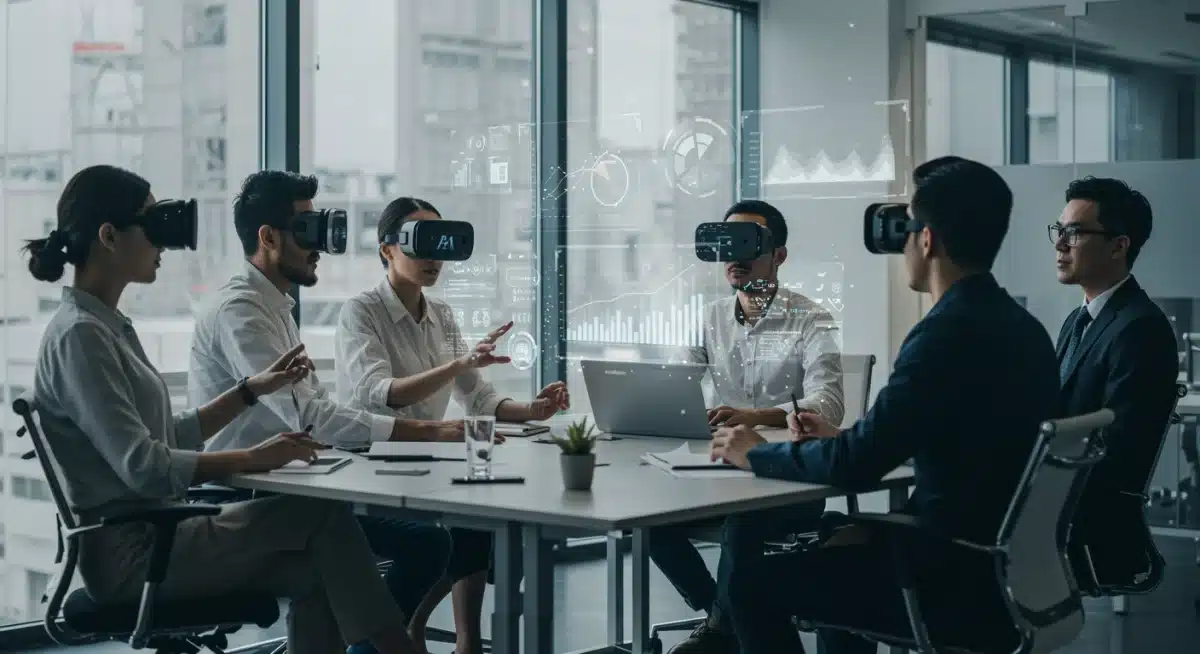
AR overlays digital information onto the real world, providing workers with contextual data and guidance without requiring them to look away from their physical environment. In professional services, this could mean lawyers reviewing cases with key legal precedents appearing over documents, architects visualizing designs in real-time on a construction site, or doctors accessing patient histories during examinations.
Impact on US Job Markets
- Enhanced Productivity for Knowledge Workers: Professionals in fields like law, finance, healthcare, and consulting will become significantly more efficient, as AI handles routine information retrieval and AR provides immediate, relevant data.
- Shift in Support Roles: Traditional administrative support roles may diminish as AI virtual assistants take over more tasks. However, new roles focused on training, customizing, and managing these AI assistants will emerge.
- New Avenues for Collaboration and Training: AR can facilitate remote collaboration and provide immersive training experiences, changing how teams work together and how employees acquire new skills.
- Demand for AR/VR Developers and AI Trainers: There will be a growing need for specialists who can develop AR applications tailored for professional use cases and AI trainers who can refine the capabilities of virtual assistants.
The integration of AI-powered virtual assistants and AR into professional services represents a powerful augmentation of human intellect. These tools are designed to extend human capabilities, making knowledge workers more effective and efficient. Instead of replacing human judgment and creativity, they aim to free up cognitive load, allowing professionals to focus on higher-value, more complex aspects of their work. The key for individuals will be to embrace these tools as partners, learning to leverage their capabilities to enhance their own performance and adaptability.
Navigating the Future: Strategies for the US Workforce
The Automation Trends 2026 outlined above paint a picture of a dynamic and evolving job market. While concerns about job displacement are valid, a deeper look reveals that automation often creates new opportunities and transforms existing roles rather than simply eliminating them. The key to thriving in this future lies in proactive adaptation and strategic development.
Embrace Lifelong Learning and Reskilling
The most crucial strategy for the US workforce is to commit to continuous learning. Skills that were valuable a decade ago may be automated tomorrow. Focus on acquiring skills that are complementary to automation, such as:
- Digital Literacy and Tech Fluency: Understanding how to interact with and utilize automated systems, AI tools, and data analytics platforms.
- Critical Thinking and Problem-Solving: Automation can handle routine problems, but complex, unstructured challenges still require human ingenuity.
- Creativity and Innovation: The ability to generate new ideas, design solutions, and think outside the box remains a uniquely human strength.
- Emotional Intelligence and Communication: Skills like empathy, negotiation, and effective collaboration become even more valuable in a human-machine collaborative environment.
- Data Science and AI Skills: Even if not becoming a full-fledged data scientist, understanding the basics of data interpretation and AI ethics is becoming universally beneficial.
Focus on Human-Centric Roles
Roles that require significant human interaction, creativity, complex problem-solving, and emotional intelligence are generally less susceptible to automation. These include roles in healthcare, education, creative arts, strategic management, and certain customer-facing positions that demand empathy and nuanced communication.
Policy and Education Reforms
For the US to successfully navigate these automation trends, significant investments in education and workforce development programs are essential. This includes:
- Early Education Integration: Introducing computational thinking, robotics, and AI concepts at earlier stages of education.
- Accessible Upskilling Programs: Government and industry-led initiatives to provide affordable and relevant training for adults in emerging technologies.
- Flexible Labor Policies: Policies that support workers through transitions, such as portable benefits and adaptable unemployment insurance.
- Stimulating Innovation: Creating an environment that encourages research and development in AI and automation, fostering economic growth and new industries.
Conclusion: The Automated Horizon of 2026
The Automation Trends 2026 are not merely predictions; they are already in motion, reshaping industries and job functions across the United States. From hyper-automation streamlining complex processes to AI-powered robotics collaborating with humans, and intelligent analytics driving smarter decisions, the future of work is undeniably automated and augmented. While this evolution presents challenges, particularly in terms of workforce adaptation, it also unlocks unprecedented opportunities for efficiency, innovation, and the creation of entirely new economic value.
For individuals, the imperative is clear: embrace continuous learning, develop uniquely human skills, and seek out opportunities for collaboration with intelligent machines. For businesses, the call to action is to strategically integrate automation, invest in their workforce, and foster a culture of innovation. By understanding and proactively responding to these emerging trends, the US can harness the power of automation to build a more productive, prosperous, and adaptable future for its job markets and its people.