US Quantum Computing: 2026 Progress Review & Analysis

The dawn of the quantum era promises to redefine computational limits, offering solutions to problems currently intractable for even the most powerful classical supercomputers. The United States, recognizing the strategic importance of this burgeoning field, has invested heavily in various quantum computing initiatives. As we approach 2026, a critical juncture in the development timeline, it’s imperative to review the progress of these leading US Quantum Computing endeavors. This comprehensive analysis will delve into the advancements, challenges, and future prospects of three prominent initiatives, providing an expert perspective on their journey towards realizing the full potential of quantum technology.
Quantum computing, at its core, leverages the principles of quantum mechanics – superposition, entanglement, and quantum tunneling – to process information in fundamentally new ways. Unlike classical bits that represent either 0 or 1, quantum bits (qubits) can exist in multiple states simultaneously, exponentially increasing computational power. This paradigm shift holds immense promise for fields ranging from drug discovery and materials science to financial modeling and cryptography. The race to develop robust, scalable, and fault-tolerant quantum computers is global, and the US has positioned itself as a frontrunner, fostering both academic research and private sector innovation.
Our review will focus on three distinct yet interconnected approaches within the US Quantum Computing landscape: a major government-backed national lab initiative, a prominent university-led research consortium, and a leading private sector company. Each represents a unique facet of the broader US strategy, contributing diverse expertise and methodologies to the collective goal of achieving quantum supremacy and practical quantum advantage. Understanding their individual trajectories and collaborative efforts is key to appreciating the overall progress made in US Quantum Computing.
The National Quantum Initiative (NQI) and Its Flagship Labs: A 2026 Update
The National Quantum Initiative Act, signed into law in 2018, laid the groundwork for a coordinated federal effort to accelerate quantum information science and technology. Central to this initiative are several national laboratories, which serve as hubs for foundational research and infrastructure development. For this review, we will focus on the progress emanating from one of the NQI’s flagship endeavors, which by 2026, has made significant strides in specific qubit modalities and error correction research. The focus of this specific national lab has been on superconducting qubits, a technology also championed by several private companies, but with a unique emphasis on fundamental physics and long-term fault tolerance.
By 2026, this national lab has successfully demonstrated a 128-qubit superconducting quantum processor with significantly improved coherence times compared to earlier prototypes. While still operating at cryogenic temperatures, the engineering required to maintain these conditions has seen remarkable advancements, making the systems more stable and accessible for experimental use. Their research team has published groundbreaking results on suppressing crosstalk between qubits, a critical challenge in scaling up quantum processors. Furthermore, they have made substantial contributions to the theoretical and experimental implementation of quantum error correction codes, moving beyond basic syndrome measurements to more complex, multi-qubit error detection and correction protocols. This emphasis on error correction is paramount, as current quantum computers are inherently noisy, and achieving practical quantum advantage necessitates robust error mitigation strategies.
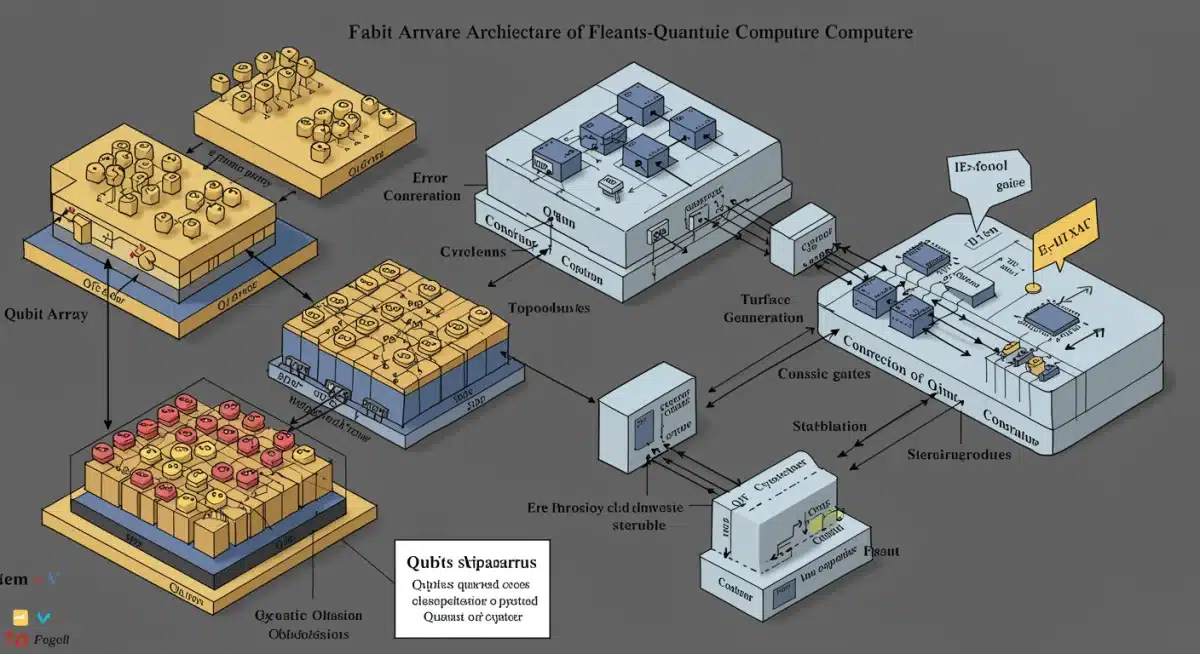
One of the key achievements by 2026 within this NQI-backed lab is the development of a modular quantum architecture. This approach aims to connect smaller, high-fidelity quantum processors into a larger, more powerful system. This modularity addresses the inherent difficulties in manufacturing large, monolithic quantum chips with perfect uniformity. They have demonstrated entanglement generation and teleportation between physically separated quantum modules, a crucial step towards building distributed quantum computing networks. This vision aligns with the long-term goal of a quantum internet, where quantum information can be securely transmitted across vast distances. The progress in this area positions the US Quantum Computing effort strongly for future scalability.
However, challenges persist. While coherence times have improved, they are still limited, particularly for complex algorithms requiring many gates. The infrastructure required to cool and control these superconducting qubits remains incredibly expensive and energy-intensive, posing questions about the widespread accessibility and sustainability of such systems. Moreover, the transition from experimental demonstrations of error correction to fully fault-tolerant quantum computation remains a monumental engineering and scientific hurdle. The lab’s 2026 roadmap indicates a focus on increasing the number of logical qubits (error-corrected qubits) and demonstrating more complex quantum algorithms on their modular platform. The long-term impact of this US Quantum Computing initiative hinges on its ability to translate fundamental research into practical, scalable quantum solutions.
University-Led Research Consortium: Pioneering New Qubit Architectures
Alongside government initiatives, university research consortia play a vital role in exploring diverse qubit modalities and pushing the boundaries of theoretical quantum science. One prominent university-led consortium, comprising several top-tier US academic institutions, has focused its efforts on developing novel qubit architectures, particularly those based on trapped ions and topological qubits. By 2026, this consortium has become a global leader in trapped-ion quantum computing, known for its high-fidelity gate operations and long coherence times.
Trapped-ion qubits, where individual atoms are suspended and controlled by electromagnetic fields, offer inherently high connectivity and excellent coherence properties. The consortium’s 2026 update reveals significant advancements in scaling these systems. They have successfully demonstrated a 64-ion quantum processor with state-of-the-art two-qubit gate fidelities exceeding 99.9%. This level of fidelity is crucial for executing deep quantum circuits and is often cited as a key advantage of trapped-ion systems over some other modalities. Furthermore, they have made breakthroughs in reconfigurable ion traps, allowing for dynamic rearrangement of qubits to optimize quantum circuit execution and mitigate errors. This flexibility is a powerful tool for developing more complex algorithms and exploring different quantum architectures, solidifying their contribution to US Quantum Computing.
Beyond trapped ions, the consortium has also made notable progress in the more speculative, yet potentially highly robust, field of topological quantum computing. While still in its early stages, their 2026 research has provided compelling experimental evidence for the existence of non-abelian anyons, the theoretical particles that would form the basis of topological qubits. These qubits are theorized to be intrinsically protected from local noise, making them ideal for fault-tolerant quantum computation. While a functional topological quantum computer remains a distant goal, the consortium’s foundational work is critical for proving the viability of this approach and securing a potential long-term advantage for US Quantum Computing.
The challenges for this consortium primarily revolve around scalability. While trapped-ion systems boast high fidelity, increasing the number of entangled ions while maintaining performance is a significant engineering feat. The consortium is actively researching photonic interconnects to link multiple ion traps, similar to the modular approach seen in superconducting systems, but tailored for ion-trap specific challenges. For topological qubits, the main hurdle is moving beyond theoretical proofs and small-scale experiments to actual qubit fabrication and manipulation. The consortium’s 2026 outlook emphasizes continued investment in both trapped-ion scalability and accelerated research into topological qubit realization, ensuring a diverse and resilient US Quantum Computing research portfolio.
Private Sector Innovation: A Leading Company’s 2026 Quantum Roadmap
The private sector is a driving force in translating foundational research into commercial applications, and in the US Quantum Computing landscape, several companies are vying for market leadership. Our focus here is on a prominent private company that, by 2026, has established itself as a leader in delivering cloud-based quantum computing services and developing full-stack quantum solutions. This company primarily utilizes superconducting transmon qubits, similar to the national lab, but with a strong emphasis on rapid iteration, user accessibility, and the development of quantum software and algorithms.
By 2026, this company has significantly expanded its quantum hardware offerings, providing access to a range of quantum processors through its cloud platform. Their flagship processor now features 100+ qubits, with improved gate fidelities and reduced error rates compared to their earlier models. Crucially, they have focused on developing a comprehensive quantum software ecosystem, including advanced compilers, development kits (SDKs), and application-specific libraries. This focus on accessibility has allowed researchers, developers, and even enterprises to experiment with quantum algorithms, fostering a growing community around US Quantum Computing applications.
A major achievement for this company in 2026 is the demonstration of ‘quantum advantage’ for a specific, albeit highly specialized, computational problem. While not yet a universal quantum computer, this demonstration showcases the potential for quantum systems to outperform classical counterparts for certain tasks. They have also made significant progress in developing quantum machine learning algorithms, showing promising results in areas like classification and optimization on their current hardware. Their business model emphasizes partnerships with industries to explore real-world applications, from optimizing logistics to simulating complex chemical reactions, thereby accelerating the commercialization of US Quantum Computing.
However, the path to widespread commercial adoption is not without obstacles. The current generation of quantum computers from this company, while powerful, is still noisy (NISQ – Noisy Intermediate-Scale Quantum) and limited in the complexity of algorithms they can reliably execute. Achieving true fault tolerance remains a long-term goal, requiring substantial advancements in qubit coherence, error correction, and system integration. Furthermore, the talent pool for quantum developers is still relatively small, and educating a broader workforce is essential for the growth of the quantum industry. The company’s 2026 strategy includes continued investment in hardware scaling and error mitigation techniques, alongside aggressive initiatives to expand its quantum software ecosystem and educational programs, ensuring the sustained growth of US Quantum Computing.
Comparative Analysis of US Quantum Computing Initiatives in 2026
When comparing these three distinct US Quantum Computing initiatives in 2026, several key observations emerge. The national lab, with its focus on fundamental research and modular superconducting architectures, is laying the groundwork for future fault-tolerant systems. Their emphasis on error correction is critical for the long-term viability of quantum computing. The university consortium, by exploring diverse qubit modalities like trapped ions and topological qubits, is diversifying the US portfolio, ensuring that promising alternative approaches are thoroughly investigated. Their high-fidelity trapped-ion systems offer a strong pathway for near-term quantum applications requiring precision. The private company, on the other hand, is excelling in making quantum computing accessible, fostering a developer ecosystem, and pushing for early commercial applications, particularly with their cloud-based superconducting processors.
Each initiative addresses different aspects of the quantum computing challenge. The national lab excels in deep scientific exploration, pushing the boundaries of physics and engineering. The university consortium acts as an incubator for novel ideas and fundamental breakthroughs, ensuring a steady stream of innovation. The private company focuses on engineering robust, user-friendly systems and identifying immediate applications, bridging the gap between research and commercialization. Together, they form a robust and multifaceted ecosystem for US Quantum Computing.
The synergy between these initiatives is also evident. Research from national labs and universities often provides the foundational knowledge and breakthroughs that private companies then leverage for product development. Conversely, the demands and challenges faced by private companies in real-world applications can inform and guide academic research priorities. This collaborative environment, though sometimes competitive, is a significant strength of the US Quantum Computing landscape.
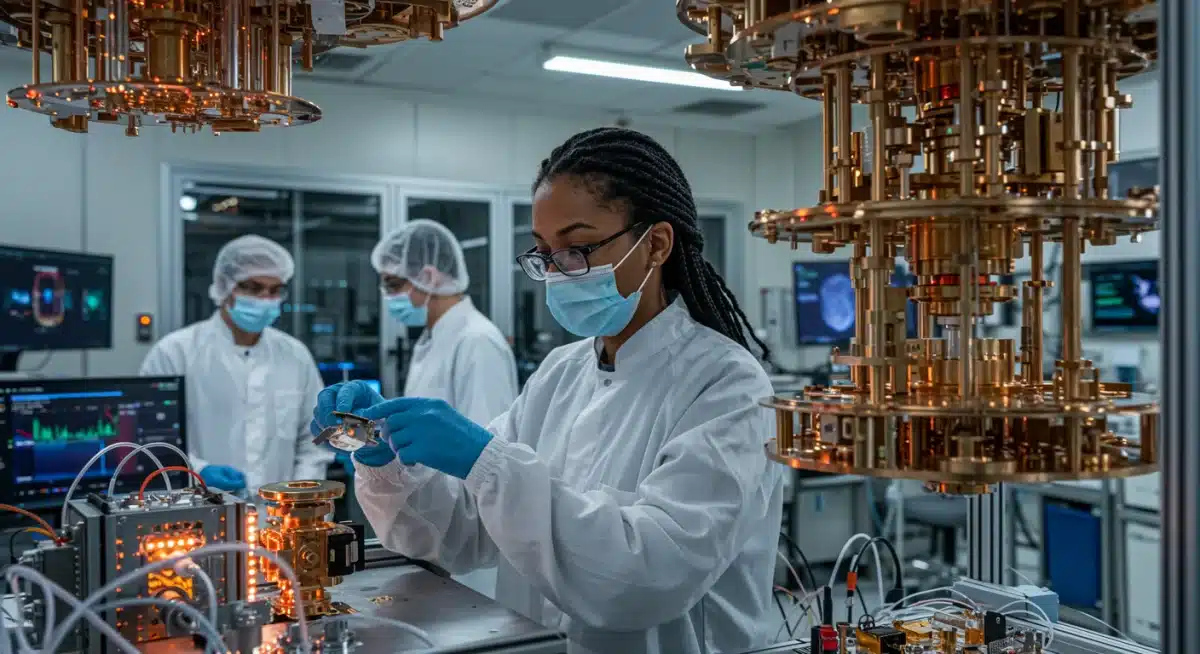
Looking ahead, the convergence of these efforts will be crucial. The national lab’s advancements in error correction, the university’s high-fidelity qubits, and the private company’s user-centric platforms will all need to integrate to deliver truly transformative quantum solutions. The US Quantum Computing strategy appears well-rounded, covering basic research, alternative technologies, and commercialization pathways, positioning the nation favorably in the global quantum race.
Challenges and Opportunities for US Quantum Computing Beyond 2026
Despite the remarkable progress observed in 2026 across these US Quantum Computing initiatives, significant challenges remain. Foremost among these is the continued pursuit of fault tolerance. While error correction research is advancing, building a fully fault-tolerant quantum computer capable of running complex algorithms without significant errors is still a monumental task. This requires not only higher qubit fidelities but also more efficient error correction codes and scalable architectures.
Another critical challenge is the ‘quantum winter’ concern – the possibility that the hype surrounding quantum computing might outpace actual technological progress, leading to a period of reduced investment. Mitigating this requires a continuous demonstration of quantum advantage for increasingly practical problems, moving beyond academic benchmarks to real-world impact. The private sector’s role in identifying and showcasing these applications will be particularly important in maintaining momentum for US Quantum Computing.
Workforce development also stands as a major opportunity and challenge. The demand for quantum engineers, physicists, computer scientists, and algorithm developers far outstrips the current supply. Investing in educational programs, from undergraduate to postdoctoral levels, and fostering interdisciplinary training are essential to building the talent pipeline necessary to sustain and accelerate US Quantum Computing advancements. Initiatives like the NQI are already addressing this, but continuous and expanded efforts are needed.
Furthermore, the ethical and societal implications of quantum computing, particularly in areas like cryptography and artificial intelligence, need careful consideration. The US Quantum Computing community must engage in proactive discussions about responsible development and deployment, ensuring that this powerful technology benefits humanity while mitigating potential risks. This includes developing quantum-safe cryptographic standards and understanding the broader societal impact of quantum-enabled AI.
On the opportunity front, the interdisciplinary nature of quantum computing opens doors for novel collaborations. The convergence of quantum hardware, software, materials science, and AI promises to unlock unforeseen applications. The continued integration of quantum computing with classical high-performance computing (hybrid quantum-classical algorithms) represents a near-term pathway to deriving practical value from current quantum systems. This hybrid approach allows quantum processors to tackle specific computationally intensive subroutines while classical computers handle the bulk of the computation, maximizing the strengths of both paradigms.
The potential for quantum computing to revolutionize industries is immense. From accelerating drug discovery by simulating molecular interactions with unprecedented accuracy to optimizing global supply chains, the economic and societal benefits are vast. The US Quantum Computing ecosystem, with its diverse strengths in national labs, academia, and private industry, is well-positioned to capitalize on these opportunities, driving innovation and maintaining a competitive edge on the global stage. The continued strategic investment and collaborative spirit will be key to unlocking these future possibilities.
Conclusion: The Future Trajectory of US Quantum Computing
The 2026 landscape of US Quantum Computing reveals a vibrant and rapidly evolving field. The national labs are pushing the frontiers of fundamental science and error correction, laying a robust foundation. University consortia are diversifying qubit modalities and exploring groundbreaking theoretical concepts, ensuring a broad and resilient research base. Private companies are accelerating commercialization, building user-friendly platforms, and demonstrating early quantum advantage for specific applications. This multi-pronged approach is a significant strength, allowing the US to pursue multiple pathways to quantum supremacy and practical quantum advantage.
While challenges such as achieving full fault tolerance, managing development costs, and expanding the skilled workforce remain, the momentum generated by these initiatives is undeniable. The strategic investments made through programs like the National Quantum Initiative Act are bearing fruit, fostering an environment of innovation and collaboration. The progress reviewed here paints a picture of a nation committed to leading the quantum revolution, with a clear vision for advancing the technology beyond 2026.
The path ahead for US Quantum Computing will undoubtedly involve continued breakthroughs, iterative improvements, and strategic partnerships. The ability to integrate the strengths of different qubit technologies, develop more sophisticated error correction techniques, and cultivate a robust quantum software and applications ecosystem will define success. As we move further into the quantum era, the collective efforts of these leading US initiatives will be instrumental in shaping a future where quantum computing transforms industries, solves grand challenges, and redefines the limits of what is computationally possible.