US Green Tech Startups: Invest Before Q4 2026 for Maximum Returns

In the rapidly evolving landscape of global economics and environmental consciousness, a critical window of opportunity has emerged for discerning investors: the US green technology startup sector. Specifically, an expert analysis indicates that the period leading up to Q4 2026 represents a time-sensitive, high-potential investment horizon. This isn’t merely a fleeting trend; it’s a confluence of policy, technological advancement, and market demand creating an unprecedented surge in value. Understanding the intricacies of this opportunity, particularly the factors driving its urgency, is paramount for anyone looking to capitalize on the next wave of economic growth and sustainable innovation. This comprehensive guide will explore why now is the moment to focus on US Green Tech Investment, the key sectors poised for explosive growth, and the strategic considerations for maximizing your returns.
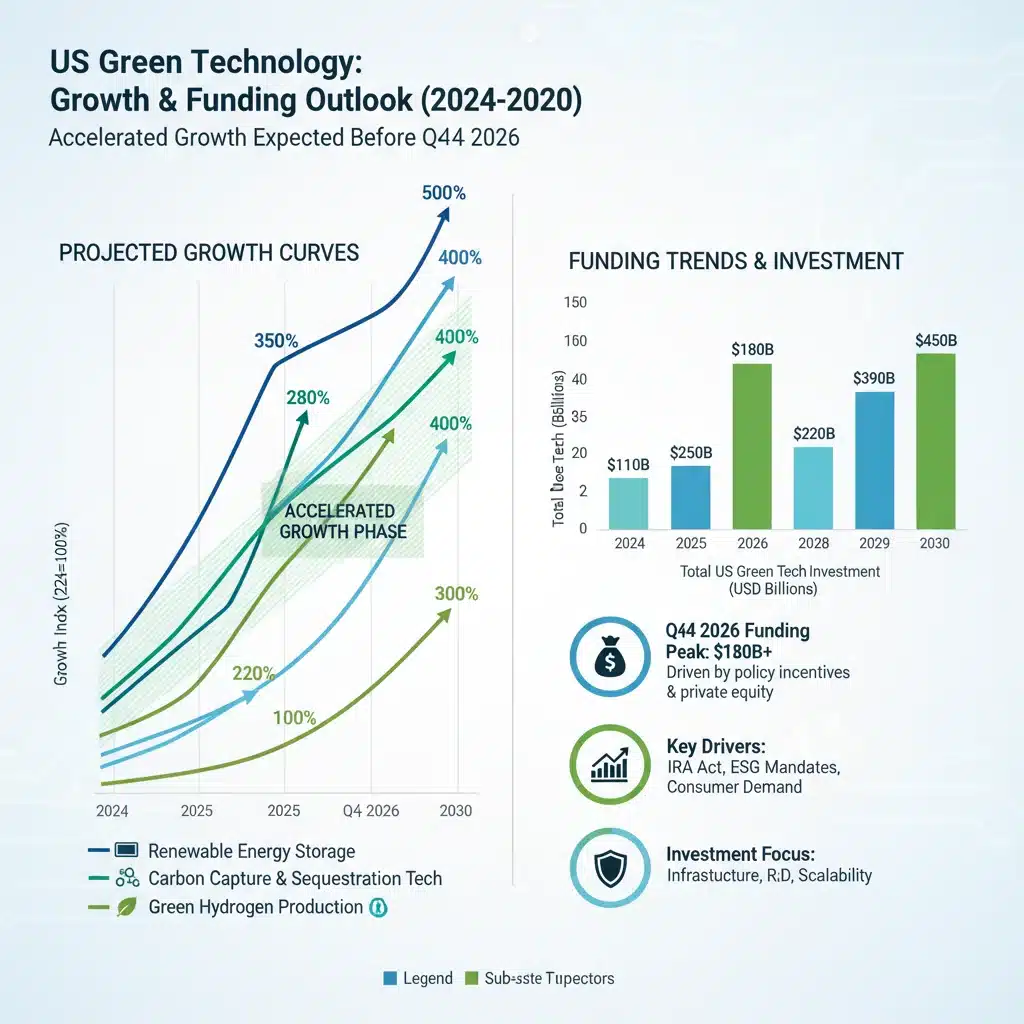
The urgency surrounding this investment window stems from several interconnected factors. First, robust governmental support, exemplified by landmark legislation like the Inflation Reduction Act (IRA), has injected significant capital and incentives into the clean energy and sustainable technology sectors. These policies create a stable and attractive environment for startups, de-risking early-stage investments and accelerating commercialization. Second, rapidly advancing technological breakthroughs in areas such as battery storage, artificial intelligence for energy management, and sustainable materials are reaching maturity, moving from proof-of-concept to scalable solutions. Third, escalating consumer and corporate demand for sustainable products and practices is creating a massive market pull, ensuring that innovative green solutions find eager adopters. Missing this pre-Q4 2026 period could mean foregoing the steepest part of the growth curve, as early movers are best positioned to capture market share and benefit from scaling efficiencies.
The Policy Tailwind: How Legislation Fuels US Green Tech Investment
Governmental policies are often the unsung heroes behind market transformations, and in the case of US Green Tech Investment, they are playing a starring role. The Inflation Reduction Act (IRA), passed in August 2022, stands as a monumental piece of legislation, committing hundreds of billions of dollars to climate and clean energy initiatives. This act isn’t just about subsidies; it’s a strategic framework designed to accelerate domestic manufacturing, encourage innovation, and reduce greenhouse gas emissions across various sectors. For green technology startups, the IRA translates into a predictable and supportive environment, offering tax credits, grants, and loan programs that significantly lower the cost of capital and enhance profitability.
The IRA’s impact is multi-faceted. For instance, it extends and expands tax credits for renewable energy projects, electric vehicles, and energy-efficient home improvements. This directly boosts demand for the products and services offered by green tech startups. Furthermore, it incentivizes domestic production of critical clean energy components, fostering a robust supply chain within the US. This ‘Made in America’ focus not only creates jobs but also reduces reliance on foreign supply chains, adding a layer of resilience and national security to the clean energy transition. Startups focusing on areas like advanced battery manufacturing, hydrogen production, and carbon capture technologies are particularly well-positioned to benefit from these provisions.
Beyond the IRA, other federal and state-level initiatives further bolster the green tech ecosystem. Research and development grants from agencies like the Department of Energy, alongside state-specific clean energy mandates and incentives, create a patchwork of support that collectively drives innovation. This policy environment effectively de-risks investment in nascent technologies, making them more attractive to venture capitalists and private equity firms. The certainty provided by long-term policy commitments allows startups to plan for scalability and market penetration with greater confidence, directly translating into higher potential returns for early investors. This legislative momentum is a primary reason why the pre-Q4 2026 period is so critical for US Green Tech Investment.
Technological Breakthroughs: Catalysts for Accelerated Growth
While policy provides the framework, technological innovation is the engine driving the rapid expansion of the green tech sector. We are currently witnessing a convergence of scientific advancements that are making sustainable solutions not only viable but often more efficient and cost-effective than their traditional counterparts. This technological inflection point is a key component of the time-sensitive opportunity in US Green Tech Investment.
Energy Storage Revolution
One of the most transformative areas is energy storage. The decreasing cost and increasing efficiency of lithium-ion batteries, alongside the emergence of next-generation technologies like solid-state batteries and flow batteries, are revolutionizing renewable energy integration. Startups developing advanced battery chemistries, innovative storage management systems, or grid-scale solutions are at the forefront of enabling a more resilient and decarbonized power grid. Reliable and affordable energy storage is critical for overcoming the intermittency of solar and wind power, making these renewable sources truly dispatchable and competitive.
AI and IoT for Sustainability
The integration of Artificial Intelligence (AI) and the Internet of Things (IoT) is another game-changer. AI algorithms can optimize energy consumption in buildings, predict maintenance needs for wind turbines, and improve the efficiency of industrial processes. IoT sensors provide real-time data on environmental conditions, resource utilization, and equipment performance, enabling smart grids, precision agriculture, and intelligent waste management systems. Startups leveraging these digital technologies to create more efficient and data-driven sustainable solutions are creating immense value.
Sustainable Materials and Circular Economy
Beyond energy, advancements in sustainable materials science are opening up new avenues. Innovations in biodegradable plastics, recycled content materials, and novel composites are reducing reliance on virgin resources and minimizing waste. Companies focused on circular economy principles – designing products for longevity, reuse, and recycling – are gaining traction. This includes startups developing advanced recycling technologies, sustainable packaging solutions, and platforms for material traceability. These innovations are not just environmentally beneficial but also offer significant cost savings and brand advantages in a market increasingly valuing sustainability.
These technological leaps are not occurring in isolation; they are synergistic, each advancement amplifying the potential of others. This rapid pace of innovation means that solutions once considered futuristic are now becoming commercially viable, creating an urgent need for capital to scale these technologies. Investors in US Green Tech Investment who identify and back these cutting-edge solutions before Q4 2026 stand to benefit from their accelerated market adoption and potential for exponential growth.
Market Demand and Corporate Responsibility: A Powerful Pull
The third major pillar supporting the pre-Q4 2026 investment window in US Green Tech Investment is the undeniable surge in market demand, driven by both consumer preference and corporate responsibility mandates. This isn’t just about a niche market anymore; sustainability has moved firmly into the mainstream, influencing purchasing decisions and corporate strategies alike.
Shifting Consumer Preferences
Consumers, particularly younger generations, are increasingly prioritizing sustainability in their purchasing decisions. From electric vehicles and plant-based foods to eco-friendly home products and renewable energy subscriptions, there is a growing willingness to pay a premium for goods and services that align with environmental values. This shift creates a fertile ground for green tech startups offering innovative, sustainable alternatives to traditional products. Companies that can effectively communicate their environmental impact and offer genuinely green solutions are capturing significant market share.
Corporate ESG Mandates and Net-Zero Goals
On the corporate front, Environmental, Social, and Governance (ESG) criteria have moved from a niche consideration to a core component of business strategy. Investors are increasingly evaluating companies based on their ESG performance, and regulatory bodies are beginning to mandate climate-related disclosures. This pushes corporations across all sectors to reduce their carbon footprint, adopt sustainable practices, and invest in green technologies. Many major corporations have set ambitious net-zero emissions targets, creating a massive procurement opportunity for green tech startups that can help them achieve these goals. This includes everything from renewable energy procurement and energy efficiency solutions to sustainable supply chain management and carbon accounting software.
Furthermore, the increasing frequency and intensity of extreme weather events are highlighting the very real economic risks associated with climate change. This provides an additional impetus for businesses and governments to invest in climate resilience and mitigation technologies, further fueling demand for green tech solutions. The combination of consumer pull and corporate push creates a robust and expanding market for green innovation, making US Green Tech Investment a compelling proposition.
Key Sectors Poised for Explosive US Green Tech Investment Growth
While the entire green tech sector is experiencing a boom, certain sub-sectors are particularly ripe for significant growth and investor returns in the lead-up to Q4 2026. Understanding these high-potential areas is crucial for strategic deployment of capital.
Renewable Energy Generation & Infrastructure
This remains the bedrock of the green transition. Beyond traditional solar and wind, look for innovation in advanced geothermal, small modular nuclear reactors (SMRs), and marine energy. Crucially, the infrastructure supporting these renewables – smart grid technologies, microgrids, and advanced transmission systems – will see massive investment. Startups developing more efficient solar cell designs, novel wind turbine materials, or AI-driven grid optimization are prime targets.
Energy Storage Solutions
As previously mentioned, energy storage is pivotal. This includes not just battery technologies for electric vehicles and grid-scale applications, but also long-duration storage solutions (e.g., pumped hydro, compressed air, thermal storage) and innovative approaches to hydrogen production and storage. Companies that can reduce the cost, increase the safety, and extend the lifespan of storage solutions will be highly valued.
Carbon Capture, Utilization, and Storage (CCUS)
With global emissions targets proving challenging, CCUS technologies are gaining renewed attention and significant funding. Startups developing direct air capture (DAC) technologies, point-source capture solutions for industrial emissions, or innovative ways to utilize captured carbon (e.g., for sustainable fuels or materials) are positioned for substantial growth. Policy incentives, particularly in the US, are making these previously expensive technologies more economically viable.
Sustainable Agriculture & Food Systems
Feeding a growing global population sustainably is a grand challenge. This sector includes precision agriculture (using IoT and AI to optimize farming), alternative proteins (plant-based, cultivated meat), vertical farming, and solutions for reducing food waste. Startups offering technologies that enhance resource efficiency, reduce environmental impact, and improve food security are attracting significant US Green Tech Investment.
Circular Economy & Waste Management
Moving beyond linear ‘take-make-dispose’ models, the circular economy focuses on minimizing waste and maximizing resource utility. This encompasses advanced recycling technologies (e.g., chemical recycling for plastics), waste-to-energy solutions, upcycling innovations, and platforms facilitating product-as-a-service models. Companies that can turn waste streams into valuable resources are creating new economic opportunities.
Water Technology (Water Tech)
With increasing water scarcity and pollution, innovations in water purification, desalination, wastewater treatment, and smart water management systems are critical. Startups developing low-energy desalination methods, advanced filtration technologies, or AI-powered leak detection systems are addressing fundamental societal needs and offer strong investment potential.
Each of these sectors benefits from the overarching policy support and market demand, making them attractive for investors looking to make impactful and profitable US Green Tech Investment decisions before the Q4 2026 deadline.
Strategic Considerations for Maximizing Returns in US Green Tech Startups
Investing in green technology startups, especially within a time-sensitive window, requires a strategic approach. It’s not just about identifying the right sectors but also about understanding the unique dynamics of early-stage ventures and the specific characteristics of the green economy.
Due Diligence Beyond Financials
While financial projections are crucial, due diligence in green tech must extend to technological viability, intellectual property strength, and regulatory compliance. Assess the scientific rigor of the innovation, the defensibility of its patents, and its alignment with current and anticipated environmental regulations. A strong technical team and a clear path to market are as important as a compelling business model.
Understanding the Policy Landscape
Given the significant role of government incentives, a deep understanding of the policy landscape is essential. How does a startup’s technology qualify for tax credits or grants? Are there potential policy shifts that could impact its business model? Investors need to be aware of both the opportunities and risks presented by legislative frameworks. Lobbying efforts and advocacy groups can also provide insights into future policy directions.
Assessing Scalability and Market Adoption
Many green technologies have high upfront capital costs. Evaluate a startup’s strategy for scaling production, reducing costs over time, and achieving widespread market adoption. Look for evidence of successful pilot projects, strong customer traction, and a clear go-to-market strategy. Partnerships with established corporations can often accelerate market entry and provide critical resources.
Team Strength and Experience
As with any startup investment, the quality of the founding team is paramount. In green tech, look for a blend of scientific expertise, engineering prowess, and business acumen. Experience in navigating regulatory environments and building complex technological solutions is highly valuable. A passionate and resilient team is better equipped to overcome the inevitable challenges of bringing novel technologies to market.
Impact Measurement and ESG Alignment
For many investors, especially those focused on impact investing, measuring the environmental and social impact of a green tech startup is as important as financial returns. Understand how the startup quantifies its positive impact (e.g., tons of CO2 reduced, gallons of water saved). Strong ESG alignment can also attract additional capital from institutional investors and socially conscious funds, enhancing a startup’s valuation and long-term prospects.
Exit Strategy Considerations
Before investing, have a clear understanding of potential exit strategies. Will the startup be acquired by a larger corporation seeking to integrate green technologies into their operations? Is an IPO a realistic long-term goal? The rapid consolidation and M&A activity in the green tech sector suggest strong exit opportunities, but it’s important to assess this early on.

By meticulously applying these strategic considerations, investors can navigate the complexities of US Green Tech Investment and significantly increase their chances of capitalizing on the unique, time-sensitive opportunity presented before Q4 2026. The confluence of policy support, technological breakthroughs, and surging market demand creates a fertile ground for unprecedented returns, but only for those who act decisively and strategically.
The Urgency of Action: Why Q4 2026 is a Critical Deadline
The emphasis on Q4 2026 as a critical deadline for optimizing US Green Tech Investment is not arbitrary. It is based on several converging timelines that suggest a maturation of the market and a potential shift in investment dynamics post-this period.
Policy Certainty and Sunset Clauses
Many of the generous incentives embedded in legislation like the IRA have specific timelines or sunset clauses. While some may be extended, the most aggressive front-loaded benefits for early adopters and manufacturers are often designed to kickstart the industry within a defined period. Investing before Q4 2026 allows startups to fully leverage these maximum incentives, which translates to better unit economics and higher profitability for early-stage companies, directly benefiting their investors.
Technological Maturation and Market Saturation
The current phase is characterized by rapid technological innovation and early market adoption. As technologies mature and become more widespread, the pace of exponential growth in specific niches tends to decelerate. While growth will continue, the opportunities for outsized returns often diminish once a technology becomes mainstream and competition intensifies. Capturing the early-mover advantage, where technologies are still disruptive and market shares are being established, is key to maximizing returns.
Increased Competition and Valuation Creep
As the green tech sector proves its profitability and stability, it will inevitably attract more capital and more players. This increased competition can lead to higher valuations for startups, making entry points less attractive for new investors. Acting before Q4 2026 allows investors to enter at potentially lower valuations, securing a larger equity stake for their capital and positioning themselves for greater appreciation as the market expands. The ‘smart money’ is often that which gets in before the crowd.
Global Economic Shifts and Capital Allocation
While the current environment is highly favorable for green tech, global economic conditions are always subject to change. Interest rate fluctuations, geopolitical events, and shifts in investor sentiment can impact capital allocation. Securing positions in promising green tech ventures before these potential shifts provides a buffer and allows investors to benefit from the current, highly supportive economic climate for sustainable innovation.
In essence, the period leading up to Q4 2026 represents a sweet spot where policy support is at its peak, technological innovations are breaking through, and market demand is surging, yet competition has not fully driven up valuations. It’s a window for significant alpha generation in US Green Tech Investment, and those who recognize and act upon this urgency will be the ones to reap the most substantial rewards from the green revolution.
Conclusion: Seizing the Moment in US Green Tech Investment
The landscape of US Green Tech Investment presents a compelling, time-sensitive opportunity unlike any other in recent memory. The confluence of aggressive governmental support, groundbreaking technological advancements, and an undeniable surge in market demand creates a fertile ground for innovation and substantial financial returns. The period leading up to Q4 2026 is not just another investment cycle; it is a critical window during which early and strategic investors can tap into the foundational growth phase of what is set to become a dominant economic force.
From the intricate web of incentives provided by landmark legislation like the Inflation Reduction Act to the disruptive potential of AI-driven energy solutions and advanced material science, the drivers for this growth are robust and multi-faceted. Key sectors such as renewable energy infrastructure, advanced energy storage, carbon capture, sustainable agriculture, and circular economy solutions are not merely promising; they are essential for the future of our planet and are attracting unprecedented levels of capital and talent.
For investors, the call to action is clear: conduct thorough due diligence, understand the intricate policy environment, assess the scalability of innovative solutions, and back strong, experienced teams. By focusing on these strategic considerations, you can position yourself to capitalize on the steepest part of the growth curve before market maturation and increased competition inevitably lead to higher valuations.
Missing this pre-Q4 2026 opportunity in US Green Tech Investment could mean foregoing the chance to be at the forefront of a monumental economic and environmental transformation. The time to act is now, to invest not just in promising startups, but in a sustainable and prosperous future. The rewards, both financial and societal, for those who seize this moment, are poised to be extraordinary.