US Cloud Providers 2026: Performance & Cost Efficiency Review

The landscape of cloud computing is in a perpetual state of evolution, and as we stride into 2026, the demand for robust, scalable, and cost-effective infrastructure has never been higher. Businesses, from burgeoning startups to multinational enterprises, are increasingly dependent on cloud services to power their operations, innovate, and maintain a competitive edge. Choosing the right cloud provider is no longer just a technical decision; it’s a strategic imperative that can significantly impact a company’s financial health, operational efficiency, and future growth trajectory. This comprehensive analysis delves into the leading US Cloud Providers 2026, offering an expert, data-backed review of their performance, cost efficiency, and strategic offerings.
The US market remains a dominant force in the global cloud industry, hosting some of the largest and most innovative cloud service providers. Our focus for 2026 centers on the established titans – Amazon Web Services (AWS), Microsoft Azure, and Google Cloud Platform (GCP) – while also acknowledging the significant contributions and niche strengths of other players. This review aims to equip decision-makers with the insights needed to navigate the complexities of cloud selection, ensuring their investments yield optimal returns.
The Evolving Cloud Landscape: What’s New in 2026?
Before diving into individual providers, it’s crucial to understand the overarching trends shaping the cloud landscape in 2026. The past few years have seen an acceleration in several key areas:
- AI/ML Integration: Artificial Intelligence and Machine Learning capabilities are no longer add-ons but core components of cloud offerings. Providers are locked in a race to offer the most advanced, user-friendly, and cost-effective AI/ML services, from pre-trained models to sophisticated MLOps platforms.
- Edge Computing Proliferation: The need to process data closer to its source for reduced latency and enhanced real-time decision-making has driven the growth of edge computing. Cloud providers are extending their reach to the edge, offering integrated solutions that blend centralized cloud power with localized processing.
- Sustainability as a Priority: Environmental concerns are increasingly influencing cloud strategies. Businesses are scrutinizing providers’ commitments to renewable energy, carbon neutrality, and efficient data center operations. Green cloud initiatives are becoming a significant differentiator.
- Enhanced Security and Compliance: With cyber threats growing in sophistication, cloud security remains a paramount concern. Providers are continually investing in advanced security features, threat detection, and compliance certifications to meet stringent regulatory requirements across various industries.
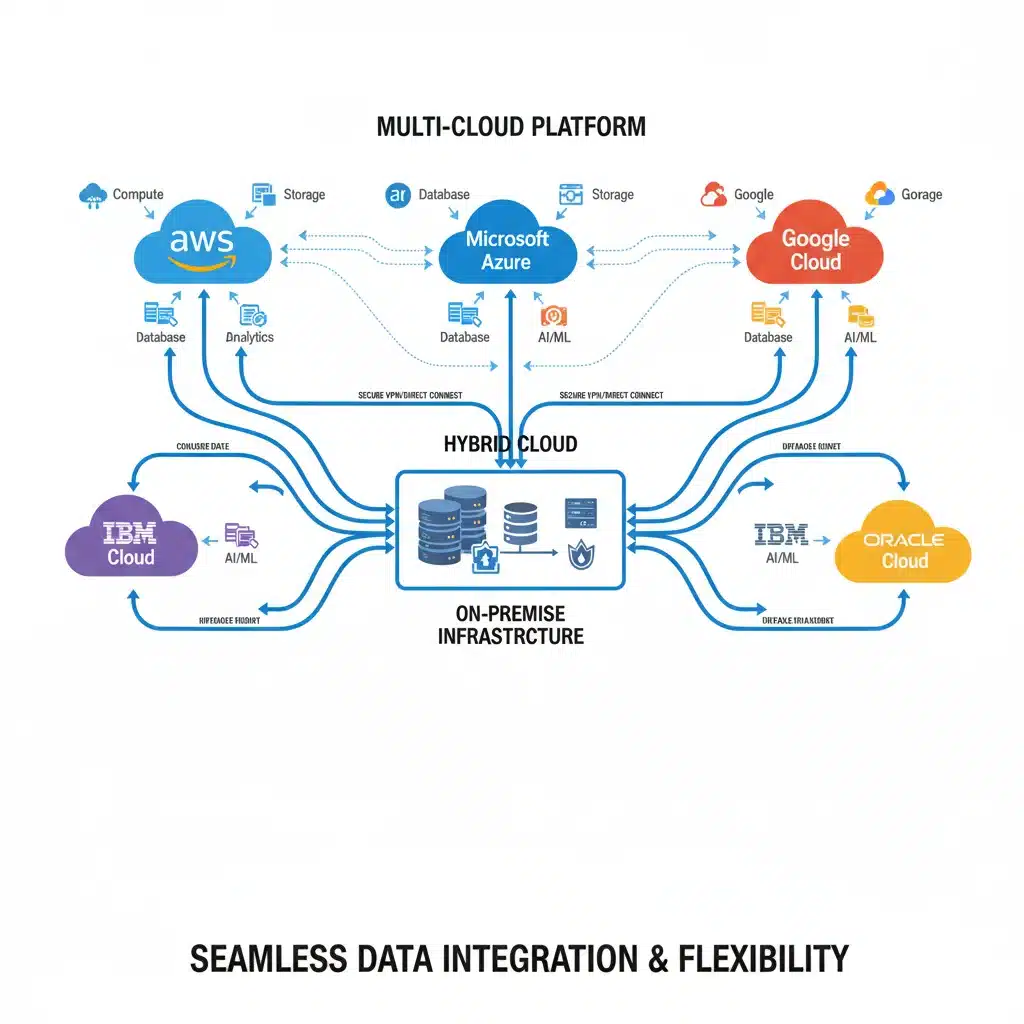
- Hybrid and Multi-Cloud Dominance: The "one cloud fits all" mentality is largely a relic of the past. Most enterprises now adopt hybrid cloud strategies (combining public and private clouds) or multi-cloud approaches (using services from multiple public cloud providers) to optimize for cost, performance, and vendor lock-in avoidance.
- Serverless and Containerization Maturity: Serverless computing and container orchestration (like Kubernetes) have matured significantly, offering developers greater agility, scalability, and efficiency. Cloud providers are continuously enhancing their platforms to support these modern application development paradigms.
Performance Paradigms: Speed, Reliability, and Scalability
When evaluating US Cloud Providers 2026, performance is often the first metric businesses consider. This encompasses several critical factors:
Network Latency and Throughput
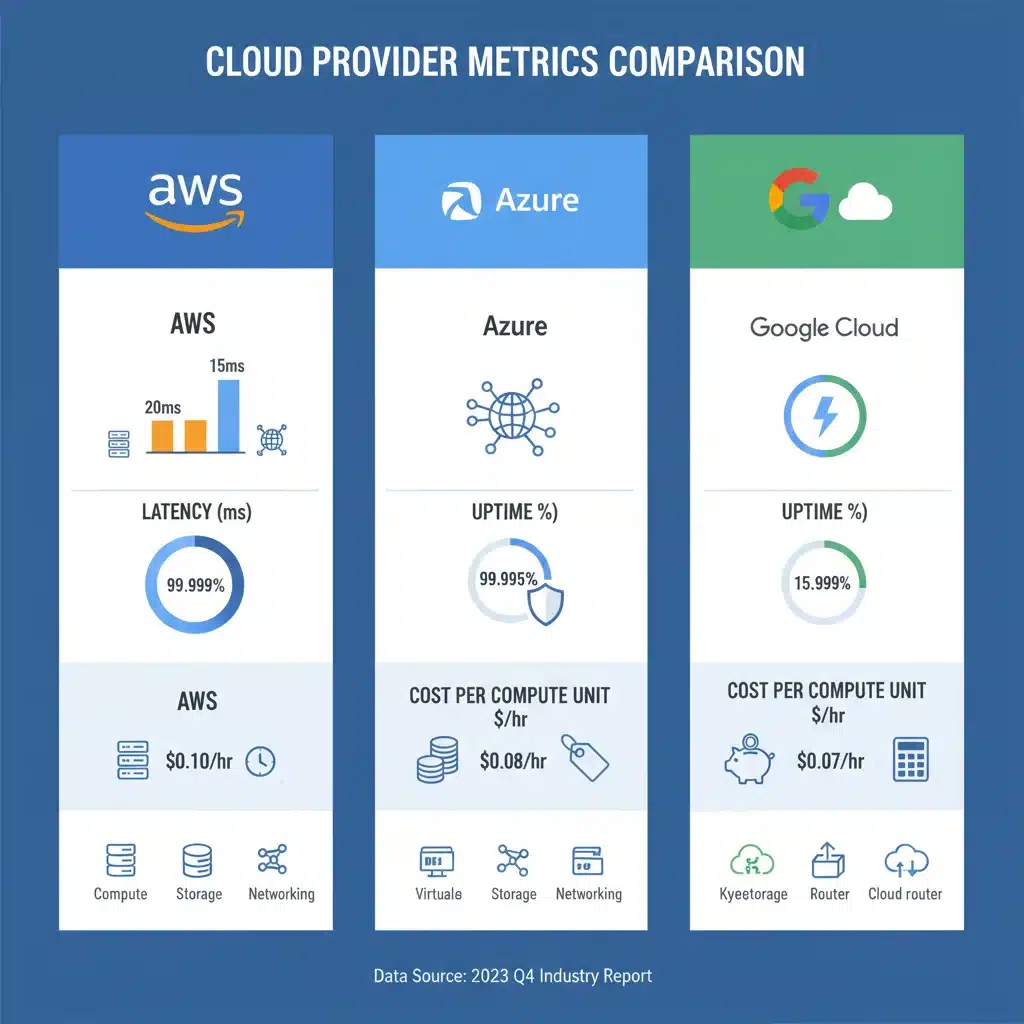
For applications requiring real-time interaction or high-volume data transfers, network performance is paramount. Our analysis of 2026 data indicates that all three major providers – AWS, Azure, and GCP – have invested heavily in expanding their global network infrastructure, reducing inter-region latency, and optimizing data transfer speeds. However, regional variations persist. For instance, AWS’s extensive global footprint often provides an advantage in regions with a high concentration of its data centers, while Azure’s strong enterprise focus ensures robust connectivity for corporate networks. GCP, known for its advanced global fiber network, consistently delivers low latency for its core services.
Compute Performance
The raw processing power and efficiency of virtual machines (VMs) and container instances are crucial for compute-intensive workloads. In 2026, all major providers offer a diverse range of instance types optimized for various use cases, from general-purpose to memory-optimized, compute-optimized, and GPU-accelerated instances for AI/ML. Benchmarking data reveals that while specific instance types might show marginal differences, the overall compute performance across AWS EC2, Azure VMs, and GCP Compute Engine is highly competitive. The key differentiator often lies in the availability of specialized hardware (e.g., custom AI chips like Google’s TPUs) and the ease of scaling these resources.
Storage Performance
Data storage is a foundational cloud service, and its performance – measured by IOPS (Input/Output Operations Per Second) and throughput – directly impacts application responsiveness. Object storage (S3, Azure Blob Storage, Google Cloud Storage) continues to offer unparalleled scalability and durability, with performance improvements geared towards faster data retrieval for analytics and AI workloads. Block storage (EBS, Azure Disks, Persistent Disk) for VMs has seen significant enhancements in SSD-backed options, delivering consistently high IOPS for databases and transactional applications. File storage solutions also continue to evolve, offering better performance for shared file systems.
Database Performance
Managed database services are a cornerstone of modern applications. AWS RDS, Azure SQL Database, and Google Cloud SQL provide highly scalable, performant, and managed relational databases. Beyond relational, NoSQL databases like Amazon DynamoDB, Azure Cosmos DB, and Google Cloud Firestore offer immense scalability and low-latency access for specific use cases. Performance in this domain often comes down to the provider’s specific optimizations for different database engines and their global replication capabilities.
Cost Efficiency: Navigating the Pricing Maze in 2026
Cost is a perennial concern for cloud adopters. While the initial appeal of "pay-as-you-go" is strong, managing cloud spend effectively requires a deep understanding of each provider’s pricing model, discounts, and optimization tools. In 2026, cost efficiency for US Cloud Providers 2026 is not just about the lowest hourly rate; it’s about total cost of ownership (TCO), including operational overhead, scaling costs, and potential egress fees.
Pricing Models and Discounts
All major providers offer a base on-demand pricing model, but significant savings can be achieved through:
- Reserved Instances/Commitment Discounts: Committing to a certain level of usage for 1 or 3 years can lead to substantial discounts (up to 70% or more). This is particularly beneficial for predictable workloads.
- Spot Instances/Preemptible VMs: These offer highly discounted compute capacity (up to 90% off) for fault-tolerant workloads that can withstand interruptions.
- Sustained Use Discounts: GCP pioneered this, offering automatic discounts for running instances for a significant portion of the month, without requiring an upfront commitment. AWS and Azure have similar "savings plans" or "hybrid benefit" programs.
- Volume Discounts: As usage grows, prices per unit often decrease, especially for storage and data transfer.
Data Transfer Costs (Egress)
One of the most frequently overlooked cost drivers is data egress – transferring data out of the cloud provider’s network. These costs can accumulate rapidly, especially in multi-cloud or hybrid cloud environments. While ingress is typically free, egress fees vary significantly between providers and regions. Businesses must carefully factor these into their TCO calculations, particularly for applications with high outbound data traffic.
Cost Management Tools
To combat cloud sprawl and optimize spending, providers offer sophisticated cost management tools:
- AWS Cost Explorer & Budgets: Provides detailed cost visualization, forecasting, and alerts.
- Azure Cost Management + Billing: Offers similar capabilities with integration into Azure Advisor for recommendations.
- Google Cloud Billing Reports & Cost Management: Delivers granular insights and allows for budget setting.
Effective use of these tools, coupled with a FinOps culture, is essential for maximizing cost efficiency with US Cloud Providers 2026.
Deep Dive into Leading US Cloud Providers 2026
Amazon Web Services (AWS): The Market Leader’s Continued Dominance
AWS remains the undisputed market leader in 2026, boasting the broadest and deepest set of services. Its ecosystem is vast, offering everything from basic compute and storage to advanced AI/ML, IoT, robotics, and quantum computing services. AWS’s innovation pace is relentless, with thousands of new features and services launched annually.
- Strengths: Unmatched service breadth and depth, extensive global footprint, mature ecosystem with a vast partner network, strong community support, industry-specific solutions (e.g., AWS for Healthcare, Financial Services). Its serverless offerings (Lambda) and container services (ECS, EKS) are highly evolved.
- Performance: Consistently high across compute, storage, and networking, with specialized instances for demanding workloads.
- Cost Efficiency: Complex pricing model but offers significant savings through Reserved Instances, Savings Plans, and Spot Instances. The sheer number of services means careful management is needed to avoid unnecessary spend.
- Key Innovations in 2026: Further advancements in custom silicon (Graviton processors for better price/performance), enhanced generative AI services (e.g., Amazon Bedrock capabilities), deeper integration of edge computing with AWS Outposts and Local Zones, and continued focus on sustainable infrastructure.
- Ideal For: Companies seeking the widest range of services, needing highly scalable and resilient infrastructure, and those with significant in-house cloud expertise to navigate its complexity.
Microsoft Azure: Enterprise Powerhouse and Hybrid Cloud Champion
Azure continues to be a formidable contender, particularly strong in the enterprise space due to its deep integration with Microsoft’s existing software ecosystem (Windows Server, SQL Server, .NET, Active Directory). Azure’s hybrid cloud strategy, powered by Azure Arc and Azure Stack, is a significant differentiator.
- Strengths: Strong enterprise appeal, excellent hybrid cloud capabilities, robust PaaS (Platform as a Service) offerings, strong commitment to compliance and industry-specific regulations, competitive AI/ML services (e.g., Azure OpenAI Service), and a growing global network.
- Performance: Excellent performance for Windows-based workloads, competitive for Linux. Strong network performance and a growing number of regions.
- Cost Efficiency: Offers competitive pricing, especially for existing Microsoft customers through Azure Hybrid Benefit. Reserved Instances and Savings Plans provide significant discounts. Cost management tools are robust.
- Key Innovations in 2026: Continued leadership in hybrid and multi-cloud management with Azure Arc, enhanced AI capabilities leveraging OpenAI integration, expansion of specialized hardware for AI workloads, and a strong focus on industry clouds.
- Ideal For: Enterprises with existing Microsoft investments, organizations requiring strong hybrid cloud solutions, and those prioritizing compliance and security.
Google Cloud Platform (GCP): Innovation, Data Analytics, and AI Prowess
GCP, while smaller in market share than AWS and Azure, is renowned for its technological innovation, particularly in data analytics, AI/ML, and open-source contributions (e.g., Kubernetes). Its global network infrastructure is arguably the most advanced, offering superior low-latency connectivity.
- Strengths: Industry-leading data analytics (BigQuery, Dataflow), cutting-edge AI/ML services (Vertex AI, TPUs), strong commitment to open source, superior global network infrastructure, strong containerization support (GKE – Google Kubernetes Engine), and a developer-friendly ecosystem.
- Performance: Exceptional network performance, highly efficient compute (especially with custom TPUs for AI), and robust storage solutions.
- Cost Efficiency: Known for sustained use discounts and custom machine types, which can lead to cost savings for consistent workloads. However, some specialized services can be premium-priced.
- Key Innovations in 2026: Further advancements in generative AI and foundation models, expansion of serverless capabilities, continued investment in sustainability, and enhanced multi-cloud management with Anthos.
- Ideal For: Data-intensive organizations, AI-first companies, those heavily invested in Kubernetes and open-source technologies, and businesses prioritizing superior network performance.
Beyond the Big Three: Other Notable US Cloud Providers in 2026
While AWS, Azure, and GCP dominate, other providers offer compelling alternatives, especially for specific use cases or smaller scales:
- Oracle Cloud Infrastructure (OCI): OCI has made significant strides in performance and cost, particularly for enterprise databases and lift-and-shift migrations of Oracle workloads. Their "second-generation" cloud boasts strong network performance and competitive pricing.
- IBM Cloud: With a focus on enterprise, hybrid cloud, and AI, IBM Cloud leverages its deep industry expertise and Red Hat OpenShift integration to offer robust solutions, particularly for regulated industries.
- DigitalOcean/Linode (Akamai): These providers cater primarily to developers and smaller businesses, offering simpler interfaces, predictable pricing, and robust infrastructure for web applications and startups. They excel in ease of use and transparent billing.
- VMware Cloud on AWS/Azure/GCP: For organizations with significant on-premise VMware investments, these solutions allow extending their familiar environment to the public cloud, simplifying hybrid cloud management.
Making the Right Choice: Factors Beyond Performance and Cost
Selecting among the US Cloud Providers 2026 involves more than just raw performance and pricing. Several other critical factors must be weighed:
Ecosystem and Integrations
Consider the breadth of services offered and how well they integrate with your existing technology stack and third-party tools. A rich ecosystem can reduce development time and operational overhead. AWS generally leads here, but Azure’s Microsoft integrations and GCP’s open-source compatibility are also strong.
Security and Compliance
Evaluate each provider’s security posture, certifications (e.g., ISO 27001, SOC 2, HIPAA, GDPR), and data residency options. Understand their shared responsibility model and how it aligns with your internal security policies. All major providers invest heavily in security, but nuances exist in their offerings and geographical compliance adherence.
Support and Service Level Agreements (SLAs)
What level of technical support do you need? Providers offer various support tiers, from basic to enterprise-grade, with different response times and access to specialists. Review their SLAs for uptime guarantees and how they handle outages.
Vendor Lock-in and Portability
While complete vendor lock-in is hard to avoid, consider strategies to maximize portability. Technologies like containers (Kubernetes) and serverless functions, along with open standards, can make it easier to move workloads between clouds or adopt a multi-cloud strategy. This is a crucial consideration for long-term flexibility.
Geographic Reach and Data Residency
If your business operates internationally or has strict data residency requirements, the provider’s global network of regions and availability zones is critical. Ensure they have data centers in the necessary locations to meet regulatory demands and minimize latency for your user base.
The Future of Cloud: 2026 and Beyond
As we look beyond 2026, the trajectory of cloud computing points towards even greater sophistication and integration. We anticipate:
- Hyper-Personalized Cloud Services: Cloud platforms will become even more tailored to specific industry needs, offering highly specialized services and solutions.
- Autonomous Cloud Operations: Increased adoption of AI-driven automation for cloud resource management, optimization, and self-healing systems, reducing human intervention.
- Quantum Cloud Computing: While still nascent, quantum computing services will become more accessible on leading cloud platforms, opening new avenues for complex problem-solving.
- Enhanced Cloud Native Security: Security will be baked deeper into cloud-native development processes, from code to deployment, with AI-powered threat prediction and response.
- Sustainable Cloud by Default: "Green cloud" will move from a differentiator to a baseline expectation, with providers continually striving for net-zero operations.
Conclusion: Navigating the Cloud with Confidence in 2026
The choice of a cloud provider in 2026 is a nuanced decision, influenced by a multitude of factors unique to each organization. While AWS, Azure, and GCP continue to lead the pack among US Cloud Providers 2026, their individual strengths cater to different strategic priorities. AWS offers unparalleled breadth and innovation, Azure provides robust enterprise and hybrid cloud solutions, and GCP excels in data analytics, AI, and network performance.
Businesses must move beyond brand loyalty and conduct thorough due diligence, encompassing performance benchmarks, detailed cost analysis (including TCO), security posture, compliance certifications, and alignment with their long-term strategic goals. Leveraging multi-cloud and hybrid cloud strategies will continue to be vital for optimizing flexibility, resilience, and cost efficiency.
Ultimately, the "best" cloud provider is the one that most effectively meets your specific technical requirements, budgetary constraints, and business objectives, while also providing a clear path for future innovation and growth. By carefully evaluating the insights provided in this review, organizations can make informed decisions that propel them forward in the dynamic world of cloud computing in 2026 and beyond.