Quantum Computing Patents: US Surge & 2026 Investment Outlook

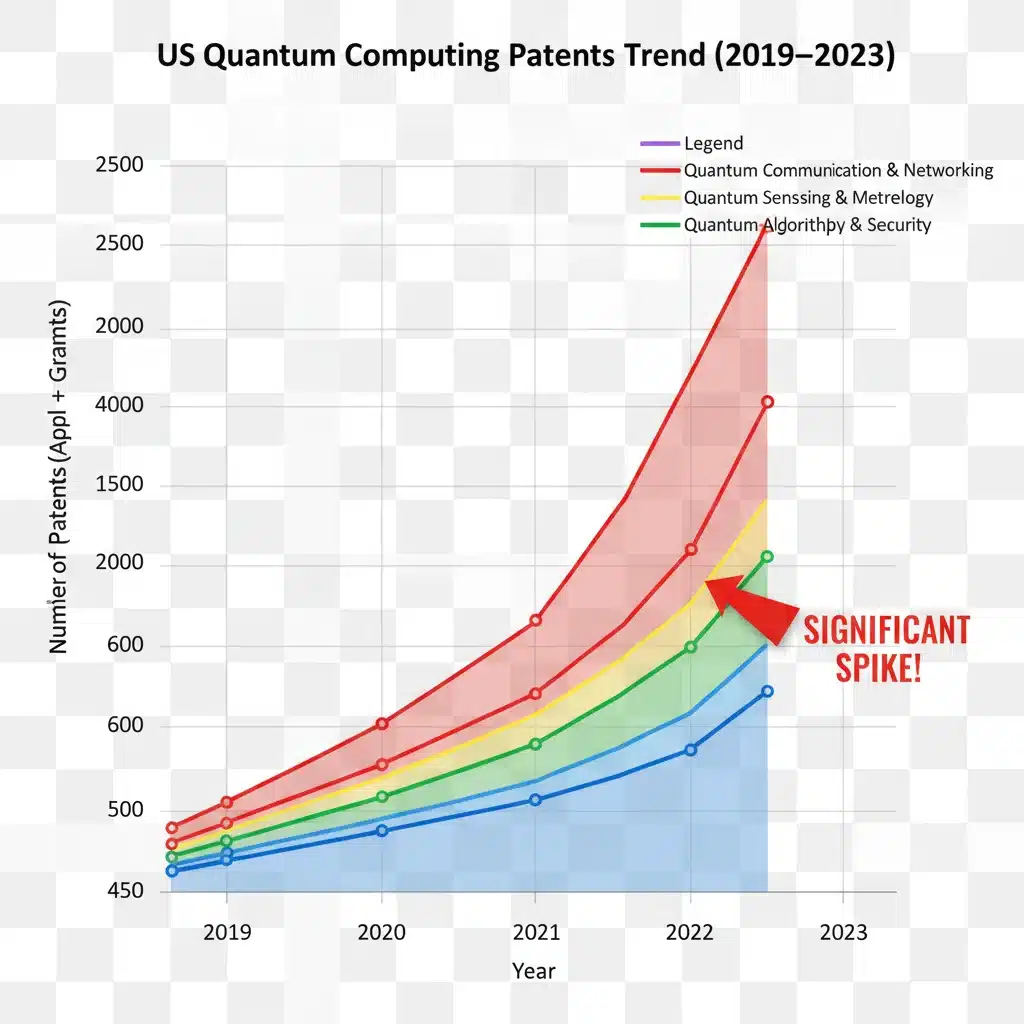
The landscape of technological innovation is continuously evolving, with quantum computing emerging as one of the most transformative fields of our time. Recent data indicates a significant 20% surge in Quantum Computing Patents filed and granted within the United States, a clear indicator of the nation’s accelerating pace in this cutting-edge domain. This remarkable increase is not merely a statistic; it represents a profound shift in research and development, signaling immense future potential and, critically, shaping investment strategies for the year 2026 and beyond.
Understanding the implications of this surge requires a deep dive into the various facets of quantum computing, the nature of these patents, and the strategic moves being made by both established tech giants and nascent startups. This article aims to dissect these trends, offering insights into what this heightened patent activity means for investors, policymakers, and the global technological ecosystem.
The Quantum Leap: A 20% Surge in US Quantum Computing Patents
The 20% increase in Quantum Computing Patents in the US is a powerful testament to the nation’s commitment to leading the quantum revolution. This growth is driven by a combination of factors, including increased government funding, private sector investment, and a growing pool of highly skilled researchers and engineers. The United States has historically been a hub of innovation, and its current trajectory in quantum computing solidifies this position.
Quantum computing promises to solve problems currently intractable for classical computers, impacting fields from medicine and materials science to finance and artificial intelligence. The intellectual property generated through these patents covers a broad spectrum of quantum technologies, including quantum processors, algorithms, error correction techniques, and quantum communication systems. Each patent represents a unique innovation, a step forward in harnessing the elusive power of quantum mechanics.
This surge is not happening in a vacuum. Other nations, such as China and various European countries, are also heavily investing in quantum research. However, the US’s patent activity highlights a particularly robust and diversified approach, indicative of a mature and rapidly expanding ecosystem. For investors, this creates both opportunities and challenges, requiring a nuanced understanding of the technological breakthroughs and the competitive landscape.
Understanding the Landscape of Quantum Computing Patents
To truly grasp the significance of the 20% surge, it’s essential to understand what these Quantum Computing Patents entail. Patents in this field are often highly complex, protecting novel approaches to building and operating quantum computers. They can range from fundamental discoveries in quantum physics applied to computation to specific engineering solutions for qubit stability and connectivity.
Key areas of patenting include:
- Quantum Hardware: This category covers the physical components of quantum computers, such as superconducting qubits, trapped ions, photonic qubits, topological qubits, and silicon-based quantum dots. Innovations here focus on scalability, coherence times, and error rates.
- Quantum Algorithms: Patents related to new quantum algorithms designed to run on quantum computers for specific tasks, such as Shor’s algorithm for factoring large numbers or Grover’s algorithm for searching databases.
- Quantum Software and Control Systems: This includes patents for operating systems, programming languages, compilers, and control electronics that interface with quantum hardware to execute quantum operations.
- Quantum Cryptography and Communication: Innovations in quantum key distribution (QKD) and other quantum-secure communication protocols, vital for future cybersecurity.
- Quantum Sensing and Metrology: Patents for using quantum phenomena to achieve unprecedented precision in measurements, with applications in navigation, medical imaging, and fundamental science.
The diversity of these patent categories underscores the breadth of innovation occurring. Companies are not just focusing on building bigger quantum computers but also on making them more reliable, programmable, and applicable to real-world problems. This holistic approach is crucial for the long-term viability and commercialization of quantum technology.
Drivers Behind the Patent Boom: Why Now?
Several factors are converging to fuel the current boom in Quantum Computing Patents. Firstly, significant government funding initiatives, such as the National Quantum Initiative Act in the US, have injected substantial resources into academic research and national labs. This stable funding provides the necessary bedrock for long-term, high-risk research.
Secondly, private sector investment has dramatically increased. Tech giants like IBM, Google, Microsoft, and Amazon are pouring billions into quantum research, establishing dedicated quantum divisions, and acquiring promising startups. These companies recognize the strategic importance of quantum computing and are vying for a leading position in this nascent market. Their financial muscle enables rapid prototyping, advanced R&D, and aggressive patenting strategies.
Thirdly, advancements in classical computing and engineering have made quantum research more feasible. The ability to precisely control individual atoms and photons, coupled with sophisticated cryogenics and vacuum technologies, has brought theoretical quantum mechanics closer to practical application. This symbiotic relationship between classical and quantum technologies is accelerating progress.
Finally, a growing talent pool of quantum physicists, computer scientists, and engineers is emerging from universities and research institutions worldwide. The increasing availability of skilled personnel is directly translating into more innovative ideas and, consequently, more patent applications. The ecosystem is maturing, moving from pure academic exploration to a more focused drive towards commercialization.
The Impact on 2026 Investment Decisions
For investors, the surge in Quantum Computing Patents provides both a clear signal of market activity and a complex challenge for due diligence. By 2026, the quantum computing market is projected to reach significant valuations, and early, strategic investments could yield substantial returns. However, the inherent technical complexity and long development cycles of quantum technology demand a sophisticated investment approach.
Investors should consider several key aspects:
- Patent Portfolio Strength: Companies with robust and diversified patent portfolios are likely to have a competitive edge. A strong portfolio indicates not only innovation but also a protected market position, crucial in an emerging field.
- Technological Readiness Levels (TRL): Not all quantum technologies are equally mature. Investors need to assess the TRL of a company’s offerings, understanding that fundamental research is distinct from near-term commercial applications.
- Strategic Partnerships: Collaborations between quantum startups and established industry players (e.g., aerospace, pharmaceuticals, finance) can validate technology and provide pathways to market.
- Talent Acquisition and Retention: The scarcity of quantum talent means that companies capable of attracting and retaining top researchers will be better positioned for long-term success.
- Application Focus: While general-purpose quantum computers are the ultimate goal, many companies are focusing on specific ‘quantum advantage’ applications that can deliver value in the short to medium term. Identifying these niche applications can be a key to successful investment.
The year 2026 is critical because it represents a period where many experimental quantum systems are expected to transition into more stable, albeit still early-stage, commercial products. The patents filed today will form the bedrock of these future offerings.
Key Players and Emerging Innovators in the Patent Race
The race for Quantum Computing Patents involves a mix of well-established technology behemoths and agile, venture-backed startups. Each brings a unique set of resources and strategies to the table.
Established Tech Giants:
- IBM: A pioneer in quantum computing, IBM holds a significant number of patents related to superconducting qubits, quantum processors, and cloud-based quantum services. Their ‘IBM Quantum Experience’ has made quantum computing accessible to a broader audience, fostering further innovation.
- Google: Known for its ‘quantum supremacy’ achievement, Google has a strong patent portfolio focusing on superconducting processors and quantum algorithms. Their research at Google AI Quantum continues to push the boundaries of quantum hardware and software.
- Microsoft: Microsoft is heavily invested in topological quantum computing, a potentially more stable qubit architecture. Their patents cover various aspects of this complex approach, alongside their Azure Quantum cloud platform.
- Honeywell/Quantinuum: Honeywell’s spin-off, Quantinuum, is a leader in trapped-ion quantum computing, known for its high-fidelity qubits. Their patent strategy reflects their focus on error correction and system integration.
Emerging Innovators and Startups:
Beyond the giants, a vibrant ecosystem of startups is emerging, each contributing to the surge in Quantum Computing Patents. Companies like Rigetti Computing (superconducting), IonQ (trapped-ion), PsiQuantum (photonic), and ColdQuanta (neutral atom) are developing diverse hardware platforms. These startups often focus on specific technological niches or application areas, securing patents that protect their unique intellectual property.
For investors, identifying these high-potential startups early can be crucial. Their innovative approaches, often unencumbered by legacy systems, can lead to disruptive breakthroughs. However, they also carry higher risk, given the capital-intensive nature of quantum R&D and the long path to profitability.
Challenges and Risks in the Quantum Computing Patent Landscape
Despite the exciting surge in Quantum Computing Patents, the field is not without its challenges and risks. For investors and innovators alike, understanding these hurdles is paramount.
Technical Challenges:
- Qubit Stability and Error Rates: Quantum systems are extremely sensitive to environmental noise, leading to high error rates. Patents focusing on error correction and fault-tolerant quantum computing are critical but represent immense technical challenges.
- Scalability: Building quantum computers with thousands or millions of stable, interconnected qubits remains a major hurdle. Many current patents address aspects of scalability, but a universally accepted solution is yet to emerge.
- Decoherence: Maintaining quantum coherence for long enough to perform complex computations is a fundamental challenge. Innovations protected by patents often aim to extend coherence times.
Commercialization Risks:
- Long Development Cycles: The path from fundamental research to commercially viable quantum products is long and capital-intensive. Investors need to be prepared for extended timelines before seeing significant returns.
- Market Adoption: While the potential of quantum computing is vast, identifying ‘killer applications’ that demonstrate a clear quantum advantage over classical methods is still an ongoing process.
- Talent Shortage: The highly specialized nature of quantum computing means there’s a global shortage of skilled professionals, which can slow down development and increase operational costs.
Legal and IP Risks:
- Patent Trolls and Litigation: As the market matures, the risk of patent infringement lawsuits will likely increase. Companies with strong legal teams and well-defined IP strategies will be better positioned.
- Standardization: The lack of universal standards for quantum hardware and software could fragment the market and slow down adoption. Patents might play a role in establishing de facto standards.
- International IP Protection: Protecting Quantum Computing Patents across different jurisdictions is complex and crucial for global competitiveness.
Navigating these challenges requires foresight, strategic planning, and a deep understanding of both the technological and market dynamics. The 20% surge in patents indicates progress, but also highlights the complexity of the journey ahead.
The Role of Government and Policy in Fostering Innovation
The US government plays a pivotal role in fostering the growth of Quantum Computing Patents. Beyond direct funding through initiatives like the National Quantum Initiative, policies related to intellectual property rights, export controls, and international collaboration significantly impact the quantum ecosystem.
A strong patent system is fundamental to encouraging innovation. It provides inventors with exclusive rights to their discoveries for a limited period, incentivizing them to invest in research and development. The US Patent and Trademark Office (USPTO) has been adapting to the unique challenges of quantum patent examination, ensuring that novel quantum inventions receive appropriate protection.
Furthermore, government-funded research institutions and national labs often collaborate with private companies, leading to joint patent applications and technology transfer. These partnerships accelerate the transition of fundamental research into commercial applications. Policies that encourage such collaborations are crucial for maintaining the US’s lead in quantum innovation.
Looking ahead to 2026, continued government support, both financially and through favorable policy frameworks, will be essential for sustaining the momentum in Quantum Computing Patents and ensuring the US remains at the forefront of this transformative technology.

What the Surge Means for Future Technological Development
The 20% surge in Quantum Computing Patents is not just about intellectual property; it’s a strong indicator of the future direction of technological development. Each patent represents a piece of the puzzle, bringing us closer to a future where quantum computers can tackle problems currently beyond our reach.
This increased patent activity suggests several key trends:
- Acceleration of Quantum Advantage: The diverse nature of patents, from hardware to algorithms, implies a concerted effort to achieve quantum advantage in various application domains more rapidly.
- Diversification of Quantum Architectures: The patent landscape shows that no single quantum computing architecture has emerged as a clear winner. This diversification encourages innovation across multiple fronts, increasing the chances of a breakthrough.
- Integration with Classical Computing: Many patents focus on hybrid quantum-classical approaches, recognizing that quantum computers will likely augment, rather than entirely replace, classical systems in the foreseeable future.
- Emergence of Quantum-Enabled Solutions: Beyond core quantum computing, patents are also appearing for quantum-enabled solutions in areas like advanced materials, drug discovery, financial modeling, and secure communication.
By 2026, we can expect to see more specialized quantum devices, each optimized for particular tasks. The patents being filed today are laying the groundwork for these future innovations, shaping the capabilities and limitations of tomorrow’s quantum technologies.
Conclusion: Navigating the Quantum Frontier Towards 2026
The 20% surge in US Quantum Computing Patents is a compelling narrative of innovation, strategic investment, and intense competition. It underscores the profound belief in the transformative power of quantum technology and sets a clear trajectory for accelerated development leading up to 2026.
For investors, this period presents a unique opportunity to engage with a nascent but rapidly expanding market. Prudent investment strategies will involve a thorough evaluation of patent portfolios, technological readiness, and the strength of research and development teams. Understanding the specific applications targeted by different quantum companies will also be crucial for identifying high-potential ventures.
As we approach 2026, the patents being filed today will mature into foundational technologies, driving the next wave of quantum innovation. The US, with its robust patent activity and supportive ecosystem, is well-positioned to maintain its leadership in this critical technological frontier. The quantum era is not just on the horizon; it’s actively being built, patent by patent, innovation by innovation.
The journey into quantum computing is complex, filled with both immense promise and significant challenges. However, the sustained increase in intellectual property generation signals a collective determination to unlock its full potential, paving the way for a future where quantum capabilities redefine what’s possible.