Emerging Green Technologies: Q1 2026 US Market Update for Investors
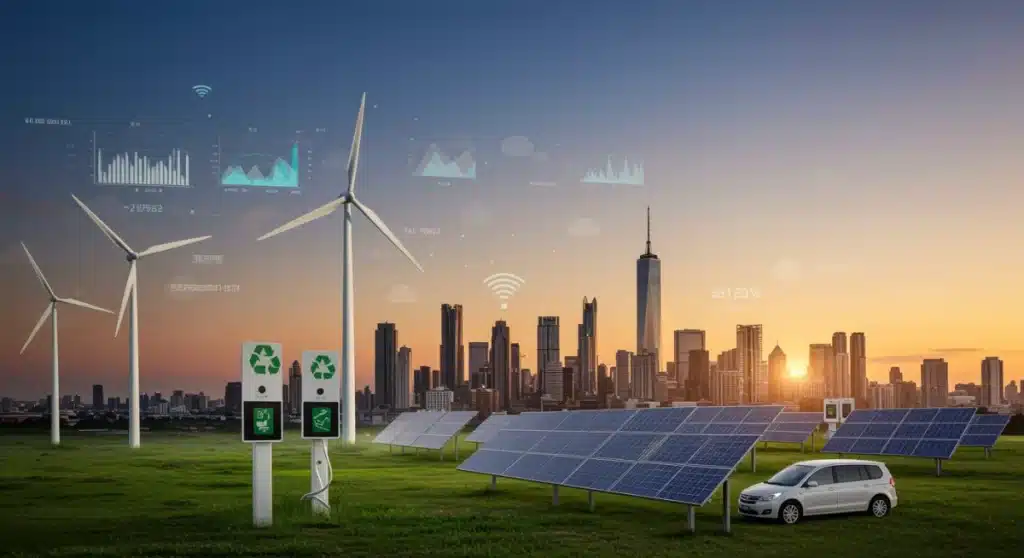
The Q1 2026 market update reveals significant growth and strategic shifts within emerging green technologies, presenting compelling opportunities for US investors and innovators navigating sustainable development and climate solutions.
As we navigate the first quarter of 2026, the landscape of emerging green technologies in the United States is buzzing with unprecedented innovation and investment. For US investors and innovators, understanding this dynamic environment is not just an advantage; it’s a necessity. This update provides a timely snapshot of the key trends, challenges, and lucrative opportunities shaping the future of sustainable development. Are you ready to capitalize on the next wave of environmental innovation?
The rise of advanced energy storage solutions
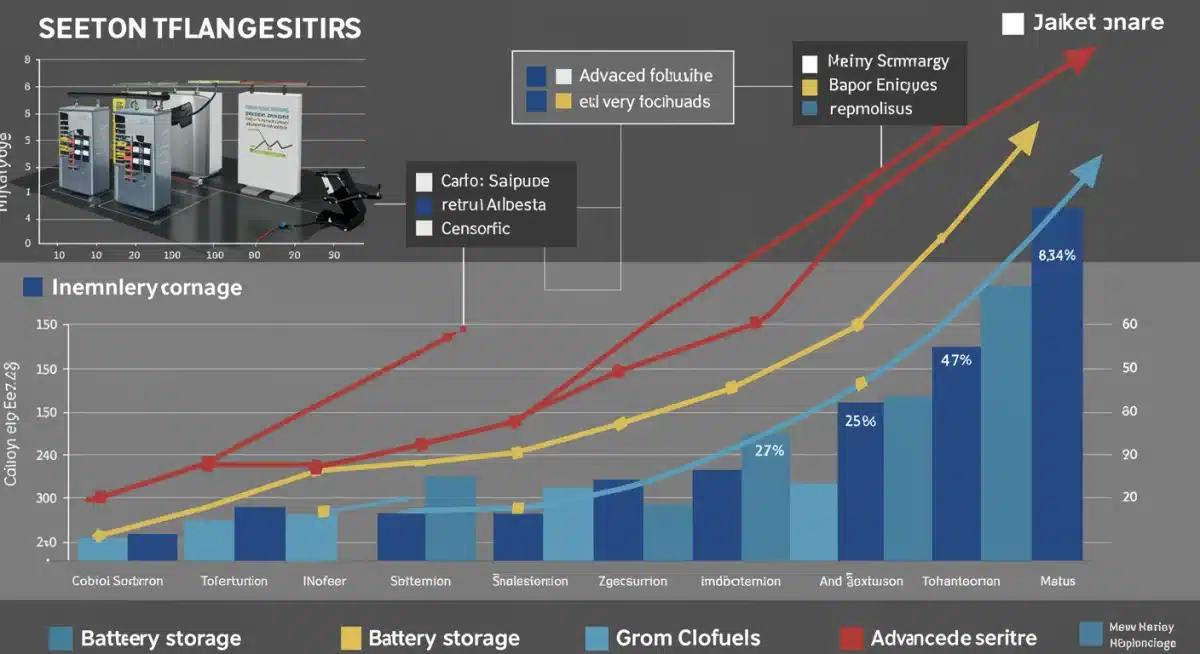
The quest for reliable and efficient energy storage remains a cornerstone of the green energy transition. As renewable energy sources like solar and wind become more prevalent, the ability to store excess energy and release it on demand is paramount. Q1 2026 has seen a surge in research and development, as well as commercial deployment, of advanced battery technologies and alternative storage methods.
Traditional lithium-ion batteries continue to improve in density and cost-effectiveness, yet new contenders are rapidly gaining traction. These innovations are crucial for stabilizing grids, powering electric vehicles, and enabling off-grid solutions. The investment climate for these technologies is particularly robust, driven by both private venture capital and significant government incentives aimed at bolstering energy independence and resilience.
Next-generation battery chemistries
Beyond lithium-ion, several alternative battery chemistries are showing immense promise. These technologies often address concerns such as raw material scarcity, safety, and operational lifespan, making them attractive for diverse applications.
- Solid-state batteries: Offering higher energy density and improved safety, solid-state batteries are moving closer to commercial viability for electric vehicles and grid storage.
- Flow batteries: Ideal for large-scale, long-duration grid storage due to their modular design and ability to scale power and energy independently.
- Sodium-ion batteries: A more cost-effective and abundant alternative to lithium, gaining traction for stationary storage applications.
Non-battery storage innovations
While batteries dominate the headlines, non-battery storage solutions are also evolving rapidly. These include mechanical, thermal, and chemical energy storage systems, each offering unique advantages for specific use cases. The diversification of storage technologies ensures a more resilient and adaptable energy infrastructure.
The market for advanced energy storage is projected to grow exponentially, with significant opportunities for both established players and agile startups. Investors are keen on technologies that offer scalability, long-term durability, and a reduced environmental footprint. This sector is not just about power; it’s about empowering a sustainable future, making it a critical area for anyone looking into emerging green technologies.
Carbon capture, utilization, and storage (CCUS) breakthroughs
Carbon capture, utilization, and storage (CCUS) technologies are increasingly recognized as indispensable tools in the fight against climate change. As Q1 2026 unfolds, significant breakthroughs are marking a new era for CCUS, moving it from niche applications to more widespread industrial adoption. The focus is not just on capturing emissions but also on finding economically viable ways to utilize or permanently store the captured carbon.
Innovations in direct air capture (DAC) are particularly exciting, with new absorbent materials and energy-efficient processes making the technology more scalable. Furthermore, enhanced oil recovery (EOR) remains a primary utilization method, but new applications are emerging, such as using captured CO2 to produce sustainable fuels, building materials, and even consumer goods. This diversification of utilization pathways is crucial for improving the economic feasibility of CCUS projects.
Advancements in capture efficiency
The efficiency and cost of carbon capture have historically been major hurdles. However, Q1 2026 has seen notable progress in reducing the energy penalty associated with capturing CO2 from industrial sources and the atmosphere.
- Novel sorbents: Development of new materials that can selectively capture CO2 with lower energy input and higher capacity.
- Membrane technologies: Improved membrane designs offering more efficient separation of CO2 from flue gases.
- Integrated systems: Combining capture technologies with renewable energy sources to reduce the overall carbon footprint and operational costs.
Expanding utilization markets
The commercial viability of CCUS heavily depends on the market for captured carbon. Beyond traditional uses, innovative approaches are creating new demand. This includes the potential for carbon-negative products that actively remove more CO2 than they emit during their lifecycle.
Government policies, including tax credits and funding for pilot projects, are playing a pivotal role in accelerating the deployment of CCUS technologies across the US. For investors, this sector offers a unique blend of environmental impact and potential for substantial returns, especially as carbon markets mature and regulations tighten. The integration of CCUS into heavy industries like cement, steel, and chemical production represents a massive opportunity for investors interested in emerging green technologies.
Sustainable agriculture and food tech innovations
The intersection of agriculture and technology is yielding revolutionary solutions to address food security, reduce environmental impact, and enhance agricultural resilience. In Q1 2026, sustainable agriculture and food tech innovations are not just buzzwords; they are becoming essential components of a greener economy. From precision farming to alternative proteins, these technologies are reshaping how food is produced, distributed, and consumed.
Vertical farming, for instance, continues its rapid expansion, offering urban areas fresh produce with significantly reduced water and land usage. Similarly, advancements in plant-based and cultivated meat technologies are providing scalable and sustainable alternatives to traditional animal agriculture. These innovations are driven by consumer demand for healthier, more ethically produced food, alongside a growing awareness of agriculture’s environmental footprint.
Precision agriculture and smart farming
Leveraging data, AI, and automation, precision agriculture aims to optimize resource use and minimize waste. This approach leads to higher yields, reduced water consumption, and lower reliance on chemical inputs.
- IoT sensors: Real-time monitoring of soil conditions, crop health, and weather patterns to inform precise interventions.
- AI-driven analytics: Predictive models for disease outbreaks, pest management, and optimal irrigation schedules.
- Automated machinery: Robotics for planting, harvesting, and weeding, reducing labor costs and increasing efficiency.
Alternative proteins and novel food sources
The market for alternative proteins is experiencing explosive growth, attracting significant investment and innovation. These products not only offer environmental benefits but also cater to evolving dietary preferences and health trends.
Beyond plant-based meats, companies are exploring fermentation-derived proteins, insect-based foods, and even lab-grown dairy products. The goal is to create delicious, nutritious, and sustainable food options that can feed a growing global population without further straining planetary resources. For innovators, this sector offers fertile ground for developing disruptive products and business models within the realm of emerging green technologies.
Water management and purification technologies
Water scarcity and quality degradation pose critical challenges globally, and the US is no exception. In Q1 2026, advancements in water management and purification technologies are providing innovative solutions to conserve, treat, and reuse this vital resource. These technologies are crucial for ensuring sustainable access to clean water for communities, agriculture, and industries.
Desalination technologies are becoming more energy-efficient and cost-effective, making them viable options for coastal regions facing severe water stress. Furthermore, smart water networks, equipped with sensors and AI, are enabling real-time leak detection and optimized distribution, significantly reducing water loss. Wastewater treatment is also undergoing a revolution, with new biological and membrane filtration systems capable of removing a wider range of contaminants and even recovering valuable resources from wastewater streams.
Advanced filtration and purification systems
The core of water technology innovation lies in developing more effective and sustainable methods for removing impurities. These systems are essential for both municipal and industrial applications.
- Membrane bioreactors (MBRs): Combining biological treatment with membrane filtration for highly effective wastewater purification.
- Nanofiltration: Utilizing nanotechnology to remove even the smallest contaminants, including pharmaceuticals and microplastics.
- UV-C LED disinfection: Energy-efficient and chemical-free methods for inactivating pathogens in water.
Water conservation and reuse strategies
Beyond treatment, emphasis is being placed on reducing overall water consumption and maximizing reuse. This includes industrial water recycling, greywater systems for residential use, and efficient irrigation techniques in agriculture.
The integration of digital twins and predictive analytics in water infrastructure allows for better planning and proactive maintenance, preventing costly failures and optimizing resource allocation. Investors are increasingly recognizing the long-term value in companies providing these essential services and technologies, making water management a key area within emerging green technologies with significant growth potential.
Circular economy and waste-to-resource innovations
The paradigm shift towards a circular economy is gaining significant momentum in Q1 2026, propelling innovations that transform waste into valuable resources. This approach moves beyond traditional linear models of ‘take-make-dispose’ by focusing on reducing waste, reusing materials, and recycling products to keep them in circulation for as long as possible. For US investors and innovators, the circular economy represents a vast untapped market, with opportunities spanning across various sectors.
New technologies are enabling the efficient recovery and upcycling of materials that were once considered waste. Chemical recycling, for example, is offering solutions for plastics that are difficult to mechanically recycle, breaking them down into their molecular components for reuse. Similarly, anaerobic digestion and pyrolysis are converting organic waste into biogas and bio-oils, providing renewable energy and biochemical feedstocks. These innovations are not only reducing landfill burden but also creating new supply chains and fostering industrial symbiosis.
Advanced recycling techniques
The efficacy of recycling is being dramatically improved by new processes that can handle a wider range of materials and produce higher-quality secondary raw materials.
- Chemical recycling: Depolymerizing plastics into monomers or producing synthetic crude oil, enabling the creation of new plastics with virgin-like quality.
- Textile recycling: Developing methods to separate mixed fibers and recover valuable cellulose or polyester from discarded clothing.
- Electronic waste (e-waste) recovery: More efficient and environmentally friendly processes for extracting precious metals and rare earth elements from electronics.
Waste-to-energy and resource recovery
Converting waste into energy or other valuable resources is a critical component of the circular economy. These technologies offer dual benefits: waste management and renewable energy generation.
From converting municipal solid waste into syngas to extracting nutrients from wastewater for fertilizers, the opportunities are diverse. Policy support for circular economy initiatives, coupled with increasing corporate sustainability commitments, is fueling investment in this sector. Innovators in emerging green technologies are finding fertile ground in developing solutions that close loops and create sustainable material flows, essential for a resilient future.
Green building materials and smart infrastructure
The construction sector, a significant contributor to global emissions and resource consumption, is undergoing a profound transformation driven by green building materials and smart infrastructure solutions. In Q1 2026, the emphasis is on creating structures that are not only energy-efficient but also utilize sustainable materials throughout their lifecycle, from production to demolition. This includes innovations in low-carbon concrete, advanced insulation, and modular construction techniques.
Smart infrastructure integrates digital technologies to optimize resource use, enhance operational efficiency, and improve urban living. This encompasses everything from intelligent transportation systems that reduce congestion and emissions to smart grids that manage energy demand and supply more effectively. The convergence of sustainable materials and digital intelligence is paving the way for truly resilient and environmentally friendly urban environments.
Innovations in sustainable construction materials
Reducing the embodied carbon of buildings starts with the materials used. New research and commercial products are offering greener alternatives to traditional high-impact materials.
- Low-carbon concrete: Utilizing alternative binders or carbon capture technologies to significantly reduce the CO2 footprint of concrete production.
- Bio-based insulation: Materials like hempcrete, mycelium, and recycled denim providing effective thermal insulation with a lower environmental impact.
- Recycled content materials: Increased use of recycled steel, plastics, and timber in structural and finishing applications.
Smart building and urban planning
Beyond materials, the intelligence embedded within buildings and urban systems is crucial for sustainability. Smart technologies enable optimized energy consumption, improved air quality, and better waste management.
Building management systems (BMS) integrated with AI can learn occupancy patterns and adjust heating, cooling, and lighting accordingly. Urban planning is also incorporating smart infrastructure to create walkable, bikeable communities with integrated public transport and green spaces. For investors, this sector offers long-term growth driven by regulatory pressures, rising energy costs, and a growing demand for healthier, more efficient living and working spaces, making it a critical aspect of emerging green technologies.
| Key Technology Area | Q1 2026 Market Highlight |
|---|---|
| Advanced Energy Storage | Surge in solid-state and flow battery R&D, critical for grid stability and EV integration. |
| Carbon Capture (CCUS) | Breakthroughs in DAC efficiency and diversification of CO2 utilization pathways. |
| Sustainable Food Tech | Rapid growth in vertical farming and alternative protein markets, driven by consumer demand. |
| Circular Economy | Increased investment in chemical recycling and waste-to-resource conversion. |
Frequently asked questions about green technologies
For US investors in Q1 2026, advanced energy storage, particularly solid-state and flow batteries, along with carbon capture, utilization, and storage (CCUS) technologies, are showing immense promise. Additionally, sustainable food tech and circular economy innovations represent high-growth areas driven by both environmental necessity and consumer demand.
Government policies, including significant tax credits, grants, and regulatory frameworks, are profoundly stimulating green technology investments in the US. These incentives aim to accelerate research, development, and deployment of sustainable solutions, creating a more favorable environment for both startups and established companies in the sector.
Smart infrastructure and green building materials are crucial for reducing the environmental footprint of the built environment. They contribute by optimizing energy use, minimizing waste, and utilizing sustainable resources, leading to more efficient, resilient, and environmentally friendly urban spaces and structures, essential for long-term sustainability.
Absolutely. The green tech market is ripe with opportunities for small innovators. Niche areas like specialized sensor development for precision agriculture, novel materials for circular economy applications, and localized water purification solutions offer fertile ground for startups to develop disruptive technologies and business models, often attracting venture capital.
Assessing long-term viability involves evaluating several factors: scalability of the technology, regulatory support, market demand, competitive landscape, and environmental impact. Technologies that offer clear economic advantages alongside strong sustainability credentials, and can adapt to evolving market conditions, typically present the most robust long-term investment prospects.
Conclusion
The first quarter of 2026 paints a clear picture: emerging green technologies are not just a trend but a foundational shift in the global economy. For US investors and innovators, this period offers an unparalleled window of opportunity to engage with solutions that promise both significant financial returns and profound environmental impact. From advanced energy storage to circular economy innovations, the drive towards sustainability is creating new markets, fostering technological breakthroughs, and reshaping industrial practices. Staying informed and agile will be key to harnessing the immense potential of these transformative technologies, ensuring a prosperous and sustainable future for all.