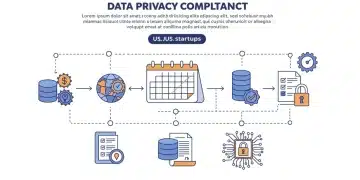
US Data Privacy Laws 2025: Key Policy Shifts & Actions

The evolving landscape of US data privacy laws presents critical policy shifts for 2025, necessitating a thorough understanding and proactive compliance strategies for all organizations handling personal data.
As January 1st, 2025, rapidly approaches, businesses across the United States face a critical juncture in navigating the complex and ever-evolving realm of data privacy. This US data privacy 2025 alert signals significant policy shifts that demand immediate attention and strategic action. Understanding these changes is not merely about compliance; it’s about safeguarding trust, mitigating risk, and maintaining operational integrity in an increasingly data-driven world.
The Evolving Landscape of US Data Privacy Legislation
The United States has long operated without a single, overarching federal data privacy law comparable to Europe’s GDPR. Instead, a patchwork of state-level regulations has emerged, creating a complex compliance environment for businesses. The year 2025 is set to introduce further complexities and consolidations, making it imperative for organizations to not only understand existing laws but also anticipate and adapt to impending changes.
This decentralized approach means that companies operating nationwide must contend with varying definitions of personal data, different consent requirements, and diverse enforcement mechanisms. The absence of federal harmonization often leads to increased operational costs and a higher risk of non-compliance if not managed carefully.
Key State-Level Developments and Their Impact
Several states have been at the forefront of establishing robust data privacy frameworks, influencing the national conversation. These pioneering laws often serve as blueprints for others, creating a domino effect across the country.
- California Privacy Rights Act (CPRA): Building on the CCPA, CPRA significantly expanded consumer rights and established the California Privacy Protection Agency (CPPA) for enforcement.
- Virginia Consumer Data Protection Act (VCDPA): This law offers consumers rights similar to CCPA but with different thresholds and definitions, emphasizing opt-out consent for targeted advertising.
- Colorado Privacy Act (CPA): Similar to VCDPA, CPA provides consumers with rights over their data, focusing on transparency and accountability for data controllers.
The convergence of these state laws, while not uniform, points towards a national trend of increased consumer control over personal data and heightened accountability for businesses. Companies must meticulously track these jurisdictional nuances to ensure comprehensive protection.
The dynamic nature of these legislative developments requires a continuous monitoring strategy. Businesses cannot afford a set-it-and-forget-it approach to data privacy. Instead, an adaptive framework that can incorporate new mandates as they arise is essential for long-term compliance and risk management.
Understanding New Definitions and Scope Expansions
One of the most critical aspects of the upcoming policy shifts involves the redefinition and expansion of what constitutes ‘personal data’ and the scope of entities subject to these regulations. What might have been considered innocuous information yesterday could be classified as sensitive personal data tomorrow, triggering a host of new compliance obligations.
These expanded definitions often include biometric data, precise geolocation data, and even inferences drawn from personal information that could identify an individual. Businesses need to conduct thorough data mapping exercises to identify all types of data they collect, process, and store.
Broadening the Definition of Sensitive Personal Information
Many new and amended laws are broadening the categories of sensitive personal information, which typically requires explicit consent for processing. This shift from an opt-out to an opt-in model for certain data types represents a significant change for many organizations.
- Biometric Data: Fingerprints, facial scans, voiceprints now frequently require higher levels of protection and consent.
- Health Data: Beyond HIPAA, state laws are increasingly covering a wider array of health-related information, even if not directly handled by healthcare providers.
- Genetic Information: Specific consent and stringent security measures are becoming standard for genetic data.
The implications of these expanded definitions are far-reaching, impacting everything from marketing strategies to HR practices. Companies must re-evaluate their data collection practices and consent mechanisms to align with these stringent requirements.
Furthermore, the scope of businesses affected by these laws is also expanding. Smaller businesses that previously fell below certain revenue or data processing thresholds might now find themselves subject to new regulations, necessitating a review of their current privacy posture.
Enhanced Consumer Rights and Consent Requirements
At the heart of the US data privacy 2025 policy shifts is an undeniable trend towards empowering consumers with greater control over their personal data. This means more robust rights to access, correct, delete, and opt out of the sale or sharing of their information. Businesses must be prepared to honor these requests efficiently and transparently.
The concept of ‘affirmative consent’ is gaining traction, particularly for sensitive data processing or targeted advertising. This moves beyond implied consent, requiring a clear, unambiguous indication of agreement from the consumer.
Implementing Robust Data Subject Request Mechanisms
To comply with enhanced consumer rights, organizations need to establish streamlined and accessible mechanisms for individuals to exercise their data subject rights. This includes user-friendly portals, clear contact information, and documented processes for verifying identities and fulfilling requests within specified timeframes.
- Right to Access: Consumers can request copies of their personal data held by a business.
- Right to Deletion: Individuals can ask for their data to be erased, with certain exceptions.
- Right to Correction: Consumers can request inaccuracies in their data be rectified.
- Right to Opt-Out: The ability to opt out of the sale, sharing, or targeted advertising using their data.
Failure to provide these mechanisms, or to respond to requests in a timely and compliant manner, can lead to significant penalties and reputational damage. Transparency in privacy policies regarding these rights is also paramount.

The shift towards stronger consent requirements also impacts how businesses engage with customers from the very first interaction. Clear, concise, and understandable consent language, free from legalese, is becoming a best practice. This builds trust and ensures that consent is truly informed.
Increased Enforcement and Accountability Frameworks
With new laws come new enforcement powers and increased accountability for non-compliance. Regulatory bodies are being established or empowered to investigate, fine, and mandate corrective actions for businesses that fail to adhere to privacy regulations. Penalties can be substantial, often calculated per violation or per affected individual, making proactive compliance a financial imperative.
Beyond monetary fines, non-compliance can also lead to injunctions, mandatory audits, and significant reputational harm, which can be even more damaging in the long run. The focus is shifting towards holding organizations accountable for their data handling practices from top to bottom.
The Role of Privacy Impact Assessments and Data Protection Officers
Many new regulations are requiring businesses to conduct Privacy Impact Assessments (PIAs) for high-risk data processing activities. These assessments help identify and mitigate privacy risks before new systems or processes are implemented. The appointment of Data Protection Officers (DPOs) is also becoming more common, especially for larger organizations or those dealing with sensitive data.
- Privacy Impact Assessments (PIAs): Mandatory evaluations of privacy risks associated with new projects or systems.
- Data Protection Officers (DPOs): Designated individuals responsible for overseeing data protection strategy and compliance.
- Vendor Management: Increased scrutiny on third-party vendors’ data privacy practices, requiring robust data processing agreements.
These frameworks are designed to embed privacy by design and by default into an organization’s operations, rather than treating it as an afterthought. Companies must invest in the resources and expertise needed to implement these internal controls effectively.
The emphasis on accountability extends to data breaches, with strict notification requirements and expectations for rapid response and remediation. A robust incident response plan, regularly tested, is no longer optional but a fundamental component of compliance.
Actions Required Before January 1st, 2025
Given the time-sensitive nature of these impending changes, businesses must begin their preparations immediately. Waiting until the last minute could result in significant compliance gaps, leading to potential penalties and operational disruptions. A structured, phased approach to compliance is highly recommended.
The first step involves a comprehensive audit of current data practices, identifying where personal data is collected, stored, processed, and shared. This data mapping exercise forms the foundation for all subsequent compliance efforts.
Developing a Comprehensive Compliance Roadmap
Creating a detailed compliance roadmap is crucial. This roadmap should outline specific tasks, assign responsibilities, set deadlines, and allocate necessary resources. It should encompass legal, technical, and operational aspects of data privacy.
- Legal Review: Engage legal counsel to interpret new laws and assess their specific impact on your business.
- Data Mapping & Inventory: Understand what data you collect, where it resides, and how it flows through your organization.
- Policy Updates: Revise privacy policies, terms of service, and internal data handling procedures.
- Consent Management: Implement or update consent management platforms to align with new requirements.
- Employee Training: Educate staff on new policies and their role in upholding data privacy.
- Security Enhancements: Strengthen data security measures to protect personal information from breaches.
Beyond these immediate steps, fostering a culture of privacy within the organization is vital. This means integrating privacy considerations into every business decision and technological development.
Furthermore, businesses should proactively engage with their third-party vendors and partners to ensure their data processing agreements (DPAs) are up-to-date and reflect the new regulatory requirements. Supply chain compliance is an increasingly scrutinized area of data privacy.
The Strategic Advantage of Proactive Privacy Compliance
While compliance with the US data privacy 2025 shifts might seem like a burden, viewing it as a strategic opportunity can transform a challenge into an advantage. Companies that embrace proactive privacy measures can build stronger customer trust, enhance brand reputation, and even gain a competitive edge in the marketplace.
In an era where data breaches are common and consumer skepticism is high, a commitment to data privacy can differentiate a business. Consumers are increasingly aware of their rights and are more likely to engage with companies that demonstrate respect for their personal information.
Building Trust and Enhancing Brand Reputation
Transparency and ethical data practices are powerful tools for building long-term customer relationships. When consumers feel confident that their data is handled responsibly, they are more likely to remain loyal and recommend a business to others.
- Increased Customer Loyalty: Trust in data handling fosters stronger customer relationships.
- Reduced Legal & Financial Risk: Proactive compliance minimizes the likelihood of costly fines and lawsuits.
- Competitive Differentiation: A strong privacy posture can set a business apart from competitors.
- Operational Efficiency: Streamlined data governance can lead to more efficient data management processes.
Moreover, robust privacy frameworks often go hand-in-hand with improved data governance and security practices, leading to a more resilient and secure overall IT infrastructure. This holistic approach benefits the entire organization.
Ultimately, investing in data privacy is an investment in the future of the business. It’s about adapting to the evolving digital landscape and positioning the organization for sustainable growth in a privacy-conscious world.
| Key Policy Shift | Brief Description |
|---|---|
| Expanded Definitions | Broader scope of ‘personal data’ and ‘sensitive personal information’ across various state laws. |
| Enhanced Consumer Rights | Stronger rights to access, delete, correct data, and opt-out of data sale/sharing. |
| Stricter Consent Rules | Movement towards explicit consent (opt-in) for sensitive data and targeted advertising. |
| Increased Enforcement | Higher penalties, more active regulatory bodies, and greater accountability for businesses. |
Frequently Asked Questions About 2025 US Data Privacy Laws
While a single federal law isn’t expected, several states will introduce or strengthen their privacy regulations, building upon models like CPRA, VCDPA, and CPA. Businesses must monitor specific state legislation relevant to their operations, as these laws will bring new compliance burdens and consumer rights.
Many new laws expand the definition to include categories like biometric data, precise geolocation, genetic information, and certain health data beyond HIPAA. This expansion often triggers requirements for explicit consent (opt-in) and more rigorous protection measures, necessitating a review of current data categorization.
Businesses should conduct a comprehensive data audit, update privacy policies, enhance consent management systems, and implement robust data subject request mechanisms. Training employees on new protocols and reviewing third-party vendor agreements are also critical steps for timely compliance.
Non-compliance can lead to significant financial penalties, which are often calculated per violation or per affected individual. Additionally, businesses face reputational damage, legal injunctions, mandatory audits, and potential loss of customer trust, all of which can severely impact operations and market standing.
Absolutely. Proactive compliance builds stronger customer trust and enhances brand reputation, differentiating businesses in a privacy-conscious market. It also reduces legal and financial risks, streamlines data governance, and can lead to more efficient internal processes, offering a significant competitive edge.
Conclusion
The impending policy shifts in US data privacy 2025 represent more than just regulatory hurdles; they signify a fundamental evolution in how businesses must handle personal information. The time for preparation is now, not later. By understanding the expanded definitions, enhanced consumer rights, and increased enforcement mechanisms, organizations can proactively adapt their strategies. Embracing these changes not only ensures compliance but also positions businesses to foster greater trust with their customers, mitigate risks, and ultimately thrive in a future where data privacy is paramount. January 1st, 2025, is not merely a deadline; it’s a call to action for every entity handling personal data in the United States.